
Jul 10, 20267 min read
Are Self Guided Tours Worth It?
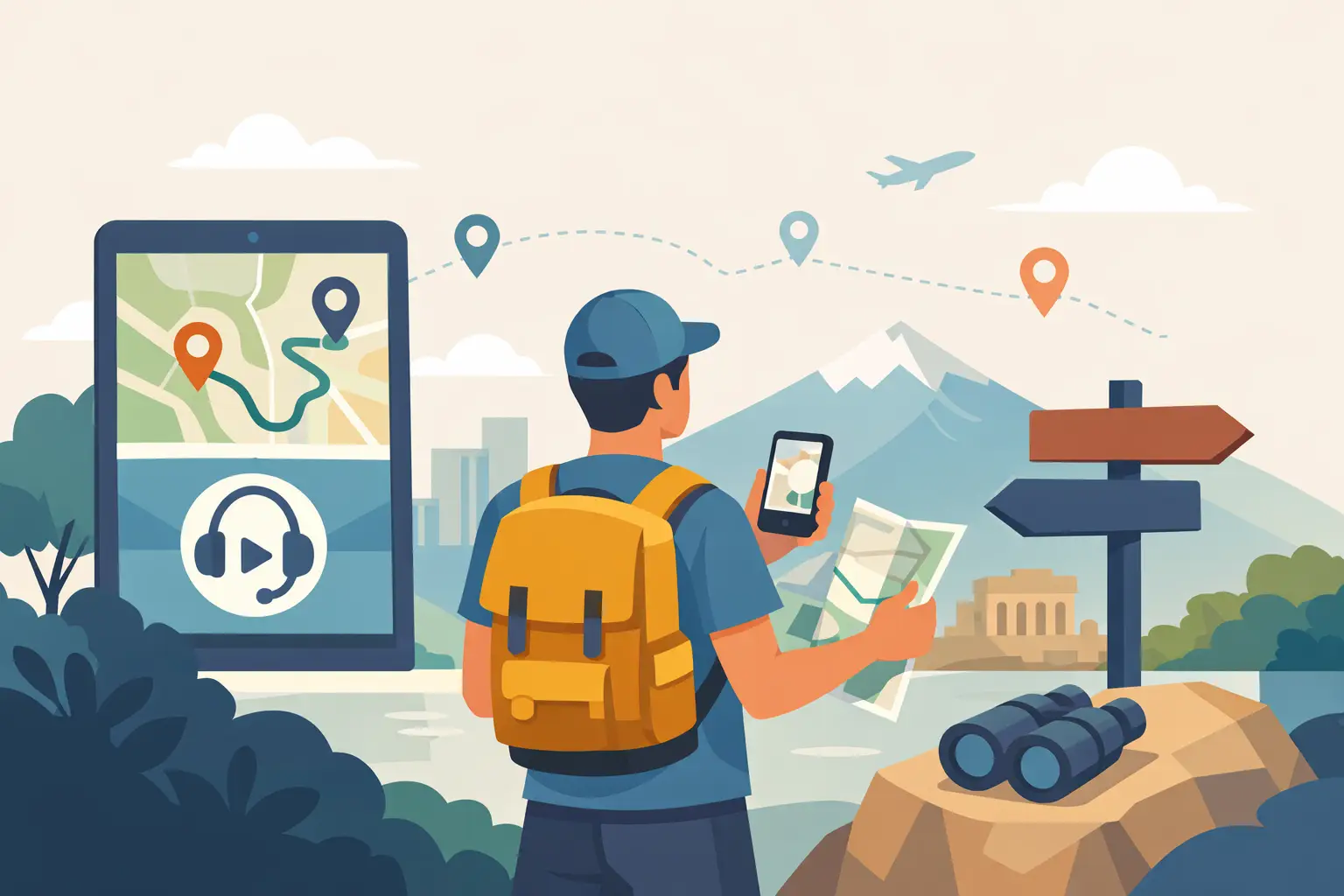
Miss the start time for a group tour by six minutes and the whole plan can fall apart. That is exactly why so many travelers ask, are self guided tours worth it when the alternative is rushing across a city, following a flag, and moving at someone else’s pace. The short answer is yes, often. But the better answer is that their value depends on what kind of experience you want, how you like to travel, and whether the tour is built for real exploration or just basic navigation.
Are self guided tours worth it for modern travelers?
For a lot of people, absolutely. Self-guided tours match how people already move through cities now - phone in hand, map open, camera ready, curious but independent. Instead of fitting your day around a guide’s schedule, you choose your own start time, your own pace, and often your own level of depth.
That flexibility matters more than it used to. Travelers are blending work and leisure, taking shorter trips, building more spontaneous itineraries, and looking for experiences that feel personal rather than prepackaged. A self-guided format fits neatly into that reality. You can start after brunch, pause for coffee, spend 20 extra minutes in a courtyard you love, or stop entirely and pick it back up later.
But not all self-guided tours deserve the same praise. A flat list of landmarks with a few paragraphs of text is not the same as an interactive mobile experience that uses storytelling, location triggers, challenges, and discovery mechanics to pull you deeper into a place. The difference between boring and memorable is usually in the design.
Where self-guided tours clearly win
The biggest advantage is autonomy. You are not trapped in the average pace of a group, which is often too slow for some people and too fast for others. If you are traveling solo, as a couple, or with friends who want freedom without losing structure, self-guided tours can hit the sweet spot.
They also reduce friction. No meeting point stress. No awkward headphones. No crowd gathering around one guide while traffic roars past. You move when you want, hear what you want, and engage more directly with the city instead of constantly managing group logistics.
Cost is another reason people switch. Guided tours can be fantastic, but they are usually more expensive because you are paying for live staff, fixed scheduling, and smaller group capacity. Self-guided options are often more accessible, especially for families or groups who would rather spend their budget on food, museums, or multiple experiences across a trip.
Then there is range. A good self-guided platform can offer everything from architecture walks and food neighborhoods to mystery trails, date-night city games, historic quests, and cultural storytelling routes. That opens the door to a more active kind of tourism - one where exploration feels less like a lecture and more like participation.
The hidden value: immersion without performance
Some travelers love a charismatic guide. Others do not love the social side of joining strangers, asking questions in public, or keeping up with a group dynamic. Self-guided tours remove that performance layer. You can be fully engaged without feeling watched or rushed.
This is especially useful in cities where the best moments are small and personal. Maybe it is reading a story outside an old theater. Maybe it is solving a clue that leads you into an alley you would have missed. Maybe it is noticing a mural, a hidden plaque, or a local detail because the experience asked you to look rather than just listen.
That is where the strongest digital tours outperform expectations. They do not simply replicate a human guide on a screen. They use the phone as an exploration tool - triggering stories in the right place, layering in game mechanics, and turning movement into part of the experience itself.
For travelers who want agency and momentum, that can feel more immersive than standing still while someone else talks.
When a guided tour is still the better choice
Self-guided does not automatically mean better. There are real trade-offs.
If you are visiting a place with dense historical complexity, live expert interpretation can add something a phone cannot. Great guides answer unexpected questions, read the energy of a group, and connect details in real time. If your goal is scholarly depth, behind-the-scenes access, or nuanced cultural context, a guided tour may still be worth the premium.
Safety can matter too. In remote environments, nightlife districts, or destinations where navigation is genuinely challenging, a live guide adds reassurance. The same goes for travelers who are not comfortable relying on mobile navigation, battery life, or app-based experiences.
And then there is quality control. Some self-guided tours are thoughtfully built. Others feel like a map with filler text. If the content is weak, the route is clumsy, or the experience does nothing beyond point you from stop to stop, the freedom will not compensate for the lack of substance.
So the right question is not just are self guided tours worth it. It is which self-guided tours are actually designed to create a better experience.
What makes a self-guided tour worth paying for?
A worthwhile self-guided tour should do more than tell you where to walk. It should shape how you experience the city.
Strong storytelling is the first test. Does the tour give the place personality, stakes, and texture? Facts alone are easy to find. What people remember is how those facts are framed.
Interactivity is the second test. The best experiences invite action - solving, choosing, spotting, collecting, comparing, unlocking, noticing. This is where travel starts to feel like discovery rather than passive consumption.
Good route design matters just as much. A smart route creates rhythm. It balances iconic landmarks with overlooked corners. It avoids unnecessary backtracking. It respects how people actually walk, pause, snack, and explore.
Finally, the platform experience counts. If the interface is confusing, instructions are vague, or the tour breaks flow every few minutes, the magic disappears fast. Mobile-first travel experiences need to feel intuitive, responsive, and alive.
That is why newer formats are gaining traction. Interactive self-guided tours built with challenge-based mechanics, GPS triggers, and local storytelling can turn a city into something closer to a real-life exploration game. For many travelers, that is not just convenient. It is more memorable.
Are self guided tours worth it for different travel styles?
For solo travelers, they are often a great fit. You get structure without giving up independence. You can move fast, linger, change plans, and stay in your own rhythm.
For couples, they can be more intimate than a group tour. You share the experience directly, react in the moment, and turn the city into something you uncover together.
For friend groups, it depends on energy. If everyone wants flexibility and playful exploration, a self-guided city game or interactive route can be ideal. If the group tends to debate every decision, a live guide may keep things moving.
For families, self-guided tours can be excellent when they include gamified elements. Kids and teens are far more likely to engage when there is a mission, a clue, or a reward built into the walk.
For professional tour creators and destination brands, the value goes even further. Self-guided formats are not only consumer-friendly. They are scalable. A single well-designed experience can run all day, in multiple languages, without the staffing limits of traditional tours. That creates new room for monetization, broader access, and more experimentation with format.
How to decide before you book
Think about the outcome you want, not just the price.
If you want maximum flexibility, a lower barrier to entry, and a more personal pace, self-guided is usually the smart move. If you want live expertise, social interaction, or deep discussion, a guided tour may be the better call.
Then check the experience design. Is it static or interactive? Does it simply inform, or does it invite you to play, search, and notice? Does it feel built for a smartphone, or merely uploaded to one?
That distinction is where the category is changing fast. The strongest platforms are moving beyond digital brochures and into active exploration. Leplace is part of that shift, turning city tours into interactive mobile experiences shaped by story, movement, and game logic rather than just audio and pins on a map.
That is the real answer to the question. Self-guided tours are worth it when they help you experience a place more deeply, more freely, and more actively than a conventional tour could. If the city starts feeling less like a checklist and more like a world you are unlocking step by step, you chose well.
The best travel experiences do not just show you a place. They make you want to keep going.
Enjoyed this post?
Comments
Be the first to comment.