
Jul 14, 20267 min readLeplace
Digital Walking Tours That Turn Cities Into Play
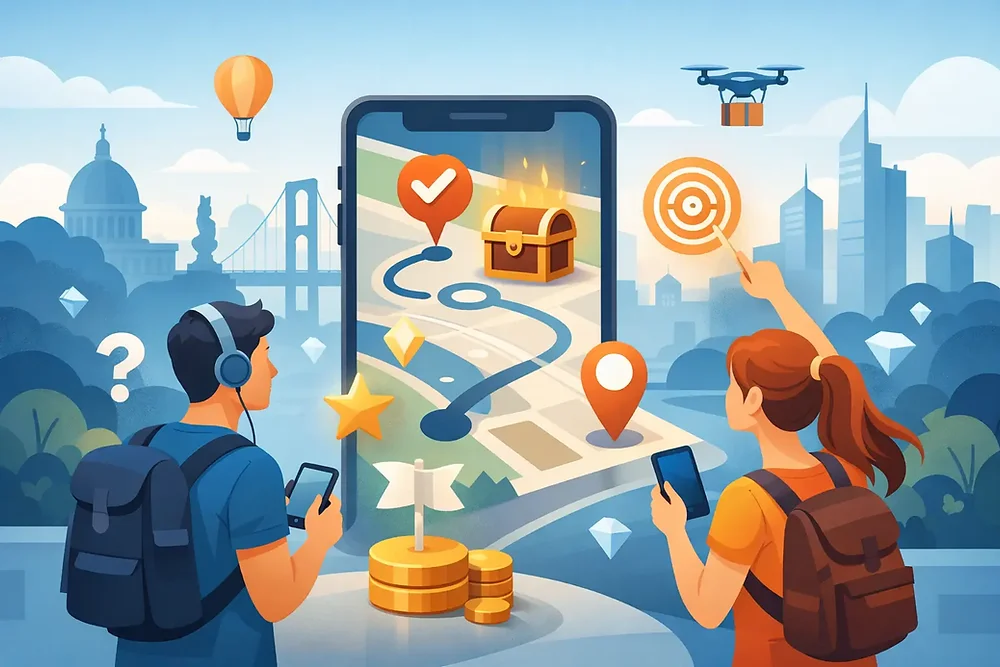
A great city rarely gives up its best stories from the window of a bus. They are hidden behind a courtyard gate, painted onto a side street wall, tucked into the name of a neighborhood bar, or waiting at the end of a route you would not have chosen on your own. Digital walking tours turn that uncertainty into part of the experience.
Instead of following a guide holding a flag or pressing play on a long audio track, explorers use their phones to move through a real place with a mission. GPS prompts can reveal the next stop. Challenges can make people look closer. Local stories can turn a familiar landmark into a scene worth remembering. The city stays real, but the way people interact with it changes completely.
For travelers, that means more freedom without sacrificing context. For tourism organizations, guides, and cultural teams, it creates a more active way to package local knowledge for an audience that already travels with a smartphone in hand.
Why Digital Walking Tours Feel Different
A conventional tour often follows a simple pattern: meet, listen, walk, repeat. That format still has a place, especially when a live guide brings deep expertise, social energy, or access to locations that cannot be reached independently. But it does not always fit the way people want to explore.
Travelers arrive at different times. Some want to pause for coffee, browse a market, or spend 20 extra minutes at a museum. Others are traveling solo and do not want to join a group. A digital experience lets the route adapt to the explorer rather than forcing the explorer to adapt to a schedule.
The difference is not only convenience. The strongest interactive self-guided tours give people a reason to pay attention. A question at a historic fountain is more engaging than a paragraph of facts. A GPS-triggered clue can make the walk to the next location feel purposeful. Virtual objects, collectible badges, and story choices add momentum without taking attention away from the streets themselves.
That is the opportunity: transform sightseeing from passive consumption into real-life exploration.
What Makes a Digital Walking Tour Worth Playing
Not every map with pins deserves to be called an experience. A useful route can help people find attractions, but an unforgettable one creates curiosity between the stops.
A story gives the route a reason to exist
The best tours are built around a clear point of view. It might follow a city’s hidden architecture, underground music history, food culture, local legends, public art, or the strange events that shaped a district. The theme tells explorers why these places belong together.
A route with no narrative can feel like a list of things someone thinks visitors should see. A story-driven route creates anticipation. Each stop answers one question while raising another, giving the explorer a reason to continue.
For example, a historic downtown route becomes more compelling when participants are asked to investigate how one building, one family, or one local decision changed the neighborhood. The information can be accurate and substantial, but it needs movement. People remember a story they helped uncover.
Challenges turn attention into action
Gameplay mechanics work best when they support the place rather than distract from it. A task might ask players to spot a detail in a mural, find a date carved into stone, match an old photo to a modern street, or solve a clue using something visible nearby.
These moments create a powerful shift. The visitor is no longer simply standing beside an attraction. They are looking, comparing, searching, and deciding. That active involvement can make even a small side street feel like a discovery.
The challenge level matters. If puzzles are too simple, the experience feels forgettable. If they are too difficult, the route becomes frustrating and people stop playing. Strong tour design uses quick wins early, then introduces deeper clues once participants understand the rhythm.
Location-aware delivery keeps the city in control
GPS-enabled experiences can reveal content when people arrive at the right place. This reduces the need to constantly study a map and helps keep the story tied to the real environment. A building, bridge, statue, or storefront becomes the trigger for the next scene.
Still, technology should serve the walk, not dominate it. GPS can drift in dense urban areas, batteries run low, and travelers may have inconsistent mobile service. Good digital tours account for these realities with clear directions, flexible check-in zones, concise content, and an experience that does not collapse if someone steps a few feet off route.
Digital Walking Tours for Different Types of Explorers
A single city can support many kinds of routes because people travel with different motivations. The couple looking for a playful date activity, the solo traveler with two free hours, the family seeking an outdoor adventure, and the architecture fan all want different things from the same streets.
For solo explorers, self-guided tours offer independence with a sense of company. Prompts and stories create structure without requiring a group booking. For friends, challenge-based routes add friendly competition and shared memories. For families, short missions and visual clues can keep younger participants engaged while adults still get meaningful local context.
There is also a growing audience of repeat visitors and residents. They are not looking for the standard landmark circuit. They want a fresh angle on a place they already know. A neighborhood game, seasonal story, artist-led route, or nighttime mystery can make locals feel like tourists in their own city.
This is why format matters more than scale. A 45-minute experience with a sharp theme can be more memorable than a three-hour route trying to cover an entire city center.
What Creators and Tourism Partners Can Build
For guides, destination marketers, museums, event organizers, and cultural organizations, digital tours are more than a replacement for printed maps. They are a product format with room for creativity and revenue.
A local guide can turn specialized knowledge into an experience available beyond their live schedule. A destination organization can direct visitors toward overlooked neighborhoods and local businesses. A museum can extend an exhibit outdoors. An event team can create an interactive route that activates a district before, during, or after a festival.
The strongest concepts are specific. “Discover the city” is broad enough to describe almost anything, which makes it difficult to market. “Solve a jazz-era mystery through five historic blocks” is easier to imagine, easier to share, and easier to price.
Creators should also think about the role of time. A route can be designed for a lunch break, a sunset walk, a rainy afternoon, or a full weekend challenge. Timing shapes everything from route length to content density. It also helps travelers decide whether the experience fits their day.
Platforms such as Leplace give creators a way to publish story-driven, GPS-enabled exploration games without building a custom app from scratch. That lowers the technical barrier, but it does not remove the need for strong creative direction. Technology can deliver the experience. Local insight is what gives it value.
Design for the Street, Not the Screen
The biggest mistake in mobile tourism is treating a walking tour like a website with a map attached. Explorers did not come outside to read a wall of text.
Keep instructions direct. Use audio, imagery, short writing, and interactive prompts with intention. Make each stop worth the walk. If a location has no visual, emotional, or narrative payoff, it may not belong on the route.
Route flow deserves the same attention as the content. A great story can lose energy if participants are repeatedly sent across dangerous intersections, through confusing construction zones, or up a steep hill without warning. Test the experience at different times of day. Check lighting, noise, accessibility, restroom options, public transit connections, and whether a venue is actually open when the route sends visitors there.
Accessibility should be part of the first draft, not a late add-on. Some routes can offer step-free alternatives, seated moments, adjustable route lengths, text alternatives to audio, and clear notes about terrain. Not every experience can accommodate every need, but transparent design helps people choose confidently.
The New Standard Is Participation
Travelers have access to endless information before they arrive. What they cannot get from a search result is the feeling of being part of a place. That feeling comes from movement, surprise, local perspective, and the small satisfaction of figuring something out for yourself.
Digital walking tours create that moment when they balance freedom with direction. Too much structure feels controlled. Too little feels like a map with marketing copy. The sweet spot is an experience that gives people a mission, then leaves room for the city to interrupt it.
The next time you build or choose a city experience, look for one that makes you raise your eyes from the screen. The best mobile tour does not compete with the street. It makes the street impossible to ignore.
Enjoyed this post?
Comments
Be the first to comment.