
Aug 7, 20268 min read
A Guide to Immersive Tourism Apps That Play Back
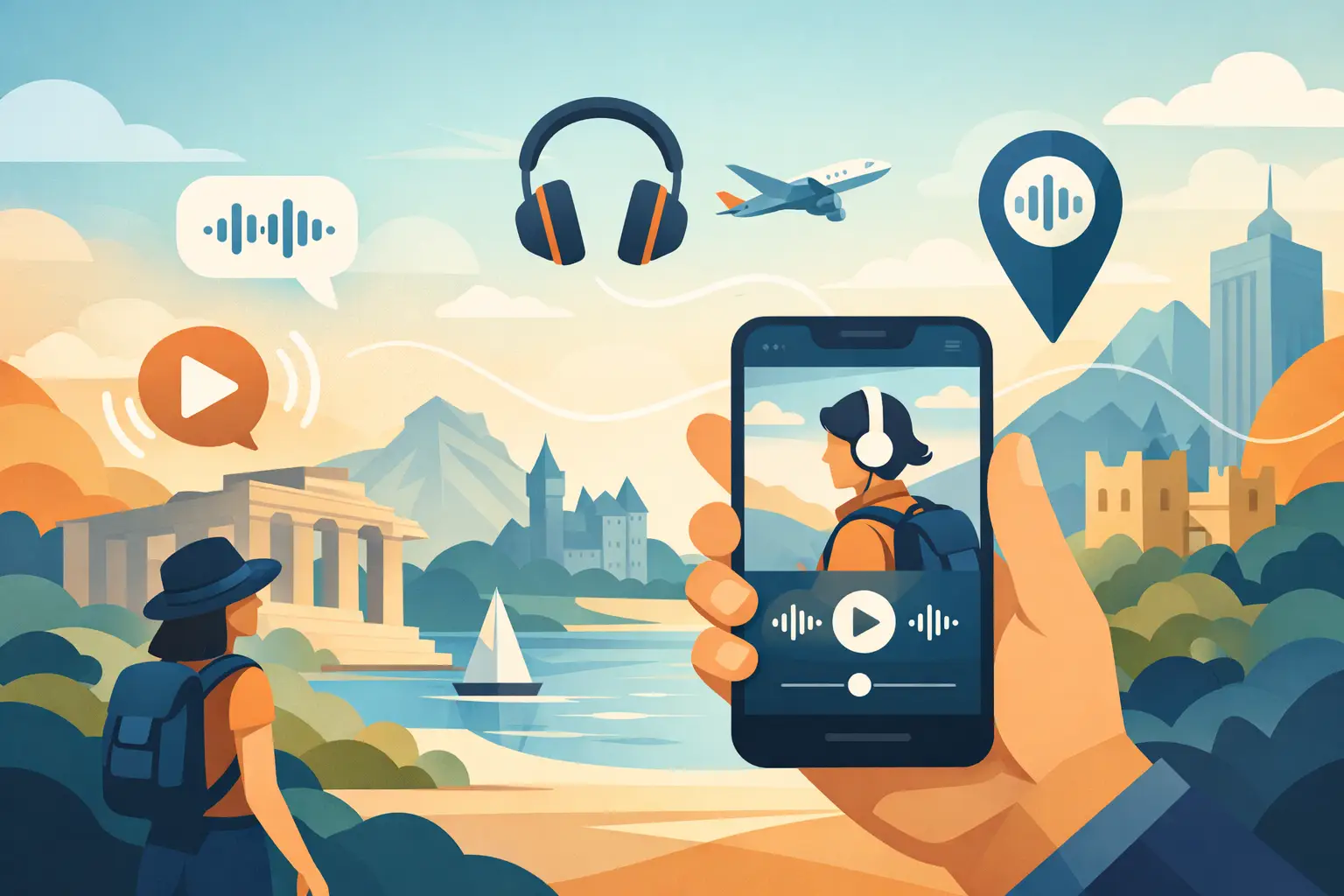
A city can look completely different when your phone gives you a reason to look up, take a side street, solve a clue, or follow a story that exists beyond a landmark plaque. This guide to immersive tourism apps is for travelers who want more than a map with pins - and for creators who want to turn local knowledge into an experience people will remember.
The best immersive tourism apps do not compete with the real world for attention. They send people deeper into it. They turn a historic district into a mission, a waterfront into a puzzle trail, or a neighborhood café into part of a larger local narrative. Instead of moving visitors from stop to stop, they create momentum.
What makes an app immersive?
An immersive tourism app combines place, story, and participation. The traveler is not simply listening to information while walking. They are making choices, finding locations, completing challenges, collecting virtual items, or uncovering the next chapter through GPS-based exploration.
That shift changes the feeling of a self-guided tour. A traditional audio guide can be useful when someone wants expert context at a museum, monument, or major attraction. An immersive app is built for active discovery. It works especially well in cities where the real magic lives between the headline sights: in overlooked streets, local legends, public art, food culture, and small details that reward curiosity.
Immersion does not always mean putting on a headset. In outdoor tourism, the strongest form of immersion is often mobile-first and location-aware. Your phone becomes a portal, but the city remains the main screen.
A guide to immersive tourism apps for travelers
For travelers, the right app depends on the kind of day you want to have. A solo visitor may want flexible pacing and a clear route. A couple might prefer a story-driven walk with playful challenges. A group of friends may be looking for friendly competition, photo missions, and a reason to wander beyond the usual itinerary.
Start with the experience format. Some apps specialize in guided audio, while others focus on scavenger hunts, escape-game mechanics, augmented reality moments, or creator-led neighborhood stories. None is automatically better. The question is whether the format matches the city, the group, and your available time.
A strong experience should make the route feel intentional without making you feel controlled. You should know what to do next, but still have room to pause for lunch, explore a shop, or follow an unexpected lead. Good self-guided design creates freedom with direction.
Look for stories tied to the location
Generic trivia can make any route feel interchangeable. The memorable experiences connect their stories to places you can see, hear, or physically reach. A challenge in an old market should reveal something about the market. A virtual object collected near a theater should add meaning to the building, its artists, or its history.
This is where local creators matter. Guides, historians, artists, tourism teams, and neighborhood experts can turn familiar streets into experiences with a point of view. The technology delivers the interaction, but local knowledge gives the journey a soul.
Check how the app handles practical reality
An imaginative concept can still fail if it drains the battery, loses GPS signal in dense streets, or assumes every traveler has unlimited mobile data. Before choosing an experience, check its expected duration, starting point, accessibility information, language options, and whether it can be used with limited connectivity.
Also consider the pace. A 90-minute route with eight meaningful interactions can feel richer than a three-hour route stuffed with tasks. More content is not always more immersive. The best experiences know when to let a place speak for itself.
Choose interaction with a purpose
Challenges should add discovery, not create busywork. Finding a hidden detail on a building can sharpen observation. Answering a question after a story can help it stick. A GPS trigger can create anticipation as you approach the next location.
But if every stop asks you to tap through screens, scan random objects, or race against a timer, the city may start to feel like a backdrop. The interaction should serve the story and the route. When it does, the app becomes a companion rather than a distraction.
The features that separate a real experience from a digital brochure
Many travel products use the word “interactive.” That can mean anything from a clickable map to a full real-life exploration game. Look beyond the label and assess what the traveler actually gets to do.
The strongest immersive tourism apps usually bring several elements together:
- GPS-based triggers that reveal content where it matters
- Story chapters that create a reason to continue
- Challenges, clues, or missions that invite active participation
- Visual layers such as AR-style effects, historical images, or virtual collectibles
- Flexible self-guided pacing for independent travelers
- Clear route logic, safety cues, and practical navigation support
Not every experience needs every feature. A literary walk may need thoughtful narration and simple prompts, while a family-friendly city game may thrive on scoring and collectible rewards. Feature-heavy design is only valuable when it makes the experience more intuitive, more social, or more memorable.
What creators and tourism partners should build
For destination brands, cultural institutions, tour operators, and local guides, immersive apps offer more than a new digital format. They create a way to package local stories into products that can run beyond fixed tour schedules.
That does not mean replacing guides. Live guides bring energy, expertise, and human connection that no app can fully reproduce. Mobile experiences work differently: they extend reach, support travelers outside regular operating hours, create an entry-level product, and give visitors a reason to explore at their own pace.
A smart strategy often uses both. A museum can create an outdoor mission that brings visitors to its doors. A guide can offer a self-guided route for weekdays and lead premium small-group experiences on weekends. An event organizer can use a location-based game to move attendees through a festival district while sharing partner stories along the way.
Begin with one strong promise
Do not start by trying to digitize everything you know about a city. Start with a clear experience promise. Perhaps visitors will solve a mystery hidden in a historic quarter. Maybe they will meet the voices behind a food neighborhood. Or they will collect clues that reveal how a former industrial area became a creative hub.
A focused promise makes every design decision easier. It tells you which locations belong on the route, what challenges make sense, and what details can be left out. It also gives travelers a compelling reason to choose your experience over a standard walking tour.
Build for movement, not just information
A mobile tour is not a brochure broken into screens. Every stop should earn the walk to get there. Ask what the visitor can see at that exact location, what action they can take, and what emotional beat the moment should create.
For example, an old gate can become a threshold in a mystery story. A mural can reveal a creative challenge. A viewpoint can be the reward after a series of clues. This is experience design: using the physical city as part of the narrative system.
Platforms such as Leplace help creators build these interactive self-guided tours without needing to develop a custom app from scratch. That lowers the technical barrier, but the creative work still matters. The strongest routes are built around a distinct local perspective, not a template.
Design for commercial value without flattening the story
Paid digital experiences need a clear value exchange. Travelers may pay for exclusive stories, polished game mechanics, access to unusual places, a special event layer, or a complete ready-to-play route that saves planning time. Partners may also use free experiences strategically to increase foot traffic, awareness, or visitor engagement.
Pricing depends on audience and format. A short discovery trail can work as an affordable impulse purchase. A longer narrative game for groups can support a higher price because it replaces an activity, not just a map. Test the offer against the actual alternative: a free walk, a guided tour, an attraction ticket, or a group activity.
Measure the moments that matter
Downloads are useful, but they do not tell the whole story. For immersive tourism, completion rate, time spent on route, challenge participation, reviews, repeat use, and partner visits often reveal more about whether an experience is working.
Watch where players stop progressing. If many users abandon a route after the same clue, the issue may be unclear instructions, weak GPS positioning, or a story moment that does not create enough curiosity. If visitors consistently spend longer at one stop, that may be a sign to build more around it.
Feedback should improve the route, not erase its personality. A city experience should be easy enough to enjoy and distinctive enough to feel like it could only exist there.
The next time you choose or create a tourism app, look for the moment when the phone encourages someone to put it down and notice the street. That is where digital exploration becomes a real memory.
Enjoyed this post?
Comments
Be the first to comment.