
Aug 13, 20268 min read
A Guide to Interactive Tourism Publishing
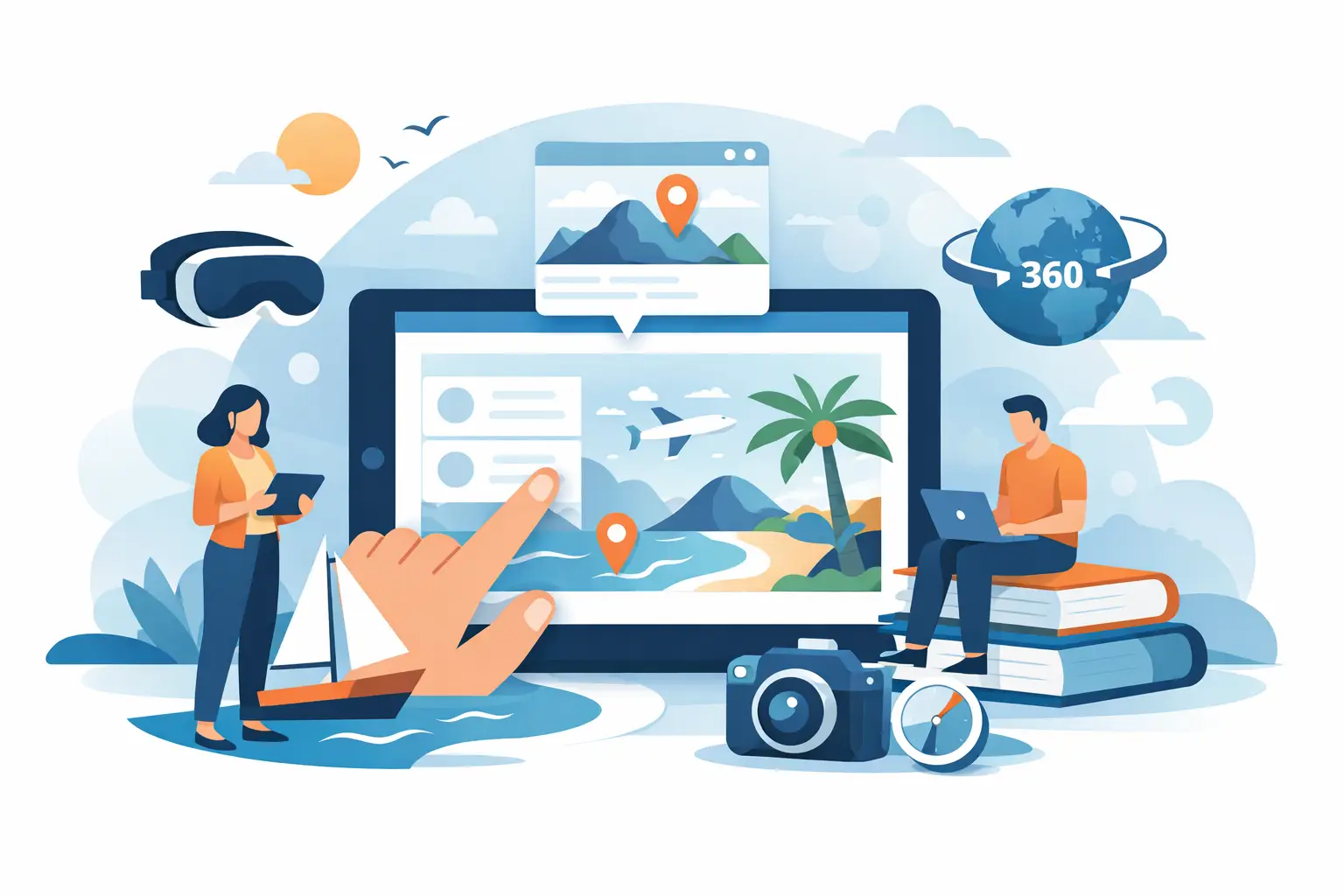
A visitor stops at a mural, finds a clue hidden in its history, and follows a GPS prompt to a neighborhood bakery that locals love. That is the difference between a route and an experience. This guide to interactive tourism publishing is for creators and destination teams ready to turn local knowledge into mobile adventures people actively play, remember, and recommend.
Interactive publishing gives travelers a reason to look up from the screen and engage with the real city. It also gives guides, cultural organizations, and tourism brands a scalable way to package stories beyond a fixed departure time, a printed map, or a standard audio stop.
What Interactive Tourism Publishing Really Means
Interactive tourism publishing is the creation of self-guided, mobile-first experiences that respond to where a traveler is and what they do. Instead of moving users through a sequence of facts, it combines place, story, tasks, media, and progress. A guest might solve a riddle at a historic theater, collect a virtual object in a public square, choose between two routes, or complete a photo mission before the next chapter appears.
The technology matters, but the experience design matters more. GPS, maps, audio, video, augmented elements, and digital rewards are tools. The real product is a well-paced reason to explore.
A strong interactive tour can be cultural, culinary, family-focused, architectural, spooky, playful, or event-based. It can also serve different commercial goals. A destination organization may want visitors to spread beyond the city center. A local guide may want to sell a signature experience without personally leading every session. A museum or cultural institution may want to extend its story into the streets. The format changes, but the core idea stays the same: let the traveler participate.
Start With a Playable Promise
Before choosing stops or writing a single clue, define the promise. What will someone be able to say after completing this experience? Not simply, "I saw downtown," but "I uncovered the hidden stories behind downtown's old storefronts" or "I raced through the waterfront like a detective."
That promise creates focus. It tells travelers who the experience is for, sets expectations for tone and duration, and helps you decide what belongs in the route. If a stop does not advance the promise, it may be interesting, but it is probably not essential.
The best concepts have a clear audience and a clear emotional engine. A couples' date-night route can lean into surprise and shared decisions. A family quest needs short walking distances, simple tasks, and visible progress. A history experience for curious adults can allow more depth, but it still needs moments of discovery rather than a long stream of dates.
Be realistic about the tension between ambition and completion. A 20-stop experience may sound more valuable than an eight-stop one, but travelers often remember the finish, not the size. For a first release, a compact, high-energy route is easier to test and more likely to earn strong reviews.
Build a Story Arc, Not a Pin Collection
A map with ten good places is not automatically a tour. Interactive tourism publishing works when each location feels like part of a journey.
Give the experience a beginning, middle, and payoff. The opening should quickly establish the mission and teach the traveler how to play. The middle should build momentum with a mix of tasks, discoveries, and choices. The ending should feel earned, whether it reveals a final story, delivers a reward, points to a local business, or simply creates a memorable final view.
Think in chapters rather than stops. One chapter might introduce a vanished neighborhood. The next asks travelers to find traces of it in the present. A later challenge can ask them to compare old and new details, making the city itself the evidence. That structure turns information into participation.
Pacing is where many otherwise excellent tours lose energy. Avoid placing three reading-heavy stops in a row. Alternate modes: a quick observation challenge after a story-rich location, a moment of audio before a walking stretch, or a playful decision before a more reflective finale. Every interaction should have a purpose. A quiz that only checks whether someone read the text feels like homework. A task that makes them notice the place differently feels like discovery.
Design Challenges That Belong in the Real World
The most satisfying challenges cannot be completed from a couch. They use the physical environment as part of the game.
A strong location-based prompt may ask travelers to spot a symbol carved above a doorway, identify which direction a statue faces, listen for a sound near a market, or match a historic image to the modern streetscape. These actions are simple, but they turn passive movement into attention.
Use a mix of challenge types so the experience stays fresh:
- Observation tasks that reward looking closely at architecture, art, signs, and public space.
- Riddles that reveal a clue through local history, legends, or visual details.
- GPS milestones that create a sense of arrival and progress.
- Choice moments that let travelers shape the route or tone of their adventure.
- Collectibles and rewards that give completion a visible payoff.
Difficulty should fit the setting. A puzzle that is too easy becomes filler. One that is too obscure creates frustration, especially when rain, crowds, construction, or weak GPS complicate the moment. Build in a hint system and make sure the experience can recover gracefully. Travelers should feel challenged, never stranded.
Safety and access are part of game design, not a legal afterthought. Do not ask users to cross unsafe streets, enter restricted spaces, or rely on a business being open. Consider step-free alternatives, daylight conditions, public transit, restroom access, and the reality that not everyone walks at the same pace. A great experience invites more people into the city.
Create Content for the Mobile Moment
Travelers use a phone while moving, often with one hand and limited patience for large blocks of text. Write for the street, not for a brochure.
Lead with the detail that creates curiosity. Instead of opening with a full history of a building, begin with the strange fact, the personal story, or the question hiding in plain sight. Then offer optional depth for travelers who want it. This layered approach respects both the fast-moving explorer and the dedicated culture seeker.
Keep directions unmistakable. Use recognizable landmarks, plain language, and distance cues that match real behavior. "Walk toward the clock tower" is more useful than a formal street description when a visitor is orienting themselves in an unfamiliar place.
Visuals should prove the experience, not decorate it. Historic photos work best when users can compare past and present. Short audio can add atmosphere near a dramatic site. Video should be brief and meaningful. Augmented or game-like moments are powerful when they reveal something the physical location alone cannot, but they should not become a gimmick that slows the route.
Test the Route Like a Traveler Would
A route is never finished when the creator completes it. It is finished when a first-time visitor can complete it without help.
Test on different days, at different times, and in different conditions. Walk it quickly, walk it slowly, and ask someone unfamiliar with the area to try it without your explanations. Watch where they hesitate. Those pauses reveal unclear instructions, weak clues, bad map transitions, or assumptions only a local would make.
Check the operational details too. GPS can drift near tall buildings. Public art can move. A construction fence can block the perfect view. Businesses close, events change street access, and public spaces evolve. Build review dates into your publishing workflow so the experience stays current after launch.
Feedback should shape the next version. Completion rate tells you whether the journey is the right length. Drop-off points show where momentum disappears. Reviews reveal what people retell afterward. Keep the moments that create stories, and revise the ones that merely add time.
Publish With a Clear Business Model
Interactive tours can be free discovery tools, paid digital products, premium event experiences, or a blend of all three. The right model depends on your audience and what makes the experience distinct.
A free short route can introduce a destination or lead travelers toward longer paid adventures. A paid experience needs a clear reason to buy: exclusive stories, a high-quality game layer, a distinctive theme, or access to places and perspectives travelers would not find alone. For tourism partners, interactive publishing can also support campaigns, festivals, seasonal activations, and neighborhood dispersal goals.
Creator platforms such as Leplace make it possible to publish story-driven, GPS-enabled experiences without building a custom app from scratch. That lowers the technical barrier, but it does not remove the need for strong editorial judgment. Technology can deliver the mission. Only local insight can make it worth playing.
Price for the value of the experience, not for the number of stops. A polished 75-minute adventure with a satisfying narrative can command more interest than a long route with no rhythm. Test packaging for solo travelers, couples, families, and groups, since the social value of a shared challenge can be part of the purchase decision.
Make Every Release a Reason to Explore Again
The most successful publishers think beyond a single tour. They build a growing world of local experiences that can change with seasons, neighborhoods, events, and traveler interests.
A summer food quest, a fall ghost trail, and a year-round architecture game can all serve the same city while giving people a fresh reason to return. Consistent visual style, recurring characters, or collectible themes can connect separate experiences without making them feel repetitive.
Start with one route that has a sharp promise, a playable story, and a finish worth reaching. When travelers leave with a new way to see a familiar street, you have created more than digital content. You have given the city another layer to discover.
Enjoyed this post?
Comments
Be the first to comment.