
Sep 12, 20268 min read
How to Launch Location-Based Tours That Get Played
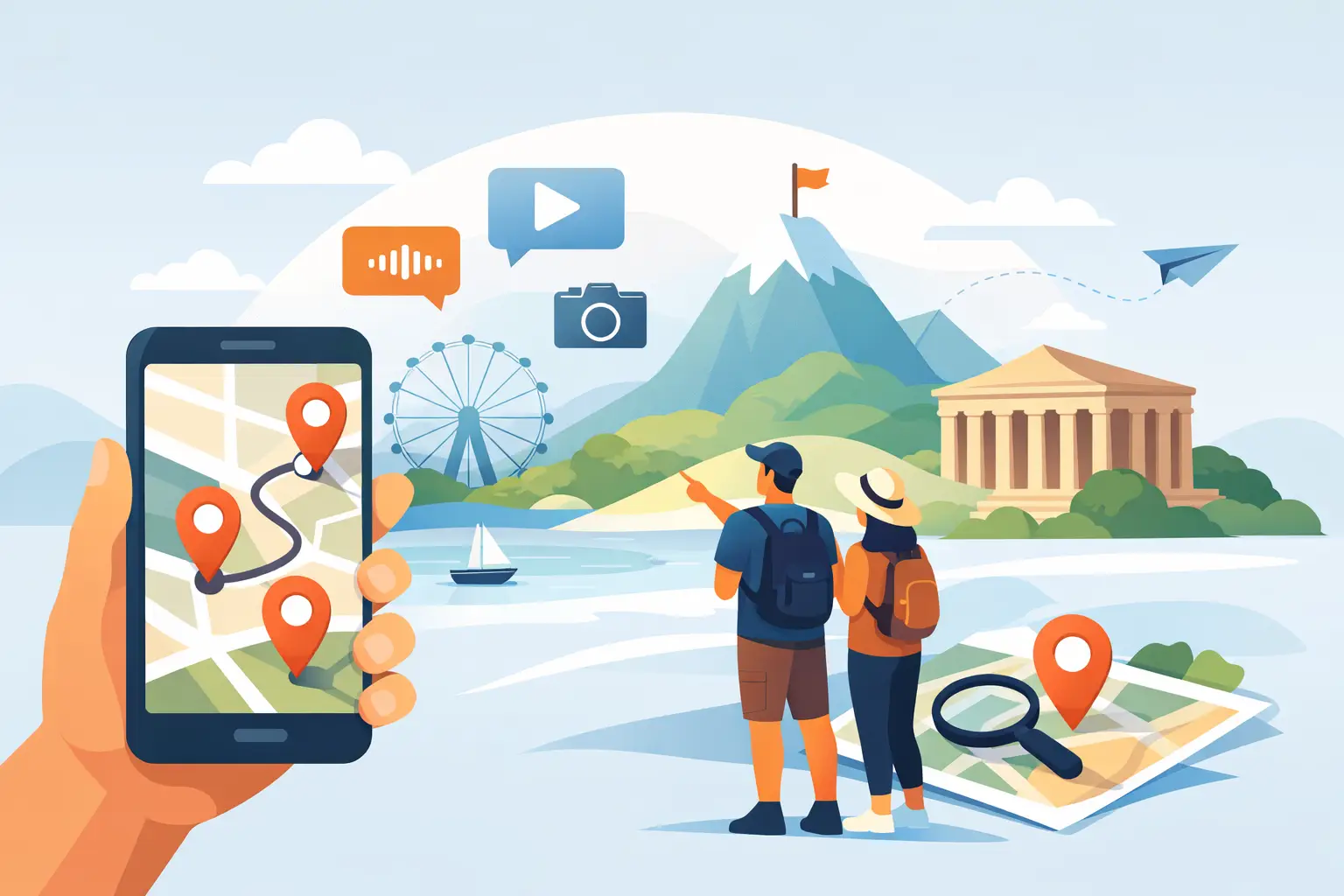
A great city tour should not feel like a playlist of facts triggered by a blue dot. It should make people look up, take the unexpected alley, notice the symbol above a doorway, and feel the satisfaction of solving what most visitors walk past. That is the real opportunity in how to launch location based tours: turn local knowledge into an active experience people can play at their own pace.
For guides, tourism teams, cultural organizations, and experience creators, location-based tours create a product that can run beyond a fixed departure time. But GPS alone does not make a tour memorable. The launch succeeds when place, story, game mechanics, and mobile usability work together from the first stop to the final reveal.
Start With a Place Worth Exploring
The strongest tours do not try to cover an entire city. They make a clear promise about one neighborhood, one theme, one era, or one question. A visitor can choose a general sightseeing route anywhere. What they cannot easily find is your point of view.
Start by defining the transformation. Perhaps players become art detectives in a warehouse district, follow the hidden history of a waterfront, race to recover a fictional object, or uncover the food stories behind a local market. The setting gives the experience credibility. The story gives it momentum.
Choose an area that works on foot and rewards attention. A compact route with 8 to 12 meaningful stops is often more compelling than a three-hour march across town. Look for visual details, accessible public spaces, distinct landmarks, and natural moments to pause. A route should feel rich without forcing people to cross dangerous intersections, climb unnecessary hills, or wander through areas that become uncomfortable after dark.
Build around one audience first
A tour designed for families, solo travelers, architecture fans, or corporate event groups can share locations, but it should not share the same pacing or challenge style. Families may want short tasks and obvious wins. Competitive friend groups may enjoy timed missions. Cultural travelers may prefer deeper context with optional layers rather than constant scoring.
Trying to serve everyone at launch usually produces a generic experience. Pick the first audience, build for its behavior, then create variants once the core route is proven.
Design a Story, Not a Sequence of Stops
Every location needs a reason to exist. If a stop only says, “Here is an old building,” it belongs in a standard map listing. In an interactive tour, each place should move the story forward, reveal a clue, teach a useful detail, or ask players to see the environment differently.
Create a simple narrative arc: an opening mission, a rising sense of discovery, a midpoint shift, and a satisfying final moment. The theme can be historical, fictional, food-focused, artistic, or mystery-driven. What matters is that the participant understands why the next location matters.
For example, a route about a city’s music scene could begin with a missing recording, send players to identify visual clues at former venues, introduce local artists through short audio or video moments, and end near a venue where the story becomes real. The tour has information, but information is not the engine. Curiosity is.
Keep each mobile interaction focused. A player standing on a sidewalk will not read 700 words of copy. Use short context, a strong visual, one decision or challenge, and a clear next action. Save deeper stories for optional content that curious players can open when they have time.
Add GPS Challenges That Feel Fair
Location-based technology can create a sense of arrival that a printed guide cannot match. GPS validation, map progress, virtual collectibles, photo missions, and clue-based navigation turn movement into participation. They also introduce friction if they are designed carelessly.
A GPS checkpoint should activate close enough to feel precise but wide enough to account for signal drift, tall buildings, weather, and different phone models. Test every location on both iPhone and Android devices. A player who is standing at the right statue but cannot trigger the next stage will remember the frustration, not the story.
Use GPS when presence is the point. If players need to stand in a plaza, locate a mural, or reach a historic doorway, a geofenced check-in makes sense. If the answer depends on noticing a detail, combine arrival validation with a visual question. That keeps participants from simply tapping through a route without engaging with the street.
The best challenge types vary throughout the experience:
- Observation tasks ask players to spot an architectural detail, symbol, color, or object.
- Puzzle prompts connect clues across two or more locations.
- Collection mechanics reward visits with digital artifacts, badges, or story fragments.
- Choice-based moments let players select a path, suspect, theme, or local perspective.
- Photo missions encourage players to frame a place creatively and share their progress.
Do not make every stop a hard puzzle. A route needs rhythm. Alternate between quick wins, moments of reflection, and more demanding tasks so players stay energized rather than stuck.
Build the Route for Real Conditions
A route can look perfect on a desktop map and fail completely in the field. Before launch, walk it at the same times your customers are likely to play it. Check crowd levels, construction, street closures, noise, lighting, and access to each checkpoint.
Pay close attention to the first five minutes. Players decide whether the experience feels polished almost immediately. The start point should be easy to find, near public transit or a recognizable landmark when possible, and supported by instructions that remove uncertainty. Tell people what they need: charged phone, headphones if audio is central, comfortable shoes, expected duration, accessibility considerations, and whether the route works after sunset.
Also plan for change. Businesses close, murals disappear, public spaces host events, and construction can turn a simple route into a detour. Design backup content for critical stops and review your tour regularly. A living city needs a living product.
Choose a Platform That Supports the Experience
Building a custom app can be expensive and slow, especially when you are still proving demand. A mobile-first creator platform lets you focus on the route, content, and customer journey instead of software development. The right setup should support GPS triggers, media, challenges, route updates, payments, and a branded experience that works in the hands of real travelers.
Leplace gives creators a way to publish interactive self-guided tours that blend local storytelling with real-life exploration game mechanics. For a guide or destination partner, that means local expertise can become a scalable digital product without waiting for a traditional group tour to fill up.
Platform choice still depends on your model. A museum-led route may need educational depth and timed event access. A tourism board may prioritize multilingual content and broad visitor reach. An independent guide may care most about quick publishing, direct sales, and the ability to test new concepts. Define what the business needs before adding features that sound impressive but do not improve the player experience.
Price the Outcome, Then Test It
People do not pay for a list of coordinates. They pay for a memorable way to spend an afternoon, a date night with a built-in mission, a family activity, or a fresh lens on a city they thought they knew.
Your price should reflect the length, production quality, exclusivity, and alternatives in the local market. A short neighborhood teaser can be free and work as a discovery tool. A 90-minute story-rich experience with original research, challenges, and collectible rewards can command a higher price. Private access, limited-time event editions, or team competitions can support premium pricing.
Launch with a clear offer rather than an endless discount. Consider an early-player rate in exchange for feedback, but make the value visible: estimated play time, what participants will discover, how many people can play on one purchase, and what makes this route different from a standard walking tour.
Test With Players Who Will Tell You the Truth
Before public release, invite a small group that resembles your intended audience. Watch them play without explaining every step. Where do they hesitate? Which clue feels obvious only because you wrote it? Do they understand the story? Are they looking at their screens too much or not enough?
Ask for feedback immediately after the experience, when the details are still fresh. Focus on completion rate, time per stop, failed GPS triggers, abandoned sections, and the moments people mention without prompting. Those moments are your marketing material. The recurring frustrations are your next production sprint.
A polished launch is not the point. A playable launch is. Release when the route is safe, understandable, technically reliable, and genuinely enjoyable, then improve it through real behavior.
Promote the Feeling, Not Just the Features
“GPS-enabled tour” describes a format. “Solve the city’s hidden jazz mystery before sunset” gives someone a reason to book. Lead with the feeling and the mission, then show the technology as proof that the experience is active, self-guided, and easy to start.
Use short videos and screenshots that show a player in motion: arriving at a checkpoint, finding a clue, collecting an item, reacting to a reveal. Feature the street, not just the interface. Local hotels, cafés, visitor centers, event organizers, and cultural venues can become useful distribution partners when the tour gives their guests a stronger reason to explore nearby.
The most shareable tours create a small story participants want to retell: the clue they almost missed, the alley they would never have entered, or the final reveal that changed how they saw the neighborhood. Build for that moment, and your route becomes more than a product on a phone. It becomes an invitation to discover your world differently.
Enjoyed this post?
Comments
Be the first to comment.