
Sep 20, 20267 min read
How to Sell Digital Walking Experiences That Convert
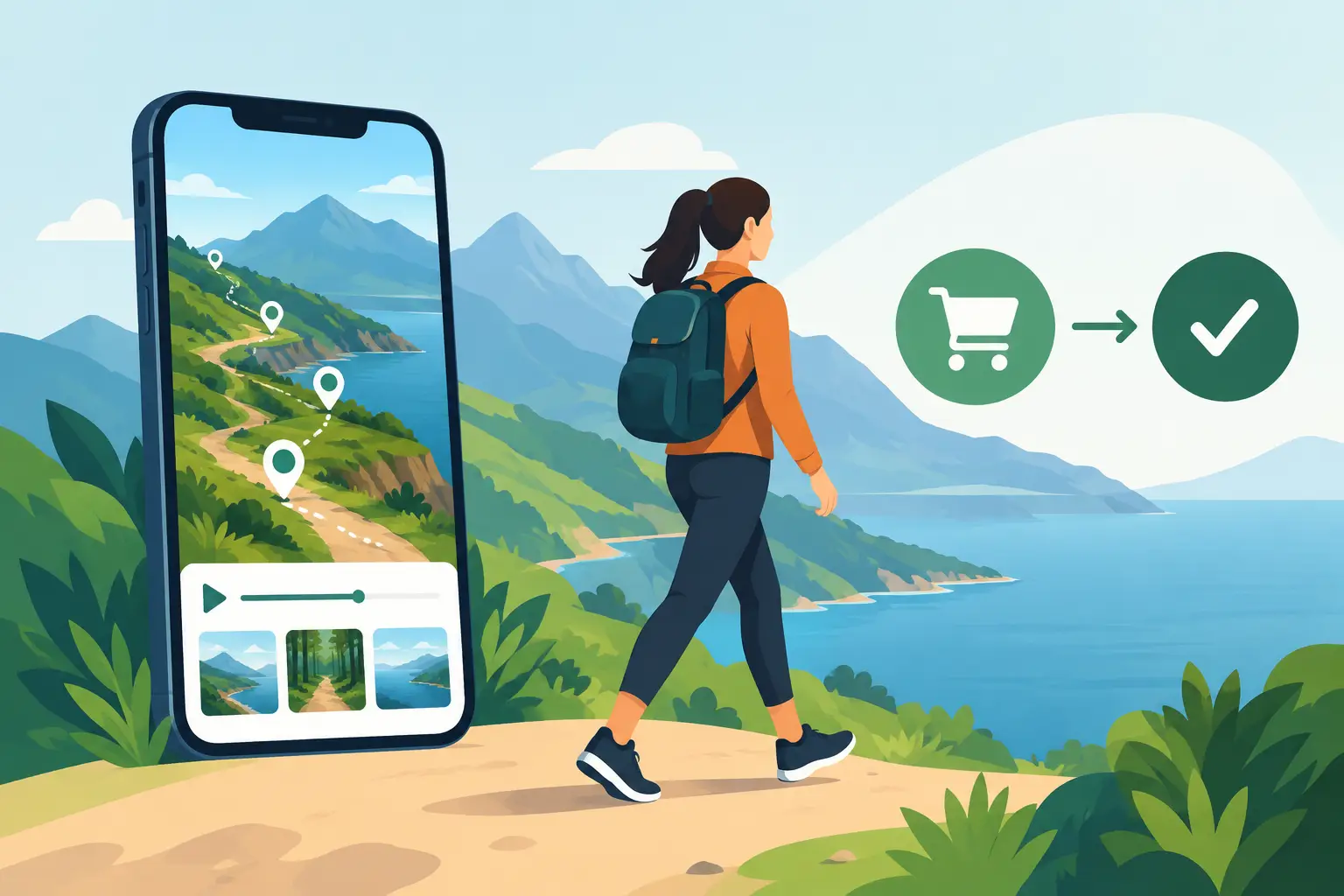
A traveler standing outside a landmark does not need another screen full of facts. They need a reason to look up, walk farther, notice the hidden alley, and feel that they found something most visitors missed. That is the real opportunity in learning how to sell digital walking experiences. You are not simply selling a route on a map. You are selling a self-guided adventure people can start on their own schedule.
For guides, tourism brands, museums, and local creators, digital experiences also solve a commercial problem: your knowledge no longer has to be limited by group size, weather, staffing, or a fixed departure time. Build the right product and one great city story can keep generating bookings long after launch.
Start With a Sellable Adventure, Not a Digital Brochure
Many digital tours fail before they reach the market because they are built like a museum placard collection. Stop here. Read this. Walk 300 feet. Read more. That format may inform people, but it rarely creates the momentum that makes a traveler recommend an experience to friends.
A sellable walking experience needs a clear promise. What will someone feel, find, solve, collect, or understand by the end? “See downtown” is too broad. “Track the clues behind Chicago’s most infamous heist,” “find the secret symbols of historic New Orleans,” or “race through a futuristic waterfront mission” gives people a reason to choose your experience over free map pins.
The strongest concepts combine a recognizable place with a specific emotional hook. Mystery works. Local food quests work. Film locations, forgotten history, architecture challenges, street-art hunts, and family-friendly missions work. The theme should help visitors see a neighborhood through a fresh lens, not just move through it.
Before building, define three things: the ideal explorer, the moment they will remember, and the action that carries them from stop to stop. A solo traveler may want freedom and cultural depth. A family may want short challenges and visible rewards. A team event may need friendly competition and shared objectives. One route cannot serve every audience equally, and that is fine. A sharper experience is easier to market.
Design for Movement, Participation, and Payoff
Digital walking experiences sell when they feel active. Location alone is not interactivity. Give people decisions, challenges, discoveries, and progress.
A great route has pacing. Open with a fast win: an intriguing clue, a surprising view, or a task that gets players involved within the first few minutes. Then vary the rhythm. Pair a story-rich stop with a visual challenge. Follow a busy landmark with a quieter hidden corner. Give explorers time to enjoy the city instead of forcing them to stare at their phones every minute.
Gameplay mechanics can make the difference between an audio guide and a real-life exploration game. Ask visitors to identify details in their surroundings, solve a location-based riddle, collect virtual items, unlock the next chapter, or choose between two paths. The mechanic must serve the story. A random quiz question feels like homework. A clue that reveals why a building mattered makes the street itself part of the narrative.
End with a payoff worth reaching. It might be a final reveal, a scenic location, a completed collection, a score, or a local recommendation that feels earned. People remember endings, and a satisfying finale gives them something to share in photos, reviews, and conversations.
Keep the Route Friction-Light
The route should be easy to begin and forgiving to navigate. State the expected duration, walking distance, starting point, accessibility considerations, and whether users need headphones, internet access, or a charged phone. Set expectations honestly. A 90-minute route can be perfect for a weekend visitor but too long for a conference attendee between meetings.
Test the experience on foot, repeatedly. Check GPS behavior near tall buildings, construction changes, street closures, crossing safety, noise levels, and the accuracy of every instruction. Have someone unfamiliar with the area try it without your help. If they get lost, confused, or bored, treat that as product feedback, not user error.
Price the Experience Around Value, Not Minutes
Pricing is where creators often underestimate what they have made. A digital format does not mean the experience should be cheap. Travelers pay for a compelling story, curated local insight, convenience, and the confidence that their limited time in a city will be well spent.
A short introductory route may work as a low-cost product or a free teaser that leads into paid adventures. A polished, story-driven city mission with challenges and high-quality media can command a higher price, especially if it replaces a conventional guided activity. Group pricing can also be powerful for couples, friends, and families because the perceived value rises when several people can play together.
Test pricing against alternatives a visitor might consider: a guided walking tour, a museum ticket, an escape room, or an evening activity. Do not position your experience as a cheaper substitute for free information. Position it as a better way to experience a place.
You can also create a product ladder. Offer one signature paid route, then add themed editions for repeat visitors, seasonal quests, or premium access for exclusive event experiences. A destination partner may prefer a custom branded route designed to drive visitors toward a district, venue, or cultural program. The best model depends on whether your main customer is an individual explorer, a group organizer, or a tourism partner.
How to Sell Digital Walking Experiences Before Launch Day
Do not wait until the route is finished to build demand. Start promoting the premise while you are testing the experience. The concept itself is marketing material: the mystery, the local character, the unusual places people will uncover.
Show the experience in motion. A static route map rarely sells adventure. Use short videos and images that show a person scanning a clue, arriving at a surprising location, solving a challenge, or celebrating a discovery. Let potential customers see what they will actually do. The goal is not to explain every feature. It is to make them imagine themselves in the city, phone in hand, moving toward the next reveal.
Your product page and promotional copy should answer the buyer’s immediate questions quickly: What is the story? Where does it happen? How long does it take? Who is it for? What makes it different from a normal walking tour? Add social proof as soon as you have it. A review that says, “We walked streets we would have missed and loved the final challenge,” is more persuasive than generic claims about innovation.
Launch with a small group of local testers, travel creators, hotel concierges, hostel teams, and community partners. They can help identify friction, but they can also become your first advocates. For B2B sales, frame the experience around partner outcomes: longer visitor dwell time, stronger neighborhood discovery, better event engagement, or a modern way to activate a cultural story without adding permanent staff.
Turn Local Distribution Into a Sales Engine
Digital products still need physical-world visibility. Travelers make decisions at hotels, visitor centers, museums, cafes, festivals, and transit-adjacent locations. Give local partners a simple way to explain the experience in one sentence. If the concept takes three minutes to describe, it will be hard for anyone else to sell.
Create a clear offer for each partner type. Hotels may value a guest-ready activity that works after check-in. Event organizers may want an interactive layer that spreads attendees across a venue or neighborhood. Tourism organizations may want multilingual experiences that highlight lesser-known areas. Restaurants and retailers may participate when the route brings relevant foot traffic, though recommendations should always feel useful to the explorer rather than forced.
Platforms such as Leplace make this model more scalable by giving creators a mobile-first place to publish interactive self-guided tours, build gameplay into the journey, and package local stories as bookable experiences. Technology matters, but the commercial advantage comes from what it lets you repeat: publish, test, sell, improve, and expand into new routes without rebuilding the entire operation.
Improve With Real Explorer Behavior
Your first version is not the finished product. Watch where people stop, where they abandon the route, which challenges they replay, and what they mention in reviews. Completion rates matter, but so does delight. A route that takes slightly longer than expected may still perform well if explorers feel rewarded at every stage.
Use feedback to tighten instructions, rebalance difficult clues, improve storytelling, and remove stops that do not earn their place. If customers ask for more history, do not automatically add more text. Consider a richer audio moment, an optional bonus chapter, or a challenge that makes the history visible in the street around them.
The city is already full of stories. Your job is to turn the right one into a reason to step outside, start walking, and see the familiar as if it were newly discovered.
Enjoyed this post?
Comments
Be the first to comment.