
Jul 8, 20268 min readLeplace
Immersive Travel Experiences That Change a City
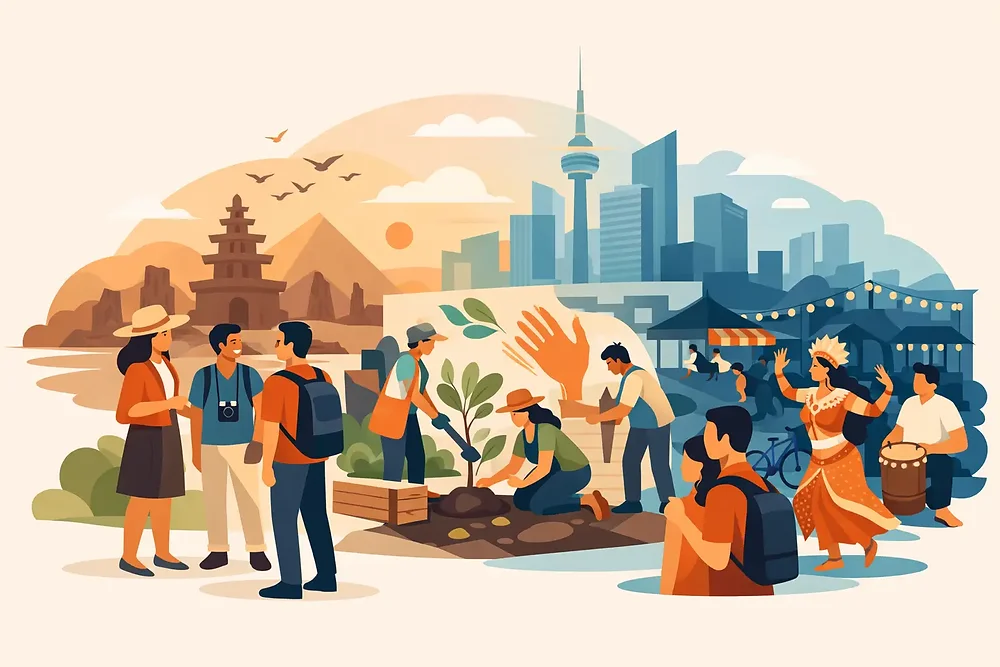
You can walk the same street two different ways. One version is a checklist - photo, landmark, coffee, move on. The other is a mission. A clue pulls you into an alley you would have skipped. A local story changes what that building means. A challenge makes you pay attention. That shift is what immersive travel experiences do best: they turn passive sightseeing into active discovery.
For travelers, that changes the emotional payoff of a trip. For tourism brands, guides, and cultural organizations, it changes the product itself. The old model asked people to follow along. The new model invites them to participate.
What immersive travel experiences actually mean
The phrase gets used loosely, so it helps to be precise. Immersive travel experiences are not just scenic hotels, themed restaurants, or tours with better visuals. They are travel experiences designed to make the visitor feel involved in the place, not just present in it.
That involvement can come from storytelling, location-triggered content, game mechanics, augmented layers, local interaction, or self-guided decision-making. The common thread is agency. The traveler is doing something - solving, choosing, collecting, noticing, responding - rather than simply receiving information.
A standard city tour might tell you that a square was once a market. An immersive format might ask you to find traces of that history in the architecture, unlock the next stop through a riddle, and reveal a character-led story once you arrive. Same city. Completely different energy.
Why immersive travel experiences feel more memorable
Most people do not remember trips as a clean sequence of facts. They remember moments when they felt surprise, curiosity, tension, play, or connection. Immersion works because it adds those layers to real places.
Interactivity sharpens attention. When a traveler is following clues, making choices, or chasing a goal, they notice more. Details stop being background scenery and start becoming part of the experience. That creates stronger recall than a passive walk with information delivered stop by stop.
There is also a freedom factor. Travelers increasingly want structure without being managed. They want to explore on their own schedule without losing the richness of local context. Self-guided interactive formats hit that sweet spot. You keep the flexibility of independent travel, but the city still feels curated, designed, and alive.
That is especially true in urban destinations, where visitors are surrounded by options and can easily default to the same top-ranked attractions everyone else sees. Immersion gives the city texture. It helps travelers feel like they are inside the story of the place, not standing outside it.
The shift from tours to real-life exploration games
This is where the market is moving fast. Travelers are comfortable using their phones as their map, camera, translator, booking tool, and social layer. Turning that device into an exploration engine is a natural next step.
What makes the format compelling is not technology for its own sake. It is the combination of real-world movement and digital motivation. GPS can trigger story beats at the right place. Challenges can pace a route without making it feel rigid. Virtual collectibles can reward curiosity. Timed missions can make familiar neighborhoods feel new.
When done well, the phone does not distract from the destination. It frames it. It gives people a reason to look closer, move further, and stay engaged longer.
That is why interactive self-guided tours are gaining traction over static audio products. A voice in your ear can inform you, but it rarely changes your behavior. A challenge-based experience can. It can send you off the obvious path, create anticipation between stops, and make every discovery feel earned.
Where immersive travel experiences work best
Cities are the natural home for this format because density creates possibility. A few blocks can hold layered history, visual contrasts, hidden corners, local legends, and commercial energy. That gives creators plenty to work with.
Historic districts are an obvious fit, but not the only one. Food neighborhoods, waterfronts, arts corridors, university zones, nightlife areas, and redeveloping industrial districts can all support immersion if the story design is strong. Sometimes the best route is not the most famous one. It is the one with enough texture to sustain curiosity.
The audience matters too. Solo travelers often want autonomy without feeling isolated. Couples want a shared activity that is more engaging than simply wandering. Friend groups respond well to competition, timed challenges, and collaborative problem-solving. Families need flexible pacing and simple mechanics. One format does not serve all of them equally, so design choices matter.
That is also the commercial opportunity. A destination does not need to sell one generic walking tour to everyone. It can package different immersive travel experiences for different moods, time windows, and traveler types.
The business case for destinations and creators
For tourism operators and city-focused brands, immersion is not just a creative upgrade. It is a stronger product strategy.
First, it expands access. A guided tour is limited by schedule, staffing, language, and group size. A mobile-first interactive experience can run throughout the day, support multiple user types, and serve travelers who prefer independence. That creates reach without forcing every experience into the same operational model.
Second, it makes local knowledge more marketable. Guides, historians, artists, and cultural organizations often have powerful stories but limited digital infrastructure. Packaging that knowledge into interactive, location-based products creates a new revenue layer. The content becomes scalable without losing place-specific character.
Third, immersive design can improve dwell time and distribution. If an experience encourages visitors to move through less trafficked streets, engage with multiple stops, or spend longer in a district, that has value for local businesses and destination managers. It can also help spread demand beyond overcrowded hotspots.
There are trade-offs, of course. Not every story benefits from gamification. A solemn memorial site, for example, needs careful tone control. Some audiences want depth and reflection more than challenge mechanics. Technology also has to stay friction-light. If the experience feels confusing, battery-hungry, or overly complicated, immersion breaks fast.
That is why the strongest products are not built around features. They are built around fit - story, audience, place, and interface all working together.
Designing better immersive travel experiences
The best experiences start with a simple question: what should the traveler feel while moving through this place?
If the answer is suspense, the route and clue structure should build tension. If the answer is wonder, the experience needs visual reveals and moments of pause. If the goal is local connection, then neighborhood voices, insider detail, and grounded storytelling matter more than flashy mechanics.
Good design also respects movement. Cities are not game boards in the abstract. They have weather, noise, crowds, construction, uneven pacing, and unpredictable distractions. An experience that looks clever on paper can fail in the street if the route is awkward or the instructions are too dense.
This is where concise storytelling wins. People on foot do not want to read a wall of text at every stop. They want clear prompts, quick emotional hooks, and a reason to keep going. Momentum matters.
A strong immersive route usually balances four elements: narrative, challenge, orientation, and reward. Too much narrative, and it becomes static. Too much challenge, and it starts to feel like homework. Too much freedom, and people lose the thread. Too much reward without substance, and it feels gimmicky.
The sweet spot is a guided sense of progression with enough room for personal discovery.
What travelers should look for before booking
Not all immersive products are equally immersive. Some use the language while delivering little more than a digital brochure.
The useful test is simple. Does the experience ask you to do anything beyond showing up and pressing play? Does it respond to your location? Does it create a sense of progression? Does it reveal local stories in a way that changes how you move through the place?
It also helps to check the intended pace and style. Some experiences are built like treasure hunts. Others feel cinematic and story-led. Some are social and competitive. Others are reflective. The right choice depends on whether you want a playful afternoon, a date activity, a solo city mission, or a deeper cultural layer during a trip.
Platforms such as Leplace are pushing this category forward by treating the city itself as the interface - not just the backdrop. That matters because the future of urban tourism will not be built on louder commentary. It will be built on better participation.
The future of immersive travel experiences
The next wave is not about replacing real travel with virtual effects. It is about making physical places more interactive, more personalized, and more story-rich.
As creators gain better tools, we will see more niche routes, more local voices, and more flexible formats that work for tourism, events, education, and culture. A neighborhood can become a playable story. A museum district can become an after-hours quest. A city festival can become a layered exploration challenge that keeps people moving and engaged.
That opens a bigger idea. Travel does not have to be consumed the same way by every visitor. Places can be published, not just promoted. They can be experienced as living narratives shaped by movement, choice, and discovery.
The travelers who remember a city most clearly are usually the ones who felt part of it. If your next trip gives you a role to play instead of a route to follow, you will probably come home with better stories.
Enjoyed this post?
Comments
Be the first to comment.