
Oct 4, 20267 min read
Location Based Tourism Makes Cities Playable
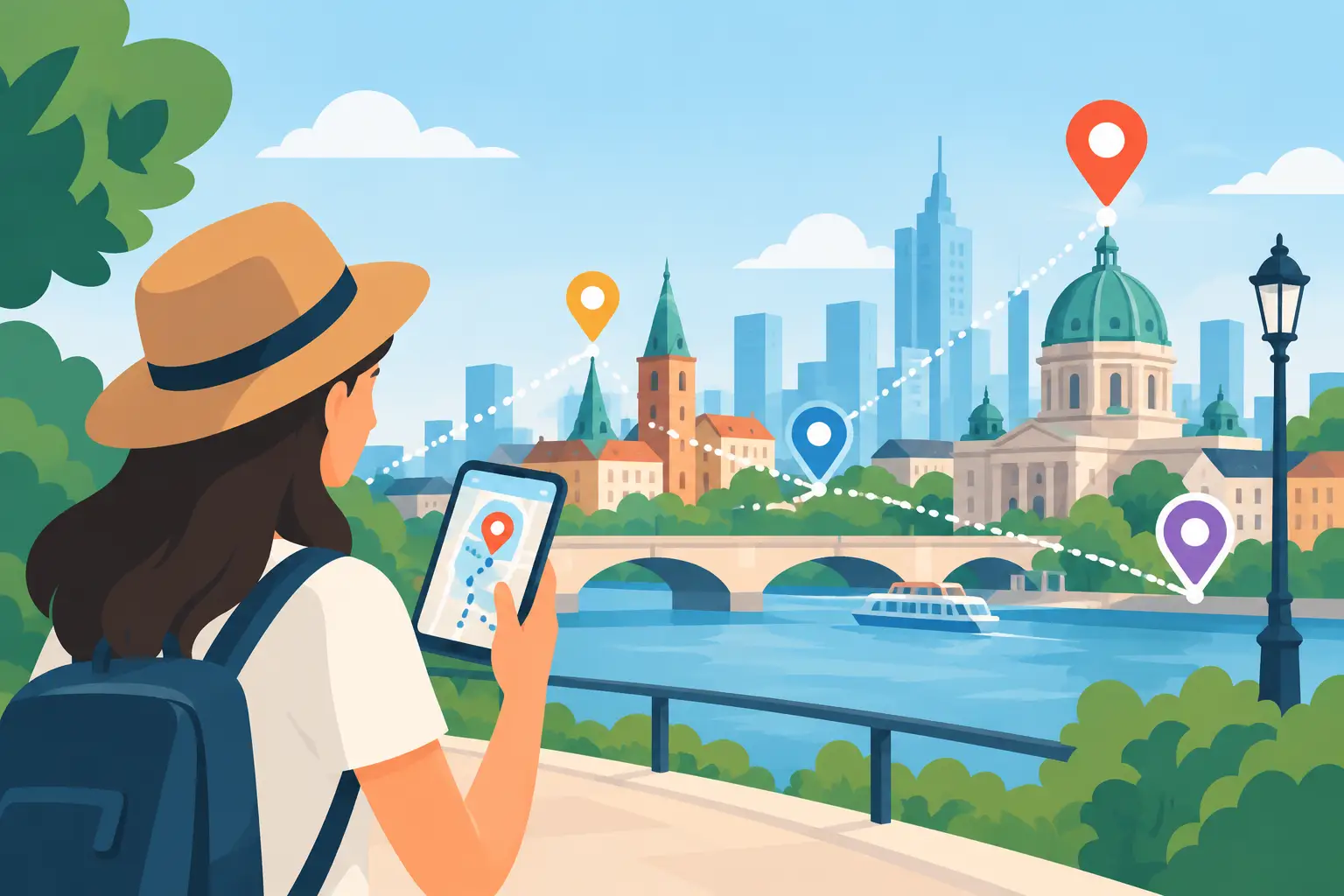
A city becomes more memorable when it asks you to do something. Follow a clue through a historic district. Find the detail hidden on a building facade. Reach a viewpoint before the next story appears. Location based tourism turns the phone in a traveler’s pocket into a live connection between digital content and the real world.
That shift matters because travelers are no longer satisfied with simply being told where to look. They want to move, choose, discover, and feel that the city is responding to them. For destinations, guides, museums, and event teams, it creates a more flexible way to package local stories into experiences that can run far beyond a fixed tour schedule.
What Location Based Tourism Actually Means
Location based tourism uses a visitor’s physical position to trigger or shape a travel experience. GPS, geofencing, maps, mobile sensors, QR markers, and augmented reality can all play a role. The technology is useful, but it is not the experience. The experience is what happens when a person arrives at the right place and the city reveals its next layer.
A basic version might open a short story when someone reaches a landmark. A richer version can guide players through a self-led route, deliver puzzles at specific locations, award virtual collectibles, and create branching choices based on what they decide to explore. The strongest experiences make place feel active rather than passive.
Think of the difference between reading a plaque and being asked to use that plaque to solve a mystery. Both can communicate history. Only one gives the visitor a reason to pay closer attention, continue walking, and tell someone about it later.
Why Travelers Want More Than a Map Pin
Maps have made travel easier, but they have also made it easy to skim a city. Visitors search for the top-rated spot, walk there, take a photo, and move on. Location-aware experiences slow that pattern down without making the day feel like a lecture.
For solo travelers, an interactive route can add direction and confidence. It replaces the uncertainty of “what should I do next?” with a lightweight mission that still leaves room for spontaneous stops. Couples and friend groups get a shared activity that does not require matching everyone’s museum interests. Families can turn a neighborhood walk into a challenge instead of a negotiation.
The appeal is not just gaming. It is agency. Travelers can start when they want, pause for coffee, take a detour, and continue without losing the thread of the experience. A guided group tour still has a place, especially when expert interpretation or personal access is the point. But a mobile-first format serves a different need: independent discovery with enough structure to make time in a city count.
From Sightseeing to Real-Life Exploration Games
The most compelling location-based tours borrow the logic of games without turning every destination into a cartoon. A challenge gives people a purpose. Progress creates momentum. Rewards make small discoveries feel earned.
A historic waterfront, for example, can become a route where visitors collect fragments of a lost merchant’s journal. A food district can lead people to neighborhood stories between tasting stops. An arts festival can send attendees to installations, backstage details, and pop-up performances that might otherwise be missed.
This approach works because it connects storytelling to movement. Visitors do not just hear that a street was important. They stand on it, notice its scale, look at its architecture, and complete a task that anchors the story in memory. The city becomes the interface.
There is a commercial advantage, too. When a route deliberately connects landmarks, independent shops, public spaces, and lesser-known cultural sites, it can spread visitor activity beyond the same crowded attractions. That needs thoughtful design. The goal is not to push foot traffic into residential streets or treat local businesses as props. It is to create respectful, valuable reasons to explore more of a destination.
The Building Blocks of a Great Location-Based Experience
A good route starts with one clear promise. Is it a ghost story after dark, a hidden architecture challenge, a family-friendly treasure hunt, or an insider introduction to a creative neighborhood? Trying to be everything at once creates a route that feels like a list of pins.
The narrative should give each stop a reason to exist. Local facts are stronger when they answer a question, reveal a conflict, or help players make progress. A creator does not need a cinematic production budget to make this work. A sharp story, a well-framed challenge, and a surprising detail often beat a long block of text.
Pacing matters just as much. Put early wins close together so participants understand how the experience works. Alternate walking, reading, looking, and solving. Build in natural stopping points near restrooms, transit, food, or scenic places. A two-hour route that feels varied will outperform a one-hour route that feels repetitive.
The final layer is the mobile experience itself. Instructions must be clear outdoors in bright sunlight. GPS triggers need a reasonable radius, especially around tall buildings or narrow streets. Content should load quickly and give users a fallback when location accuracy drops. Nothing breaks immersion faster than standing at the correct landmark while a screen insists otherwise.
Location Based Tourism for Destinations and Creators
For tourism organizations, location-based formats make local storytelling more scalable. A destination can create seasonal trails, neighborhood campaigns, event activations, and off-peak experiences without requiring a guide to lead every departure. The same platform can support different visitor types, from first-time tourists to residents looking for a new weekend activity.
For guides and creators, the model creates a product that can keep working after a live tour ends. Their expertise becomes a digital experience that can be sold, updated, localized, and offered to travelers on their own schedule. That does not replace human-led touring. It expands the menu. A guide may use a digital route as an entry product, a self-guided option for busy dates, or a companion experience for guests who want to keep exploring.
Leplace is built around this opportunity: interactive self-guided tours that combine GPS-based discovery, story-driven challenges, and real-world gameplay. It gives creators and tourism partners a way to turn local knowledge into mobile experiences without building a technology stack from scratch.
The business case depends on the use case. A city campaign may prioritize engagement, dispersion, and destination awareness. A tour creator may prioritize ticket revenue. A museum may want to bring visitors from its gallery into the surrounding district. The metrics should follow the goal: completions, dwell time, route starts, return visits, partner redemptions, or direct sales.
Design for Trust, Not Just Engagement
More interaction is not automatically better. Location tracking can feel helpful when it delivers the next clue at the right moment, but intrusive when travelers do not understand what data is being collected. Be clear about permissions, collect only what the experience needs, and explain the benefit in plain language.
Accessibility also belongs in the first draft, not the final checklist. Routes should identify stairs, steep terrain, uneven surfaces, long crossings, and limited-access hours. Offer alternative paths where possible. Use readable type, captions for audio, and challenges that do not depend entirely on color, sound, or fast movement.
Local accuracy deserves the same care. A great digital experience can lose credibility with one outdated opening hour or one careless cultural claim. Work with people who know the place, review content regularly, and let local voices shape the story. Travelers can sense the difference between a route made from search results and one made with genuine knowledge.
How to Choose the Right Format
The right format depends on the place and the audience. Dense historic centers are ideal for walking mysteries, architectural quests, and layered storytelling. Larger destinations may need bike, transit, or driving routes. A short event activation can use quick checkpoints and instant rewards, while a cultural trail may benefit from a slower pace and deeper interpretation.
Start with the behavior you want to encourage. If the goal is to help visitors discover overlooked neighborhoods, build a route that rewards wandering beyond the headline attractions. If the goal is family engagement, keep the tasks visual, active, and easy to share. If the goal is premium storytelling, focus on fewer stops with stronger audio, visuals, and exclusive access.
The most successful location-based experiences do not ask travelers to stare at a screen all day. They use the screen to direct attention back to the street, the people, the details, and the stories already waiting there.
A city does not need more generic tours. It needs reasons for people to look up, take the next turn, and realize they have found something that could not have happened anywhere else.
Enjoyed this post?
Comments
Be the first to comment.