
Aug 7, 20267 min read
Mobile Tours That Get Played - Guide for Tourism Boards
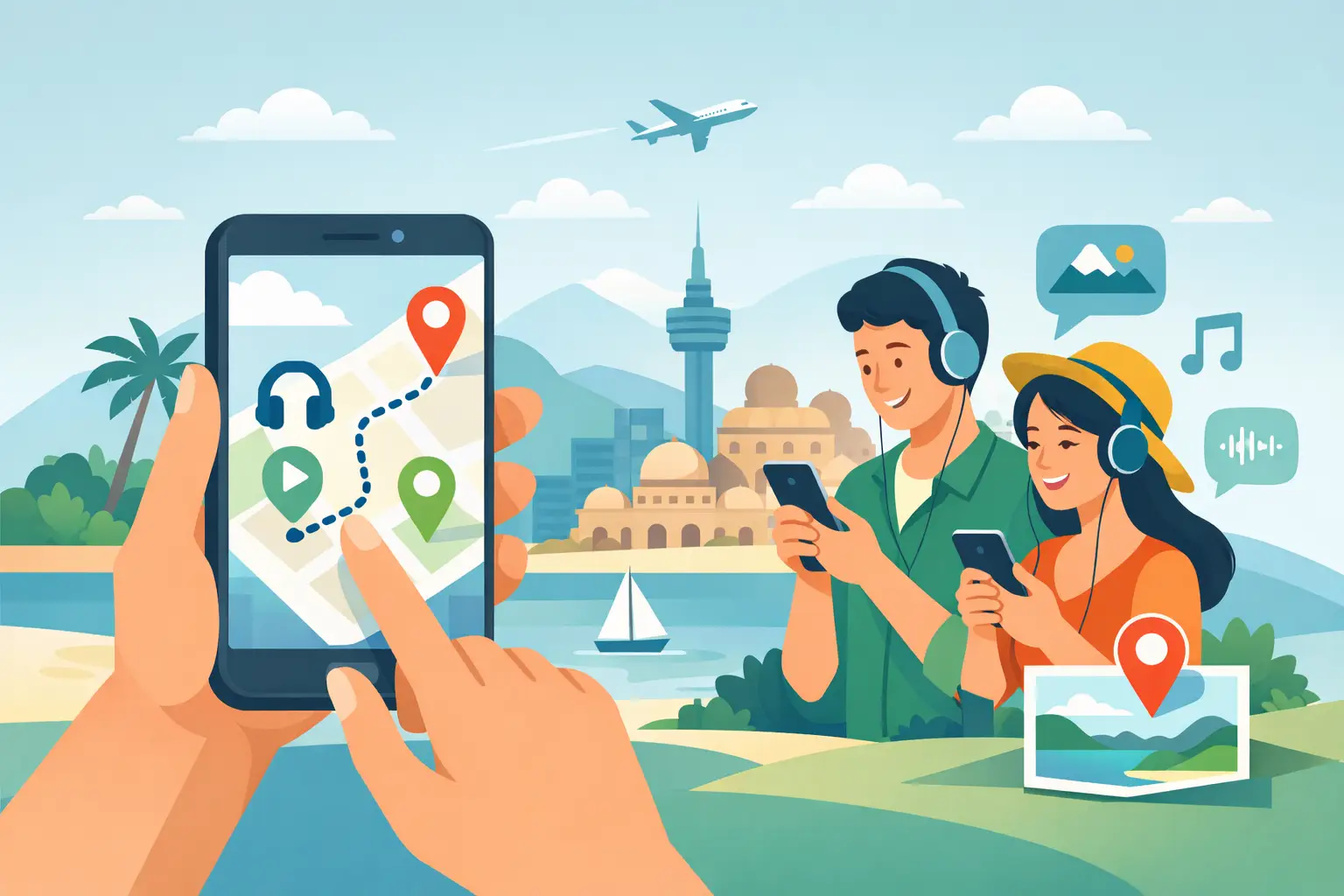
A visitor can stand in front of a landmark, read one plaque, take one photo, and move on. Or they can follow a clue through a hidden courtyard, collect a virtual artifact, hear a local story at the exact place it happened, and choose the next stop themselves. That is the shift mobile tours for tourism boards can create: less passive sightseeing, more real-world participation.
For destination teams, the opportunity is bigger than replacing paper maps or adding another audio guide. A well-designed mobile experience can spread visitors beyond the obvious hotspots, make local stories feel personal, support partners across a district, and give travelers a reason to stay out longer. The phone is already in their hand. The question is whether it leads them somewhere memorable.
Why mobile tours for tourism boards are changing the visitor journey
Tourism boards have long faced a difficult balance. Visitors want freedom, but destinations need to shape flow. Travelers want authentic local knowledge, but staff cannot personally guide every person at every hour. And every city has stories worth telling, yet many are invisible unless someone knows where to look.
Interactive self-guided tours address that gap. They turn a destination into an experience layer visitors can access when it suits them: before a museum opens, after a conference session, during a rainy afternoon, or on a late-night walk through a historic district. GPS prompts, challenges, multimedia, and map-based progression can make exploration feel active without making it complicated.
The strongest formats do not try to digitize a brochure word for word. They use the mobile screen to create momentum. A traveler receives a prompt, walks to a real place, notices a detail, makes a choice, and earns the next part of the story. That small loop is what makes an ordinary route feel like a real-life exploration game.
This matters for destinations with crowded centers, overlooked neighborhoods, seasonal pressure, or limited visitor-services capacity. A mobile tour can invite guests toward a waterfront, public art corridor, food market, heritage site, or independent business area that deserves more foot traffic. It can also offer a useful alternative for solo travelers and small groups who want flexibility without sacrificing depth.
Build an experience, not a digital brochure
A tourism board does not need to turn every attraction into a game. In fact, too many prompts can make a tour feel like a quiz with scenery attached. The best experience starts with a clear visitor promise: what will someone discover, feel, or understand by the end?
A ghost-story route might use atmosphere, audio, and evening timing. A family trail could use visual observation challenges and short distances. A food-focused tour may introduce local makers, suggest optional stops, and use collectible badges to create a sense of progress. A cultural route might pair archival images with the present-day street, letting visitors compare what changed and what remains.
The technology should serve the story. GPS can trigger content at the right moment. Virtual item collection can reward curiosity. Timed challenges can add energy to a group outing. AR-style moments can create shareable visual payoff. But each feature needs a reason to exist. If it does not help visitors see the place differently, it is decoration.
Start with one audience and one behavior
Broad visitor appeal sounds attractive, but it often produces generic content. Define the first audience more tightly. Is the tour designed for weekend couples looking for a memorable date activity? Cruise passengers with two hours in town? Conference attendees who need a post-event experience? Families exploring during school breaks?
Then decide what behavior matters. Perhaps the goal is to extend dwell time in the downtown core, move visitors toward less-visited cultural sites, generate off-season activity, or increase participation in a citywide festival. A mobile tour works best when its route, tone, and rewards are built around that outcome.
For example, a destination seeking to disperse crowds should not build a ten-stop route around its busiest square. It might begin there, then use a story hook to pull people toward quieter streets, local galleries, and neighborhood businesses. The route becomes both a visitor experience and a smarter flow strategy.
Make local voices part of the product
Visitors can find basic facts anywhere. What they cannot easily find is the voice of the place.
Bring in guides, historians, artists, chefs, architects, community groups, and business owners. Ask for the strange detail, personal memory, local debate, or overlooked object that changes how someone sees a familiar block. These contributions create texture, and they help a tourism board avoid the polished-but-generic language that makes every destination sound the same.
There is a practical trade-off here. More contributors can produce richer stories, but they also require editorial standards. Establish a clear approach to factual accuracy, tone, permissions, image rights, accessibility, and updates. A creator-friendly platform can make publishing faster, but destination stewardship still needs human judgment.
Design the route for the street, not the screen
A great mobile tour should make people look up. It should not trap them in a screen while they walk past the very thing they came to see.
Keep instructions short and location cues clear. Use a mix of obvious landmarks and small discoveries so visitors feel confident without feeling led by the hand. Plan for the physical reality of the route: crosswalks, hills, shade, construction, opening hours, restroom access, and places to pause. A clever challenge is not worth sending a traveler into an unsafe or frustrating situation.
Route length matters too. A 45-minute experience can be ideal for arrivals, event activations, and families with limited attention. A two-hour route may better suit culture-driven visitors. Rather than forcing one long journey, destinations can create connected chapters. Someone who completes a downtown mission today can continue with a waterfront or nightlife route tomorrow.
Accessibility should be designed from the beginning, not added as a late note. Consider step-free alternatives, readable text, captions, audio options, color contrast, language needs, and pacing for different mobility levels. Not every route can suit every traveler, but clear expectations let people choose confidently.
Measure what a brochure never could
Mobile experiences create a more useful feedback loop than static materials. Completion rates, route drop-off points, dwell time, popular stops, repeat play, and post-tour ratings can reveal where the experience is working and where visitors lose interest.
The numbers should guide improvement, not become the whole story. A low completion rate may mean the route is too long, but it could also mean travelers had a wonderful experience and stopped at a café halfway through. Pair platform data with partner feedback, visitor comments, and on-the-ground observation.
Tourism boards should track a focused set of outcomes:
- Starts, completions, and average time spent on the experience
- Engagement with individual stops, challenges, and story formats
- Visitor movement toward target districts or partner locations
- Satisfaction, recommendations, and intention to return
- Revenue from paid tours, promoted experiences, or local offers
Privacy needs to be part of the design. Explain what data is collected, why it is used, and how it is protected. Trust is especially valuable when a destination is asking visitors to share location data during a real-world experience.
From campaign asset to always-on destination product
A mobile tour can launch around a festival, major event, museum exhibition, or seasonal campaign. That is a smart way to create urgency. But the bigger opportunity is building an experience that remains useful after the campaign banners come down.
Think of the tour as destination infrastructure. It can be refreshed with new stories, adapted for new neighborhoods, localized for different visitor groups, and expanded through local creators. A single campaign route may become a network of interactive trails that gives travelers more reasons to explore on a second or third visit.
This is where platforms such as Leplace can help tourism teams move from a one-off digital project to a publishable, scalable format. Instead of building custom technology for every idea, destinations can focus their energy on the part no platform can invent for them: the story only their place can tell.
The strongest mobile experiences leave visitors with more than a list of sights. They leave them with a moment they want to retell: the clue that led them through an alley, the local character they met through audio, the hidden view they would have missed, or the small victory of finding the next stop. Build for that moment, and your destination will stay with them long after the map closes.
Enjoyed this post?
Comments
Be the first to comment.