
Aug 7, 20267 min read
Self Paced City Adventures That Feel Alive
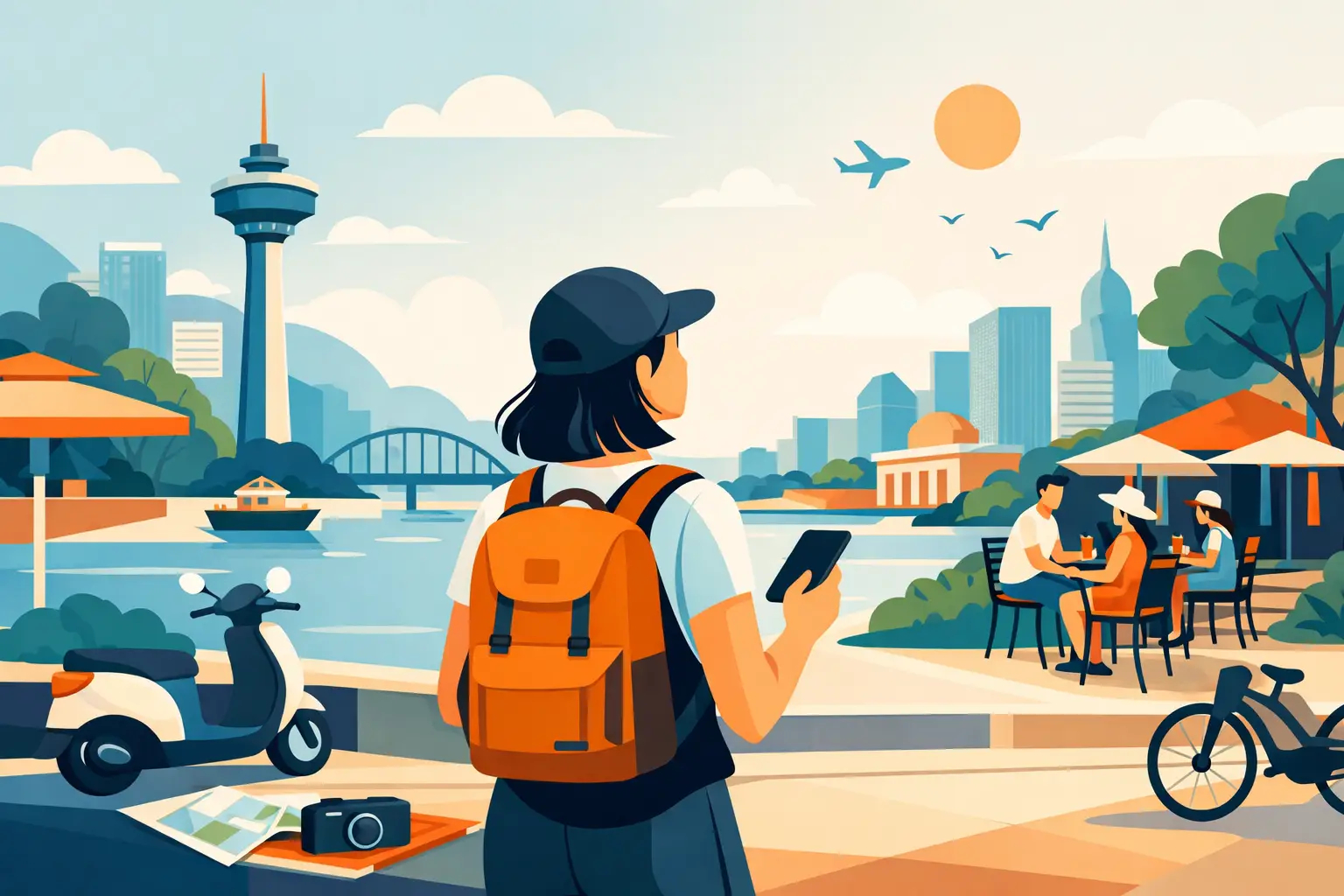
A 9 a.m. museum slot, a 12:30 reservation, and a 3 p.m. group tour can make a new city feel oddly familiar: scheduled, rushed, and watched from the outside. Self paced city adventures offer a different kind of access. They let you follow curiosity down a side street, pause for coffee when the view is right, and turn the walk between landmarks into part of the experience.
That freedom does not have to mean wandering without purpose. The best self-guided experiences combine local storytelling, GPS-aware prompts, small challenges, and a clear route to create momentum without putting you on someone else’s clock. You are still discovering the city. You are simply doing it at your own speed.
Why Self Paced City Adventures Are Changing the City Break
Traditional tours solve a real problem: a knowledgeable person helps visitors understand what they are seeing. But they also come with fixed starts, group pacing, and a route designed for the average participant. If you want ten more minutes in a historic courtyard, need to take a call, or spot a neighborhood market worth exploring, the group keeps moving.
Self paced city adventures preserve the useful part of guided travel - context - while giving the traveler control. A mobile experience can reveal the story behind a building, send you toward a hidden mural, or challenge you to notice a detail most people pass without seeing. The city becomes active rather than decorative.
This format works especially well for solo travelers, couples with different energy levels, friend groups with competing interests, and repeat visitors who have already checked off the obvious sights. It also fits the reality of modern travel. People plan on their phones, adjust on the fly, and want an experience that can start when they are ready, not when a guide raises a flag.
The appeal is not only flexibility. It is participation. A good route asks you to look, choose, solve, collect, compare, and move. That small shift turns sightseeing from a list of places into a real-life exploration game.
What Makes a Self-Guided Adventure Worth Your Time
Not every digital walking route feels like an adventure. A map with a few paragraphs of text may be useful, but it can still feel like homework. The strongest experiences build a sense of progression. Each stop should create a reason to reach the next one.
Story is the starting point. Maybe you are tracking the traces of a vanished music scene, following the decisions that shaped a waterfront, or investigating the strange symbols hidden in a city center. A theme gives the route a point of view. It helps a visitor remember more than isolated facts.
Interactivity is what keeps the story moving. Challenges can be simple: find an architectural detail, answer a location-based question, reconstruct a historical moment from clues, or collect virtual items at key places. These mechanics are not there to turn every walk into a competition. They create attention. When people have a mission, they notice the city differently.
Place matters, too. The experience should use the streets as more than a backdrop. A compelling route makes sense only where it happens. It connects the narrative to a particular alley, square, bridge, park, or independent storefront. That is where generic travel content gives way to local discovery.
Finally, the route needs practical intelligence. Clear directions, realistic timing, accessible stops, and the ability to pause are not glamorous features, but they determine whether the experience feels freeing or frustrating. A three-mile exploration can be exciting. It should not surprise someone who expected a casual 45-minute stroll.
The right pace depends on the day
There is no single ideal pace. A visitor with one open afternoon may want a focused, 90-minute route through a compact district. Someone staying for a week may prefer a looser experience that can be paused across multiple days. A family may need rest stops and low-pressure challenges, while a group of friends might want a score, a timer, and a reason to debate every clue.
That is the advantage of a self-guided format: the experience can adapt without losing its structure. Take the detour. Skip the line. Stay for the street musician. The route is still there when you are ready to return.
How to Build a Better Day Around Self Paced City Adventures
Start with an intention, not a packed itinerary. Decide what kind of energy you want from the day: historic intrigue, food-led wandering, public art, local legends, architecture, or a competitive scavenger-hunt feel. This makes it easier to choose an experience that matches your mood instead of choosing solely by what happens to be nearby.
Then leave room around the route. If an adventure is advertised as two hours, do not schedule it between two fixed commitments with exactly two hours to spare. Give yourself extra time for wrong turns, photos, a local recommendation, or a stop that earns your attention. Freedom only works when the calendar allows it.
Use your phone as a guide, not a barrier. Keep it ready for prompts and navigation, but look up between stops. The point is not to complete screens while walking through a city. The point is to use technology to direct your attention back to the real world.
It also helps to make a few practical choices before you begin. Charge your device, bring headphones if the experience includes audio, check the weather, wear shoes suited to the route, and save enough battery for the trip back. These details may sound obvious, but they are what keep spontaneous exploration from ending early.
For groups, agree on the game before the first clue. Are you trying to finish quickly, take the best photos, learn the most, or find the best stop along the way? A shared expectation avoids the familiar travel argument where one person wants to linger and another wants to “keep moving.” A good city adventure can support both, but only if the group knows what it wants from it.
When Games Make Local Stories More Memorable
Gameplay is often misunderstood as a distraction from culture. Used badly, it can be. If every location becomes a meaningless checkpoint, the experience loses the texture that makes travel valuable.
Used well, game mechanics create a reason to pay attention. A clue can make you inspect a sculpture. A location challenge can lead you through a district you would otherwise bypass. A digital collection can create a satisfying record of the places you reached. The game is not replacing the city. It is giving the city a more active role.
This is particularly powerful for stories that are hard to see at first glance. Industrial history, migration, resistance, creative communities, and lost landmarks often need interpretation. A challenge-based route can reveal those layers in a way that feels less like a lecture and more like participation.
For creators and tourism organizations, that creates a bigger opportunity than digitizing a brochure. They can package local knowledge as an experience people choose, complete, share, and return to. Leplace gives guides, cultural organizations, and destination teams a mobile-first way to turn those place-based stories into interactive tours without building a platform from scratch.
The Trade-Offs Are Real
Self-guided does not automatically mean better. A great live guide can read a room, answer unexpected questions, adjust to the weather, and share the kind of personal perspective no app can fully replicate. For a complex site, a private guide or small group tour may still be the best choice.
Technology also has limits. GPS can drift between tall buildings. A phone screen can pull attention away from the street. Some visitors simply prefer conversation and the reassurance of a human host. The answer is not to force every traveler into the same format.
The strongest travel plans mix modes. Choose a live guide when direct expertise and dialogue matter most. Choose a self-paced experience when you want flexibility, a playful mission, or the confidence to explore beyond the standard route. The city is big enough for both.
Make the City Respond to Your Curiosity
A memorable city break is rarely defined by how many attractions you managed to fit into a day. It is defined by the moment you found a place that felt personal: the overlooked doorway, the unexpected story, the street you only reached because a clue sent you there.
Choose an adventure with a clear story, give it more time than you think it needs, and let the route make room for the unplanned. Your phone can show you where to go next. Curiosity decides what happens when you get there.
Enjoyed this post?
Comments
Be the first to comment.