
Aug 7, 20267 min read
Urban Tourism Experience Platform Built for Play
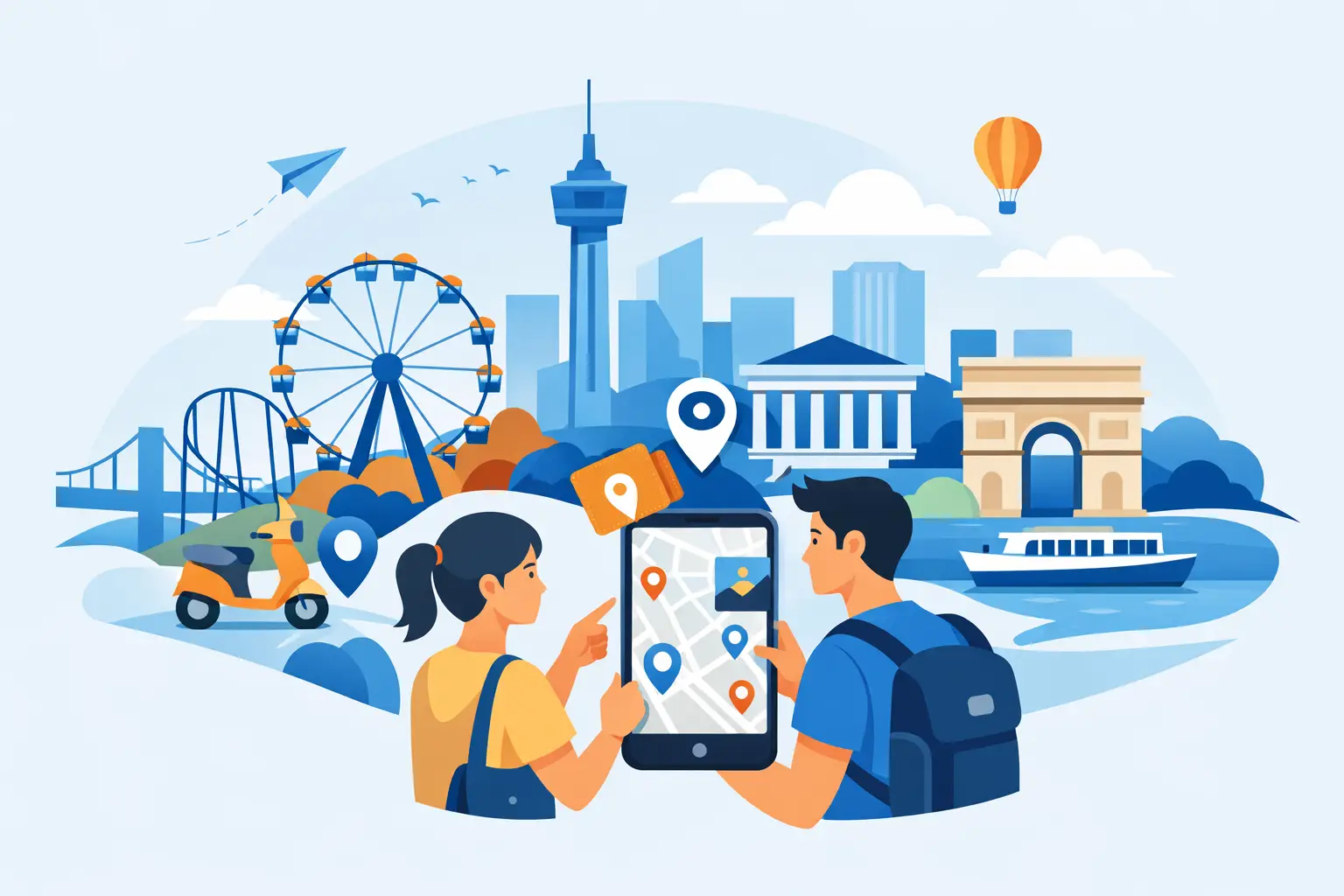
A city is not a checklist of landmarks. It is a living game board full of side streets, local legends, overlooked architecture, food rituals, and stories that only make sense when you are standing in the right place. An urban tourism experience platform turns that potential into a mobile adventure, giving travelers a reason to look up, move farther, and participate instead of simply listening.
For visitors, that means more freedom than a scheduled group tour and more energy than a standard audio guide. For guides, destination teams, museums, and event organizers, it creates a practical way to package local knowledge as a digital product people can discover, buy, and play on their own schedule.
Why the usual city tour is losing momentum
Traditional tours still have a place. A great guide can read a group, answer unexpected questions, and make history feel personal in a way no screen can fully replace. But fixed departure times, large groups, and one-way narration do not fit every traveler or every destination.
Many visitors arrive with a phone already in hand and a limited window to explore. They want to choose their pace, take a detour when something catches their attention, stop for coffee without losing the group, and keep going when curiosity takes over. They also expect digital experiences to react to them, not just play at them.
That is where interactive self-guided tours change the format. Rather than asking people to follow a line of map pins, a well-designed experience gives them a mission. Find a hidden detail. Solve a location-based clue. Collect a virtual item. Follow a character through a neighborhood. The city becomes the interface.
The difference matters because participation creates memory. Visitors are more likely to remember the mural they had to locate, the market story they uncovered through a challenge, or the square where they solved the final puzzle. They are not only consuming information. They are building their own route through it.
What an urban tourism experience platform should do
An urban tourism experience platform is more than a map with audio clips. It combines place-based storytelling, mobile navigation, gameplay, and creator tools in one environment. The traveler sees a compelling experience. Behind the scenes, a local creator or organization has a system for shaping, publishing, and managing it.
At its best, the platform brings together four layers: GPS-aware exploration, story-driven content, interactive tasks, and a simple path to access or purchase. Those layers can support a quick 45-minute neighborhood game, a half-day cultural route, or a multi-stop event activation.
Real locations, not generic content
The strongest experiences are designed around what cannot be copied into another city. A historic alley, a local character, a forgotten industrial site, a waterfront view, or an annual tradition can become the center of a mission. Generic trivia weakens the feeling of place. Specific stories make people feel they have found something real.
That does not mean every stop needs a famous landmark. Often, the best moments come from the places travelers would otherwise pass without noticing. A challenge can turn a quiet facade into a clue, a public artwork into a conversation, or a small business district into a route worth sharing.
Gameplay with a purpose
Points, badges, timed tasks, virtual collections, and treasure-hunt mechanics can add momentum, but they should never be decoration. The game mechanic needs to serve the story and the location.
For example, a mystery route can use clues to reveal a city’s hidden history. A food-focused experience can ask players to identify ingredients, trade traditions, or neighborhood specialties. A family route can use simple visual challenges that keep children engaged without forcing adults into a childish experience.
The trade-off is clear: too little interaction feels passive, while too much complexity pulls attention away from the street. The right experience makes the phone a guide, not the main attraction.
Flexible access for modern travelers
Self-guided experiences work because they respect real travel behavior. A visitor might start at 9 a.m., pause for lunch, resume after a museum visit, or complete only part of a route before catching a train. Mobile-first delivery gives them that control.
It also extends the reach of local expertise. A guide is no longer limited to leading one group at one time. A destination can offer a story after office hours. An event organizer can create an experience for hundreds of people without placing a staff member at every checkpoint. That scale does not replace human hosts. It gives travelers another valuable way to explore.
From local knowledge to a sellable experience
Cities are filled with people who already know what visitors want to discover: guides, historians, artists, food experts, cultural institutions, hotels, and neighborhood advocates. The challenge has been turning that knowledge into a product without hiring a development team or building a custom app.
Creator infrastructure changes the equation. With tools for building routes, attaching media, setting challenges, defining location triggers, and publishing access, a local expert can focus on the experience itself. The platform handles the mobile delivery layer.
Leplace brings this approach together through interactive tours and exploration games that let creators turn real-world stories into digital experiences. A guide can create a paid city quest. A tourism board can launch a seasonal route. A cultural organization can build an outdoor extension of an exhibition. Each format starts with the same asset: local knowledge with a point of view.
Design for a clear audience
A great route is not designed for “everyone.” A solo traveler looking for a two-hour cultural walk has different needs from a group of friends seeking a competitive Saturday activity. Couples may value scenic pacing and shared discoveries. Conference attendees may need a quick, social experience close to the venue.
Start with a simple promise. Is the experience a hidden-history quest, an architecture game, a local food trail, or a family-friendly discovery route? That promise should shape the story, route length, challenge style, visual tone, and price.
Build a route with rhythm
The best city experiences alternate between movement, discovery, and reward. Do not place five dense information stops in a row. Give players a reason to walk, then offer a satisfying reveal. Add moments to pause, notice, photograph, or choose a direction.
Practical route design matters as much as creative writing. Check walking distances, elevation, street crossings, lighting, public access, opening hours, and mobile signal. A dramatic clue is not useful if the site is inaccessible after 5 p.m. or blocked during a recurring market.
Price the experience around value
Not every digital route needs a price tag. Free experiences can drive foot traffic, support a destination campaign, or add value to a cultural event. Paid experiences work when the route offers meaningful original content, polished gameplay, exclusive access, or a distinctive story travelers cannot get from a free search.
Pricing depends on the city, length, audience, and creator reputation. A short game can be a low-friction impulse purchase. A premium, multi-hour route with original research and immersive content can justify more. The key is to make the value obvious before a player starts.
Where interactive city experiences create the biggest impact
The format is especially effective when a place needs more engagement, not just more visibility. Historic districts can direct attention beyond the headline attractions. Destination brands can spread visitors across neighborhoods and reduce pressure on overcrowded sites. Museums can bring indoor stories outdoors through location-based missions.
Events also benefit. A citywide festival can use a digital quest to connect separate venues. A brand activation can replace a passive giveaway with a route people actively play. Hotels can offer guests an immediate way to explore the surrounding area without handing over another printed map.
There is no single winning format. A small town may benefit from a compact story trail that keeps visitors in the center longer. A major city may need themed routes for different interests and repeat visits. The platform should support both without making creators compromise their local character.
The next city experience is participatory
Travelers do not need more content competing for their attention. They need a reason to engage with the street in front of them. When local stories, smart route design, and game mechanics work together, a walk through the city becomes something people talk about afterward.
The opportunity is simple: turn the places people pass through into places they can play, understand, and remember. Build the route around a story worth following, then let the city do what it does best - surprise them.
Enjoyed this post?
Comments
Be the first to comment.