
Amsterdam, Netherlands2 min read
Blauwbrug Amsterdam: History, Design and Bridge 236
Blauwbrug on Google Maps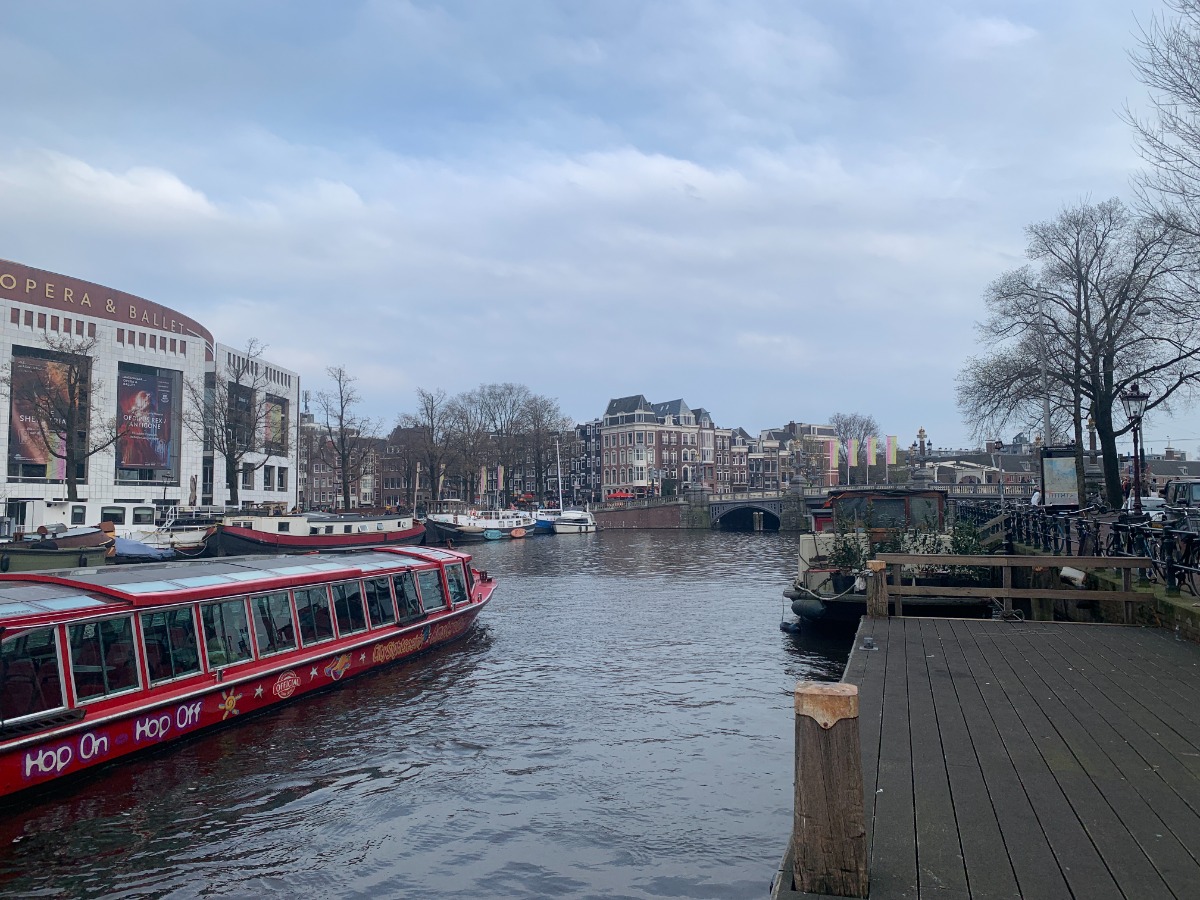
Blauwbrug is a historic bridge over the Amstel in Amsterdam, Netherlands. It connects the Rembrandtplein area with the Waterlooplein area and lies south of the Stopera. Amsterdam numbers its bridges, and Blauwbrug is bridge 236.
Its location makes Blauwbrug more than a crossing: the bridge sits where the Amstel becomes especially wide and curves through the city. Its present form also reflects a specific moment in Amsterdam’s history, when the city was preparing for an important exposition.
What is Blauwbrug in Amsterdam?
Blauwbrug is the bridge carrying the connection between the Rembrandtplein and Waterlooplein areas across the Amstel. The Stopera stands to its south, making the bridge part of a compact stretch of Amsterdam where the river, civic buildings and historic squares meet.
The city’s numbering system gives Blauwbrug an official identity as well as a familiar name: it is bridge 236. That number is part of Amsterdam’s wider system for identifying its many bridges.
Why was Blauwbrug built in its present form?
The current Blauwbrug replaced an earlier bridge at the same location. When the first trams arrived, the older bridge had become too narrow, creating the need for a wider structure.
The present bridge opened in 1883. Its architects drew inspiration from the Alexander III bridge in Paris, giving Blauwbrug a more expressive design than a purely practical crossing. It was intended as a show-off bridge for the Colonial Exposition of 1883, so its appearance was part of the message: this was a bridge built to be noticed.
What can you notice from Blauwbrug?
The Amstel is particularly wide at Blauwbrug and makes a curve beside it. That shape is important to the bridge’s setting: the water does not run in a straight urban channel here, but opens out before bending through Amsterdam.
Following the Amstel with the river on your left leads by bicycle towards the countryside. Historically, this water route also brought butter, milk and drinking water into the city. Those goods were sold at the Buttermarket, which the route material places later along the river’s course.
What is the Stopera beside Blauwbrug?
The Stopera is Amsterdam’s town hall and stands south of Blauwbrug. It opened in 1986 and is also used for ballet and opera performances.
The name combines Stadhuis, the Dutch word for town hall, with Opera. From Blauwbrug, the Stopera provides a modern civic and cultural counterpoint to the bridge’s 1883 design.
How can you visit Blauwbrug?
Blauwbrug appears as stop 12 of 26 on the Amsterdam Bicycle Tour. The route places the bridge alongside its Amstel setting and the surrounding city landmarks, giving you a way to encounter bridge 236 as part of Amsterdam’s connected river landscape.
The tour that visits Blauwbrug
Each one is a self-guided route you can start whenever you like.
Amsterdam · 6h 15m
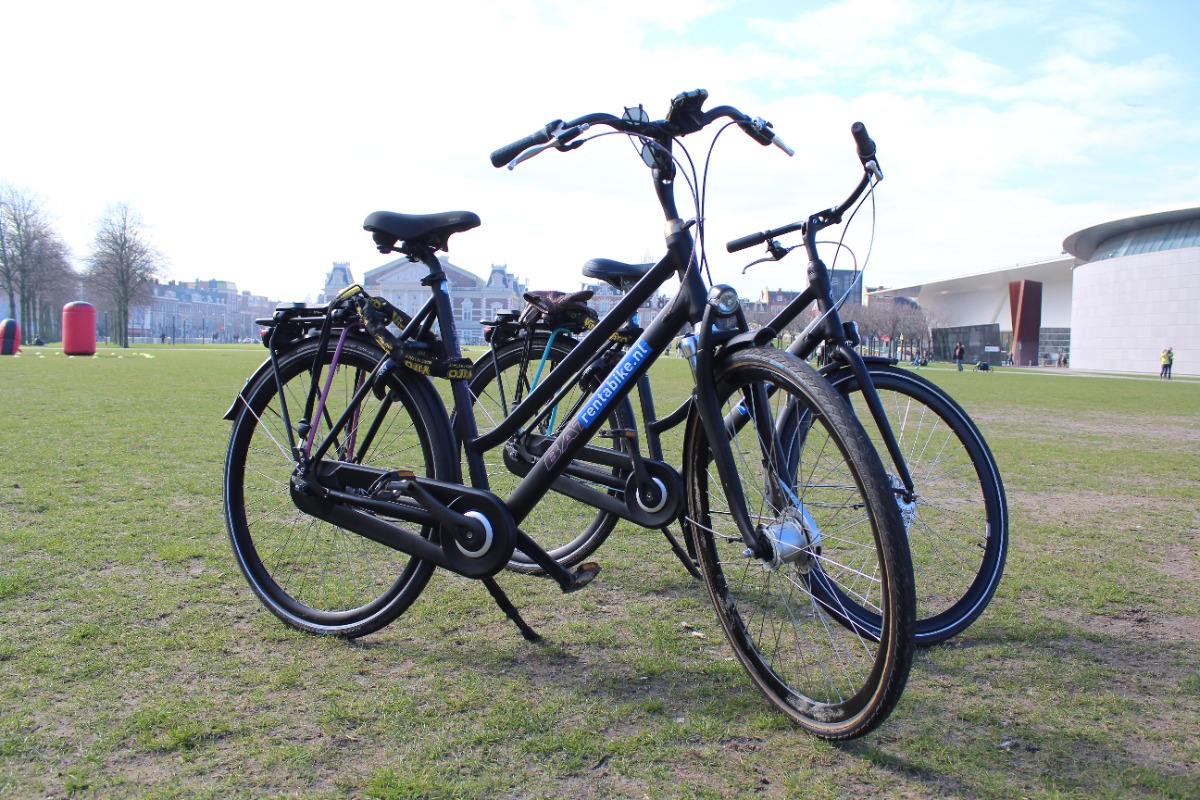
Amsterdam Bicycle Tour
The tour should last about 2.5 hours, maybe something more, depending on how quickly you move, how long you spend on a break, and how much random craziness happens on your tour. Your start is at Damp…
- places
- Amsterdam
- Blauwbrug
- bridges
- Amstel
- Waterlooplein
- Rembrandtplein