
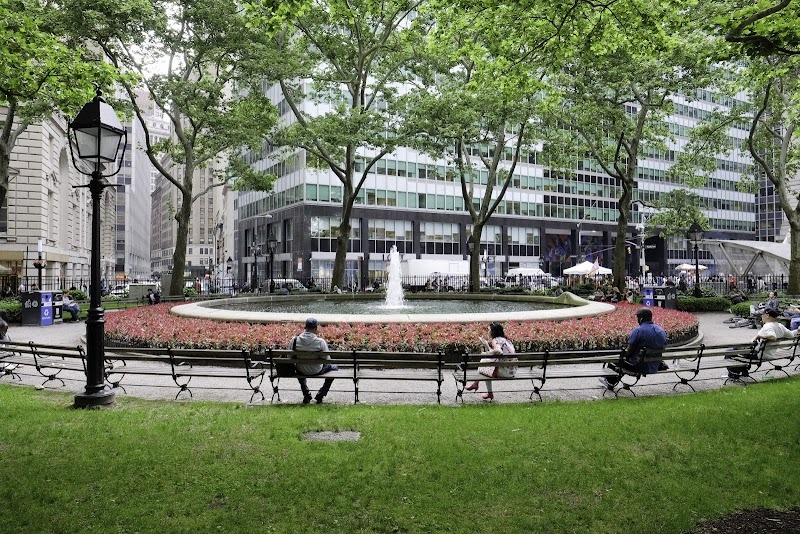
Bowling Green New York, NY is a small historic public park in the Financial District of Lower Manhattan, at the southern end of Broadway. Built in the 18th century next to the site of the original Dutch fort of New Amsterdam, it is New York City's oldest public park and remains surrounded by its original 18th-century cast iron fence.
What is Bowling Green New York, NY?
Bowling Green is a public park whose history reaches back to New Amsterdam and British New York. Its position at the southern end of Broadway places it beside the site of the original Dutch fort, linking this small green space to the earliest European settlement in the area.
The park's most distinctive surviving feature is its original 18th-century cast iron fence. Bowling Green also takes its name literally: the park included an actual bowling green. That combination of an unusually old public space, a surviving historic enclosure, and its location beside the former Dutch fort site makes Bowling Green different from an ordinary downtown park.
Why is Bowling Green important in New York history?
Bowling Green served as a public gathering place before it was formally designated as a park under British rule in 1733. Its role was therefore both practical and civic: it was a place for people to gather, with the bowling green providing the specific recreation that gave the park its name.
Before the American Revolutionary War, a monumental equestrian statue of King George III stood in Bowling Green. In 1776, the statue was pulled down. The 4,000-pound bronze is said to have been melted for ammunition to fight the British, giving Bowling Green an unusually direct connection to the political rupture of the Revolution.
What can you see near Bowling Green today?
The landmark most closely associated with Bowling Green's surroundings is the Charging Bull, a massive bronze sculpture created by Arturo Di Modica after the 1987 stock market crash. Di Modica installed it illegally near Wall Street as guerrilla public art intended to symbolize resilience, confidence, and economic optimism after a period of market panic. It eventually became a permanent landmark near Bowling Green.
The bull's meaning comes directly from financial language. A bull market refers to rising stock prices, investor confidence, and economic expansion, while a bear market represents decline and pessimism. The Charging Bull consequently became associated with ambition, speculation, and the mythology of Wall Street, as well as visitor rituals connected with luck and prosperity.
For the natural next step beyond Bowling Green, follow The History of Wall Street & the NYSE - New York Tour, which includes the park's setting among its route stops.
The tour that visits Bowling Green
Each one is a self-guided route you can start whenever you like.
New York, NY · 1h 25m
The History of Wall Street & the NYSE — New York Tour
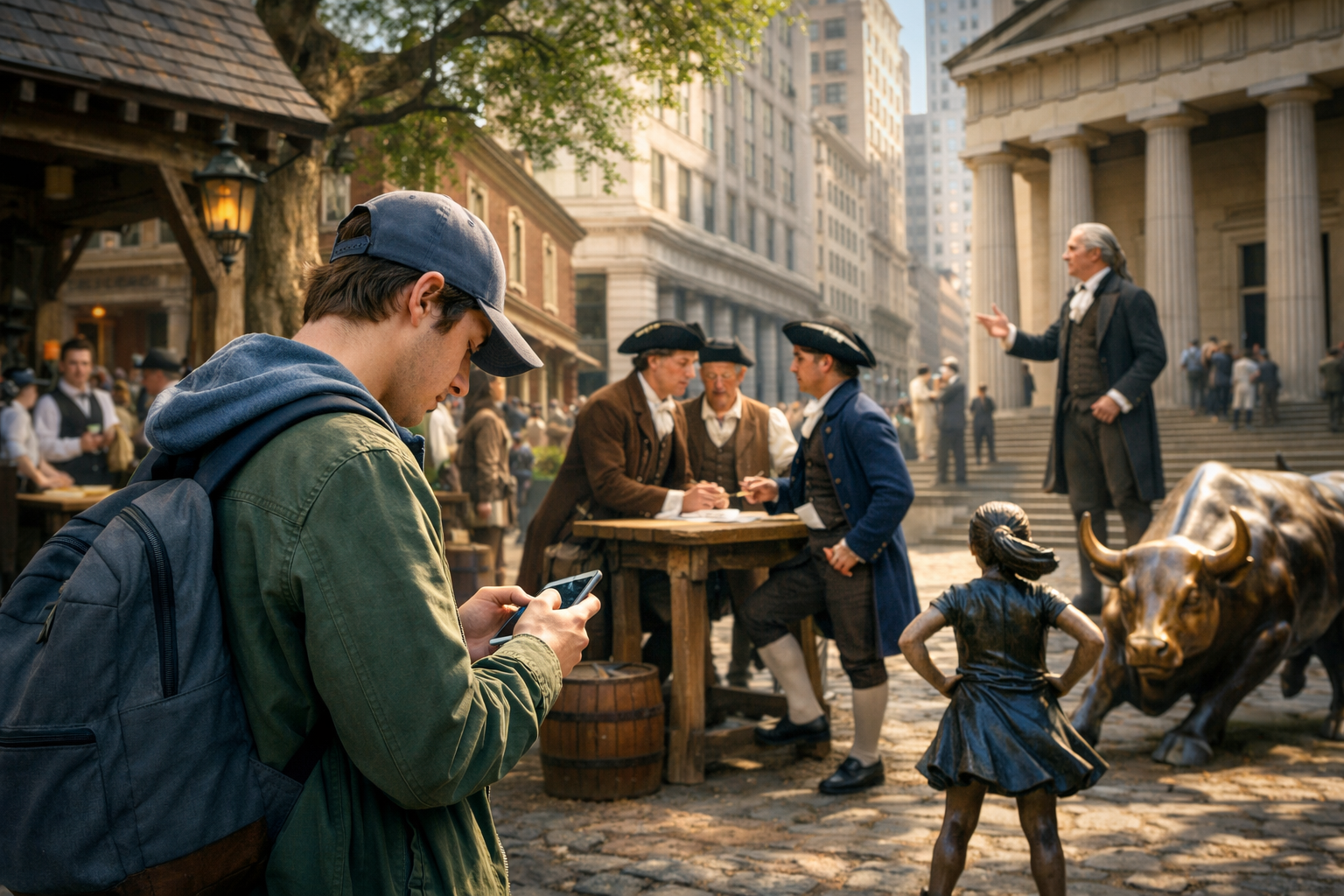
Explore the thrilling evolution of Wall Street, from its humble beginnings beneath a buttonwood tree to its reign as the world's financial capital. This immersive self-guided tour takes you to iconic sites like the NYSE, Federal Hall, the Charging Bull, and more. Uncover scandals, legends, and the dramatic stories behind the rise of American finance on the streets that built global capitalism.
- places
- New York, NY
- Bowling Green
- New York City history
- Lower Manhattan
- Financial District
- Wall Street