
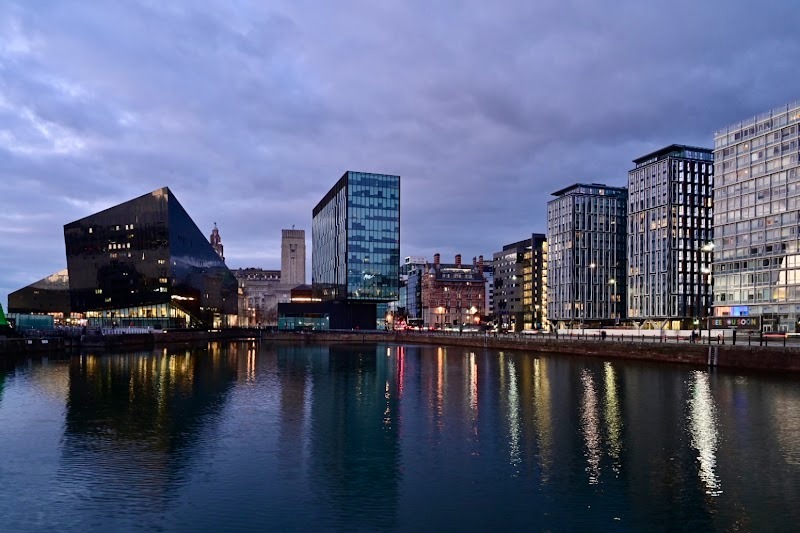
Canning Dock is a dock on the River Mersey and part of the Port of Liverpool in northern England. It sits within Liverpool's southern dock system, connecting south to Salthouse Dock and reaching the river through Canning Half Tide Dock to the west.
The Canning Graving Docks are accessed from Canning Dock, but they are distinct from the dock itself. Together, these connections show Canning Dock as part of a working waterfront system rather than an isolated basin: vessels, cargo and people moved between linked docks and the river.
What is Canning Dock in Liverpool?
Canning Dock is one of the connected dock basins that made Liverpool's waterfront a port. Its position between Salthouse Dock and Canning Half Tide Dock placed it within the southern dock system, while the access to the Canning Graving Docks connected it with facilities used for work on ships.
That physical arrangement matters because Canning Dock's role was not limited to berthing vessels. From the 1750s onward, ships preparing for outward passage often moored here for final outfitting before leaving the Mersey.
What happened at Canning Dock during Liverpool's trading history?
Canning Dock was a place where ships and cargo were prepared for Atlantic voyages. Surviving customs ledgers and port records describe textiles from Lancashire mills, brass and iron bars from Birmingham, firearms, gunpowder, alcohol and other manufactured goods being loaded for barter in African ports.
The dock's outfitting work also exposes the violence built into that trade. Carpenters sometimes installed additional “slave decks” in ships, creating cramped tiers for human cargo, while nearby blacksmiths produced chains and manacles. The Brookes was among the notorious slave ships associated with this dock network, although its exact outfitting location varied between voyages.
The Brookes' measured drawings became a central abolitionist image: they showed more than 400 enslaved Africans packed into a ship barely 100 feet long. The image reveals the brutality of the Middle Passage without separating that violence from the dockside systems that prepared ships for departure.
Merchant-financiers leased warehouse space near Canning Dock, managed cargo inventories and arranged maritime insurance from waterfront offices around the wider area and Exchange Flags. Captains used chandlers to obtain salted beef, ship's biscuit, dried beans and barrels of fresh water. Sailors were recruited in dockside taverns, signed onto crew lists and advanced small wages to buy sea gear.
Ships returning from the Americas and Caribbean entered Canning Dock carrying sugar, rum, coffee, tobacco and cotton, all products of enslaved labour. Those goods were stored in dockside warehouses or sent to local processing industries, including sugar refineries, tobacco works and cotton brokers.
What should you notice about Canning Dock's waterfront setting?
Notice Canning Dock as part of a connected system: Salthouse Dock lies to the south, while Canning Half Tide Dock provides access to the river to the west. The connection to the Canning Graving Docks adds another layer, linking the basin to ship-repair facilities without making the graving docks part of Canning Dock itself.
The surrounding setting helps explain how a voyage was assembled. Moorings, warehouses, chandlers, merchant offices and nearby workshops supported ship preparation and cargo handling. Canning Dock brought together shipwrights, sailors, merchants, insurers and warehouse operators, so its history is about the infrastructure around a voyage as much as the vessels berthed in the water.
Why does Canning Dock matter when you visit Liverpool?
Canning Dock brings together Liverpool's dock engineering, the commercial infrastructure of maritime trade and the violence and exploitation that supported the transatlantic slave trade. Its connections make it possible to examine a voyage as a system of outfitting, provisions, finance, insurance, cargo storage and crew recruitment.
For that history interpreted in context, follow the Canning Dock stop in the Liverpool Slave Trade Tour. The route places the dock's physical connections alongside the documented trading networks that operated around it.
The tour that visits Canning Dock
Each one is a self-guided route you can start whenever you like.
Liverpool · 1h 35m
Liverpool Slave Trade Tour
Walk in the footsteps of merchants, sailors, and enslaved Africans on this immersive outdoor tour of Liverpool's slave trade legacy. Explore historic docks, warehouses, and civic halls, uncovering hidden plaques and artefacts. Visit the International Slavery Museum and reflect at the Waterfront Viewpoint. This self-guided journey reveals the city's pivotal role in the transatlantic slave trade and challenges you to reckon with its enduring impact.
- places
- Liverpool
- Canning Dock
- River Mersey
- maritime history
- transatlantic slave trade