
Verona, Italy3 min read
Casa di Romeo Verona: History, Architecture and Literary Tradition
Casa di Romeo on Google Maps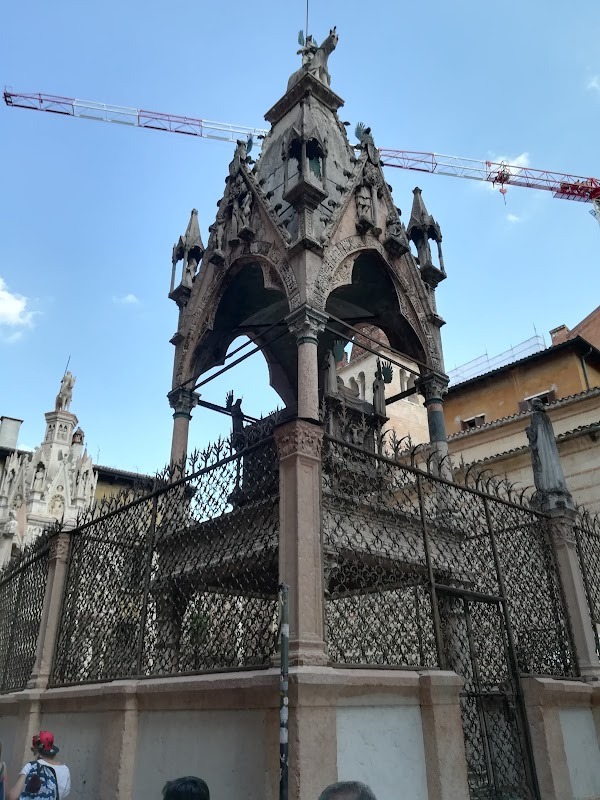
Casa di Romeo in Verona is a 13th-century medieval residence traditionally associated with Romeo Montague. No historical evidence links the building directly to a real Romeo, so its importance is literary and cultural: it represents the medieval setting behind the Romeo and Juliet legend.
The connection comes from centuries of literary tradition and interpretation in Verona, rather than from a documented biography. Casa di Romeo gives the legend a physical medieval setting shaped by family honour, political rivalry and conflict between opposing clans.
What is Casa di Romeo in Verona?
Casa di Romeo is a 13th-century residence whose association with Romeo Montague developed through the literary tradition surrounding Verona's famous lovers. The building should therefore be understood as a medieval place connected with the legend, not as a verified home belonging to a historical Romeo.
Its significance is the way it represents the world imagined by generations of writers: a city where noble families lived amid factional rivalry, political tension and threats from opposing clans. The building's historical value and its literary meaning meet here, but they are not the same claim.
What can you notice in Casa di Romeo’s medieval architecture?
The fortified brick façade, narrow windows, inner courtyard and defensive features are the details that make Casa di Romeo specifically relevant to the Romeo and Juliet tradition. They reflect the social world of noble families in medieval Verona, who lived amid rivalry and political enemies.
The façade's brick construction and defensive character are not proof that Romeo lived inside the residence. They are evidence of the kind of fortified urban environment that underlies the stories of rival clans. The narrow windows and inner courtyard add to that defensive character, showing a residence organised around protection as well as domestic life.
How did Casa di Romeo become connected with Romeo and Juliet?
The connection between the Montagues and the historical Montecchi family predates Shakespeare. In the Divine Comedy, written in the early 14th century, Dante Alighieri mentioned the Montecchi and Cappelletti as rival political factions involved in the violent struggles that divided northern Italian cities.
Around 1530, Luigi da Porto was among the first authors to place the tragic love story specifically in Verona and to use the names Montecchi and Cappelletti for the feuding families. Matteo Bandello later expanded the story in his Novelle. The plot eventually reached England and became the basis for Shakespeare's Romeo and Juliet.
Casa di Romeo represents this literary and cultural association, not a documented home of a historical Romeo. The Romeo and Juliet Verona Tour uses the residence as one of the places where that connection can be understood through Verona's medieval setting.
Where is Casa di Romeo in Verona’s historic centre?
Casa di Romeo stands near the Arche Scaligere, the monumental tombs of Verona's ruling dynasty. Its position places the residence within a historic-centre setting associated with aristocratic and political power.
That immediate context reinforces the building's defensive character and its connection with the factional rivalries behind the Romeo and Juliet tradition. Casa di Romeo is not an isolated literary prop: its architecture and setting together evoke the noble families, competing loyalties and family honour represented in the story.
For the place as one stop in a literary walk, the Romeo and Juliet Verona Tour includes Casa di Romeo as stop 5 of 7.
The tour that visits Casa di Romeo
Each one is a self-guided route you can start whenever you like.
Verona · 1h 15m
Romeo and Juliet Verona Tour
Walk in the footsteps of Romeo and Juliet on this immersive self-guided tour of Verona. Discover medieval houses, legendary balconies, and ancient tombs as you unravel the real history and enduring myths behind the world's most famous love story. Perfect for romantics, literature lovers, and curious explorers alike!
- places
- Verona
- Casa di Romeo
- Romeo and Juliet
- medieval architecture
- literary history