
Hiroshima, Japan2 min read
Children's Peace Monument Hiroshima: Meaning and History
Children's Peace Monument on Google Maps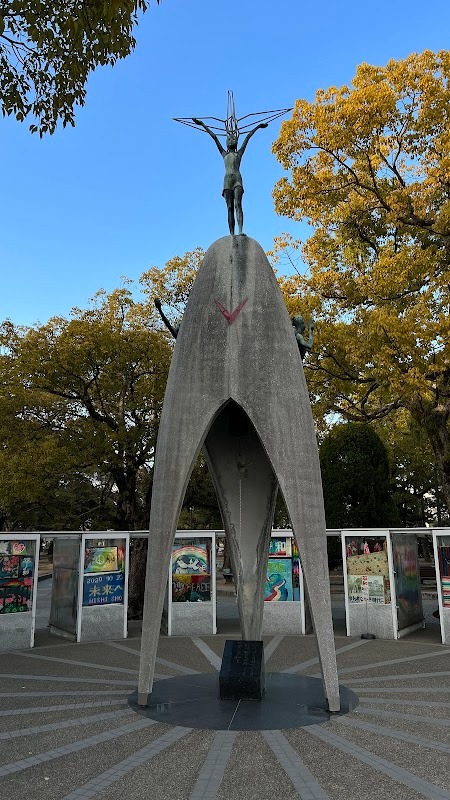
What is the Children's Peace Monument in Hiroshima?
The Children's Peace Monument is a peace memorial in Hiroshima, Japan, within Hiroshima Peace Memorial Park. It commemorates Sadako Sasaki and the thousands of child victims of the atomic bombing of Hiroshima on August 6, 1945.
The monument connects one child's story with the wider memory of children affected by the bombing. Its meaning is therefore both personal and collective: Sadako's life became a lasting symbol of the human cost of the atomic bombing, while the monument expresses a wish for peace.
Who was Sadako Sasaki?
Sadako Sasaki was two years old when she was exposed to radiation after the atomic bombing of Hiroshima. About a decade later, she developed leukemia and died on October 25, 1955, at age 12.
During her illness, Sadako folded origami cranes in her hospital bed. She had been inspired by the Japanese legend that folding a thousand cranes grants a wish. Her hopes were connected with recovery and peace, and the cranes became inseparable from the story of the monument that would later commemorate her.
Sadako's story shaped the monument because it gave the memorial a child's perspective. Rather than representing the bombing only through dates and destruction, the Children's Peace Monument recalls a young person's hopes and the many children whose lives were affected by the event.
What does the Children's Peace Monument look like?
The Children's Peace Monument was unveiled on May 5, 1958, Children's Day in Japan. It was built through the efforts of schoolchildren across Japan who were moved by Sadako's story.
At the top of the monument, a girl stands with her arms outstretched and holds a golden crane. The golden crane is presented as a symbol of hope and resilience, making Sadako's paper-folding story part of the monument's physical design.
Paper cranes gathered around the monument extend that meaning beyond the central figure. Millions of paper cranes are sent from around the world each year, and the cranes at the monument represent wishes for a world without war.
What should you notice when you visit the monument?
Begin with the girl whose arms reach upward and the golden crane above the monument. These details make the memorial's central message visible: Sadako's story is remembered through an image associated with hope and resilience.
Then notice the paper cranes gathered around the monument. They connect an individual child's story with the memory of many child victims, while also carrying the wishes of people around the world for a world without war.
The monument's setting within Hiroshima Peace Memorial Park is part of its identity. If you want to place it within a history-focused walk, the Hiroshima - War & Peace - Memorial, History, and Cultural tour visits the Children's Peace Monument as one of its stops.
The Children's Peace Monument remains a place where Sadako Sasaki's memory, the lives of Hiroshima's child victims, and the continuing message of peace meet in one carefully defined memorial.
The tour that visits Children's Peace Monument
Each one is a self-guided route you can start whenever you like.
Hiroshima · 1h 50m
Hiroshima - War & Peace - Memorial, History, and Cultural tour
Walk through Hiroshima's living history on this immersive one-day tour. Explore the Peace Memorial Museum, poignant memorials, and the iconic Atomic Bomb Dome. Take in sweeping city views from Orizuru Tower, find serenity at Gokoku Shrine and Hiroshima Castle, and reflect in the tranquil Shukkeien Gardens. Experience stories of tragedy, resilience, and hope at every step.
- places
- Hiroshima
- Children's Peace Monument
- Sadako Sasaki
- Japan
- peace memorials