
Avignon, France2 min read
Church of Saint-Agricol Avignon: History and Architecture
Church of Saint-Agricol on Google Maps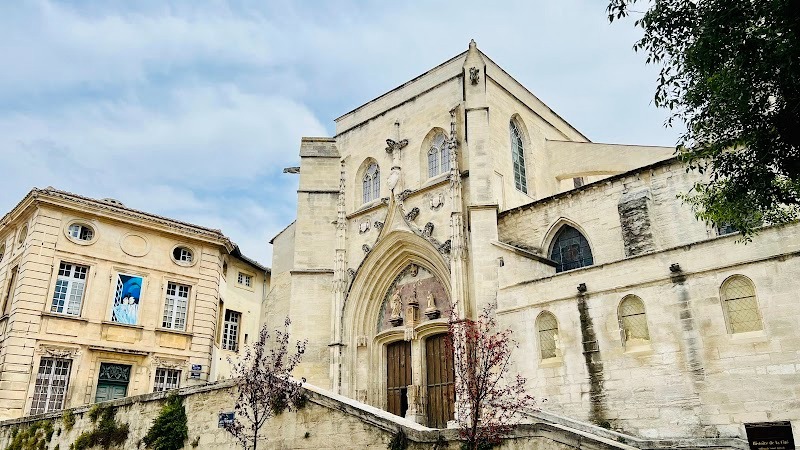
The Church of Saint-Agricol in Avignon, also called Église Saint-Agricol, is an enduring landmark on Rue Saint-Agricol. Named for Saint Agricola, a 7th-century bishop and patron saint of Avignon, it stands on a site where a church has existed since at least the 7th century.
According to tradition, Agricola was the son of Saint Magnus, who was also a bishop of Avignon. Agricola's name is associated with piety and with the protection of Avignon during drought and plague, giving the church a connection to both the city's religious identity and its history of seeking protection in times of crisis.
How did the Church of Saint-Agricol take shape?
The present Church of Saint-Agricol mainly reflects building work carried out between the 13th and 15th centuries. Its medieval form developed through several construction phases rather than being completed as a single structure.
The nave dates to the 13th century and retains characteristic pointed arches and early Gothic stonework. The choir and chapels were added in the 14th and 15th centuries, when Avignon was flourishing as a religious and administrative centre. These additions give the building a visible sense of development around its earlier Gothic core.
A striking bell tower, completed in the late medieval period, punctuates the church's silhouette with elegant austerity. Inside, medieval and Renaissance sculpture includes tombs of local clergy and benefactors, connecting the building's architectural history to the people who shaped and supported religious life in Avignon.
Why does Saint-Agricol matter in Avignon's history?
Saint-Agricol matters because the church preserves a local religious tradition beside one of the most important centres of medieval power in Europe. During the Avignon Papacy, from 1309 to 1377, the church stood near the political and theological heart of Europe.
It was not a papal church, but its proximity to the Palais des Papes placed it within a city visited regularly by cardinals, clerics and envoys. Saint-Agricol remained a site of local worship amid that concentration of political and religious power, linking the daily religious life of Avignon to the wider importance of the papal city.
What should you notice at the Church of Saint-Agricol?
Start with the church's position along Rue Saint-Agricol and its quiet dignity within Avignon. The street name itself preserves the building's close association with the city's patron saint.
Look for the contrast between the 13th-century nave, with its pointed arches and early Gothic stonework, and the later choir and chapels added in the 14th and 15th centuries. Then look up to the late-medieval bell tower, one of the defining features of the church's silhouette.
Inside, give particular attention to the medieval and Renaissance sculpture and to the tombs of local clergy and benefactors. To place these details within Avignon's wider medieval setting, follow Avignon: Where the Templars Fell, which includes Saint-Agricol as one of its stops.
The tour that visits Church of Saint-Agricol
Each one is a self-guided route you can start whenever you like.

Avignon · 1h 55m
Avignon: Where the Templars Fell
Step into Avignon's shadowy past on a self-guided walking tour tracing the dramatic downfall of the Knights Templar. Explore iconic sites like the Tour Philippe-le-Bel, Pont Saint-Bénézet, and Palais des Papes. Uncover secrets of faith, betrayal, and hidden relics as you walk in the footsteps of exiled knights and powerful popes. Each stop offers immersive stories, historic intrigue, and a touch of medieval mystery—perfect for history lovers and fans of the Cursed Kings saga.
- places
- Avignon
- Church of Saint-Agricol
- Église Saint-Agricol
- Avignon landmarks
- medieval architecture