
Brisbane, Australia3 min read
City Botanic Gardens Brisbane: A Convict-Era Landmark
City Botanic Gardens on Google Maps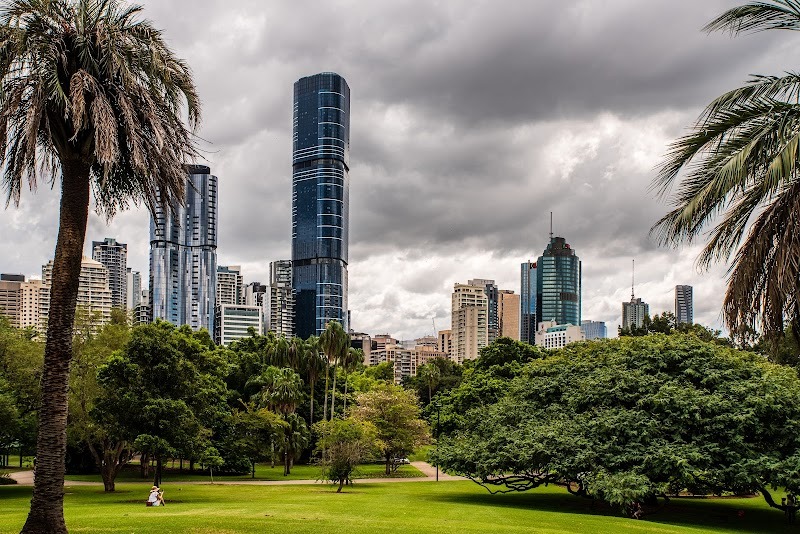
City Botanic Gardens Brisbane is a heritage-listed botanic garden on Alice Street in Brisbane, Queensland, Australia. Formerly known as Queen's Park, it occupies Gardens Point in Brisbane's central business district, bounded by the Brisbane River, Alice Street, George Street, Parliament House and the Queensland University of Technology's Gardens Point campus.
That setting is part of what makes the gardens distinctive: this is not an isolated green space, but a historic site shaped by the river, the city and the institutions around it.
What is City Botanic Gardens Brisbane?
City Botanic Gardens is Brisbane's heritage-listed botanic garden at Gardens Point. Its boundaries bring together several important parts of the city: the Brisbane River on one side, Alice Street and George Street on others, Parliament House, and QUT's Gardens Point campus.
The name Queen's Park belongs to the site's earlier identity. The present gardens also retain the physical and historical imprint of their first use, when the land was connected directly to the Moreton Bay penal settlement rather than functioning solely as a public garden.
How did City Botanic Gardens become a Brisbane landmark?
City Botanic Gardens was established in 1825 as a farm for the Moreton Bay penal settlement. In 1828, colonial botanist Charles Fraser selected the area for a public garden, but the land soon became important for growing edible crops, including maize and wheat, to sustain the growing settlement.
The site was officially declared a Botanic Reserve in 1855. Walter Hill became its first curator, bringing an experimental approach to the gardens. His work included attempts to cultivate sugar, tea, coffee, tropical fruits and grapevines—plants that connected this Brisbane site to the agricultural possibilities of Queensland.
Hill also worked with the Queensland Acclimatisation Society. Together, they helped turn the gardens into a place for propagating and distributing plant species from around the world. Under Hill's leadership, the gardens expanded to 27 acres by 1866.
What should you look for at the gardens?
The surviving details at City Botanic Gardens show that the site was a working colonial establishment as well as a place for plants. A superintendent's cottage emerged in the late 1850s, reflecting the people and administration needed to manage the gardens.
A platform for a battery of cannons was built in the early 1860s. Brisbane's first public drinking fountain was installed in 1867, adding another specifically civic feature to the site. The fence built from recycled stone from Brisbane's old gaol gives the gardens a direct material link to Brisbane's penal-colony history.
These features are useful markers when you explore the gardens because they make the site's history physical: cultivation, administration, defence, public amenities and reused colonial material all sit within the garden's story. The Convict & Colonial Brisbane tour includes City Botanic Gardens as stop 7 of 8, making the gardens one documented point within a wider route rather than the route's whole story.
What was the gardens' role in Queensland's development?
City Botanic Gardens helped test crops and cultivation methods that would influence Queensland's economy. Walter Hill's experiments produced Queensland's first granulated sugar in 1862, alongside successful cultivation of tea, coffee, tropical fruits and grapevines.
The gardens therefore belonged to Queensland's development in a practical way. They were a place where plant species could be tested, propagated and distributed, with Hill's work supporting the Queensland Acclimatisation Society's efforts to introduce plants from around the world. By the 1880s, much of the scientific research conducted in the gardens had moved to Bowen Park, marking a change in the site's research role.
Walk through City Botanic Gardens with its river-and-city setting in mind, and look for the surviving colonial-era details that reveal how the site moved from penal-settlement farm to botanic reserve and Brisbane landmark.
The tour that visits City Botanic Gardens
Each one is a self-guided route you can start whenever you like.
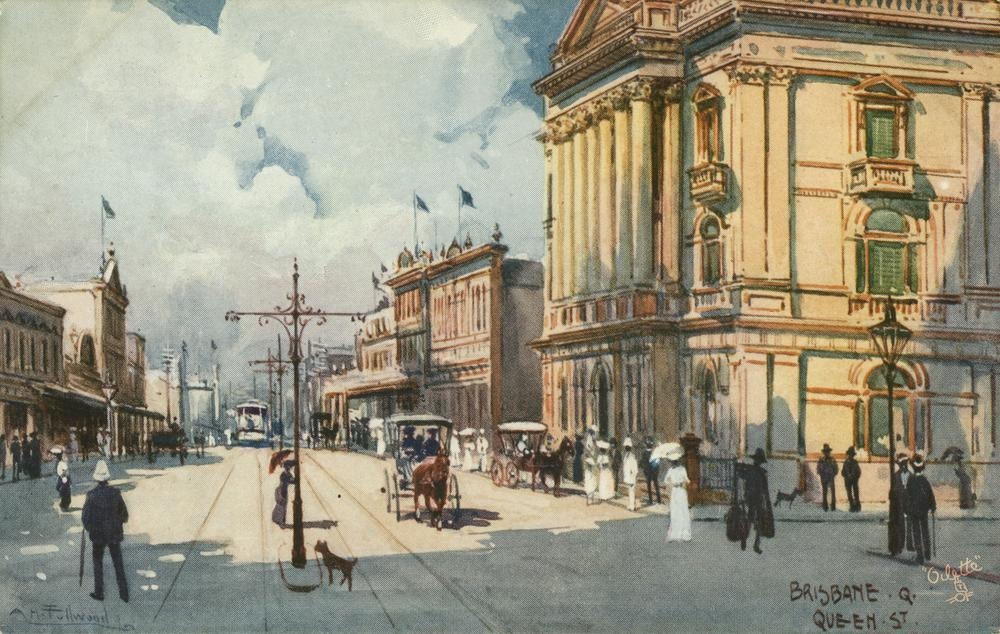
Brisbane · 1h 40m
Convict & Colonial Brisbane
Discover the hidden stories of Brisbane's dark past on this immersive tour. Walk in the footsteps of early convicts, explore historic sites, and learn about the harsh realities of life under penal settlement rule. Uncover the legacy of convict labor etched into the city's fabric. A journey through Brisbane's convict history like never before!
- places
- Brisbane
- City Botanic Gardens Brisbane
- Brisbane history
- Brisbane landmarks
- Queensland history
- self-guided city tours