
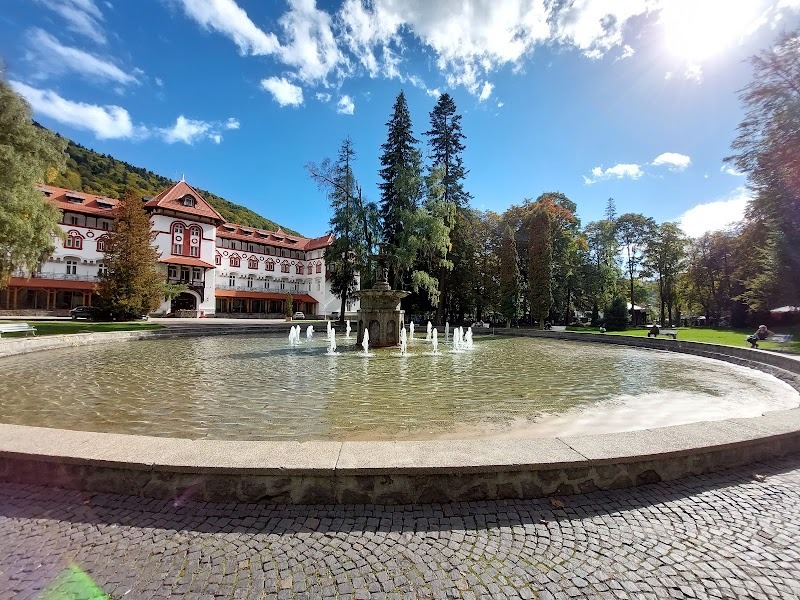
Dimitrie Ghica Park is Sinaia’s central landscaped public garden, established in the late 19th century as the town developed into Romania’s principal mountain resort. Sinaia lies in Prahova County, in the historical region of Muntenia, and the park preserves part of the public, royal-era resort landscape that grew around the town.
The park is named after Prince Dimitrie Ghica, a 19th-century Romanian statesman and former prime minister. Despite the name, Prince Dimitrie Ghica was not the park’s designer.
How did Dimitrie Ghica Park become part of Sinaia’s royal-era resort landscape?
Dimitrie Ghica Park developed gradually as Sinaia changed under King Carol I of Romania. Nearby Peleș Castle was constructed in the 1870s, and the railway arrived in 1879, contributing to the town’s urban development and strengthening its position as a mountain resort.
By 1900–1910, the park formed part of a resort setting with electric lighting, paved promenades, and landscaped green spaces intended for public leisure. Its role was not simply ornamental: Dimitrie Ghica Park became a central promenade where aristocrats, politicians, artists, and members of the growing Romanian bourgeoisie gathered during the summer season.
What should you look for in Dimitrie Ghica Park?
The defining feature to look for is the Fântâna din Parcul Dimitrie Ghica, the ornamental fountain located within the park. It dates to the turn of the 20th century, the same period when Sinaia was experiencing rapid urban development.
The fountain helps connect the park’s landscaped setting with the practical changes that made the resort feel modern for its time: electric lighting, paved walks, and public leisure spaces. It is also a specific point on The Royal Summer Dream, where the fountain appears as stop 2 of 8 for visitors who want to explore Sinaia’s royal-era story through a self-guided route.
Which Sinaia landmarks can you see around the park?
Dimitrie Ghica Park sits within a group of landmarks that show how Sinaia’s Belle Époque resort character took shape. The Cazinoul din Sinaia is a major landmark visible from the park. Inaugurated in 1912, the casino was built to attract high society tourism and became a focal point of social life, hosting concerts, receptions, and gambling events.
Hotel Caraiman and Hotel Palace, both identified as early-20th-century grand hotels, further defined the setting around Dimitrie Ghica Park. Together with the park’s fountain, paved promenades, and landscaped greenery, these surrounding buildings frame the garden as part of Sinaia’s transformation into a polished mountain resort rather than an isolated green space.
Visit Dimitrie Ghica Park to read Sinaia’s late-19th- and early-20th-century development through its public garden, fountain, promenade, casino, and grand hotels.
The tour that visits Dimitrie Ghica Park
Each one is a self-guided route you can start whenever you like.
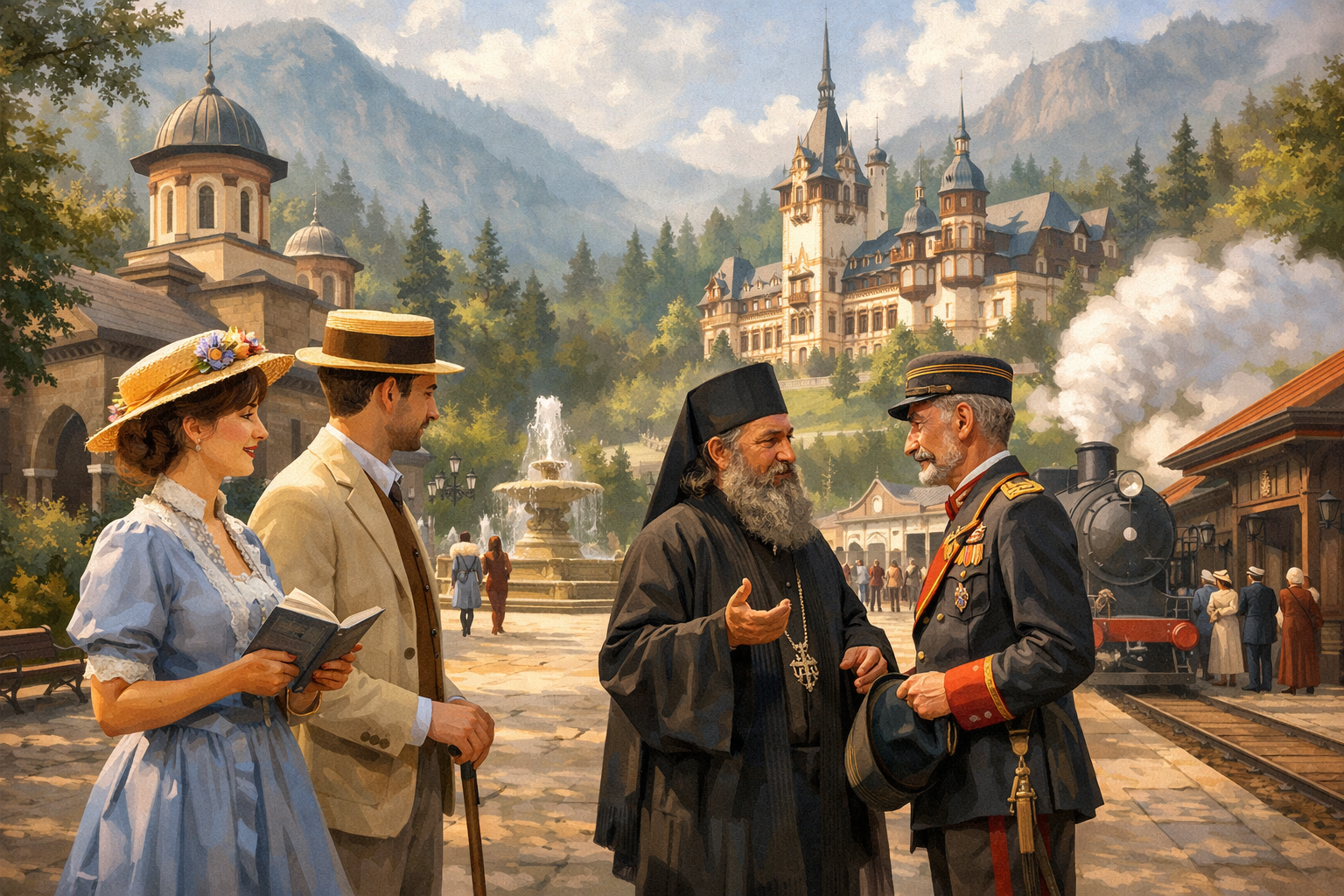
Sinaia · 1h 35m
The Royal Summer Dream
Embark on a self-guided adventure through Sinaia, Romania's royal mountain jewel. Walk in the footsteps of King Carol I and European aristocrats, exploring monasteries, palaces, grand hotels, and the legendary casino. Discover how a remote village became the 'Versailles of Romania'—where history, luxury, and intrigue meet.
- places
- Sinaia
- Dimitrie Ghica Park
- Romania
- Romanian history
- Belle Époque