
Abbeville, France2 min read
Collégiale Saint-Vulfran Abbeville: A Flamboyant Gothic Survivor
Église Collégiale catholique Saint-Vulfran, Abbeville on Google Maps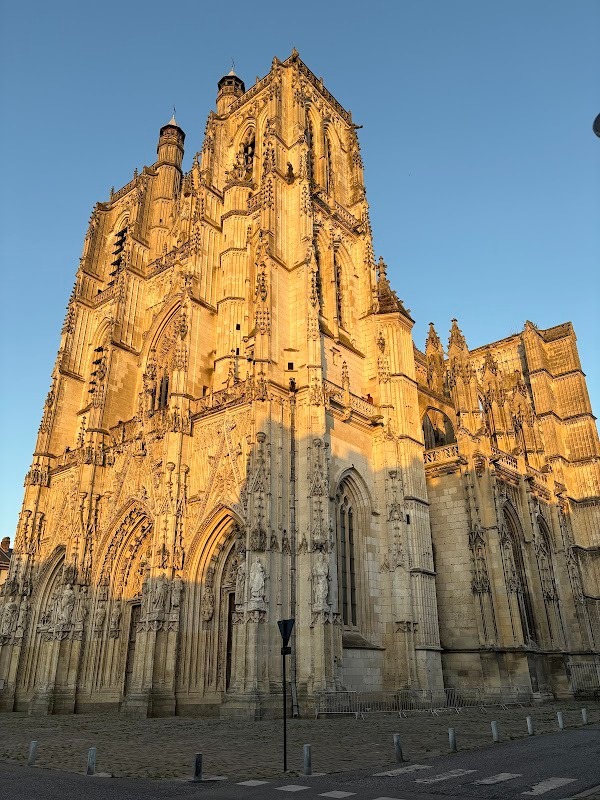
Église Collégiale catholique Saint-Vulfran, also called the Collegiate Church of Saint-Vulfran, is a collegiate church in Abbeville, France. Dedicated to Saint Vulfran, it is built in the Flamboyant Gothic style and stands as a distinctive Abbeville landmark.
What is the Collégiale Saint-Vulfran in Abbeville?
The Collégiale Saint-Vulfran is Abbeville's collegiate church dedicated to Saint Vulfran. Its Flamboyant Gothic architecture gives the building its distinctive character, particularly in the towering façade and spires that define its exterior.
Flamboyant Gothic design matters here because Saint-Vulfran is not simply identified by its religious dedication; its architectural style is central to what makes the building recognisable. The church's vertical façade and elaborate Gothic forms give it a strong presence within Abbeville.
When was Saint-Vulfran built?
Construction of Saint-Vulfran took place between 1488 and 1539. That long construction period connects the building seen in Abbeville today with several layers of history, from Renaissance splendour through revolution and into the destruction of war.
The church's significance is therefore tied to both its Flamboyant Gothic form and its survival across these historical changes. Its stonework carries the record of a building that remained present as Abbeville moved through very different periods.
What happened to the church during the Second World War?
On May 20, 1940, the Luftwaffe bombed Abbeville. Saint-Vulfran was battered but remained standing, making its façade more than an architectural surface: it is also a patchwork of restoration and memory.
The restoration marks and visible scars in the stone are described as signs of the church's survival. The De Gaulle in Abbeville during WW2 tour places Saint-Vulfran within this wartime history as one of its stops.
Its flying buttresses, originally an architectural marvel, became a symbol of resilience after the bombing. They were not built for wartime purposes, but their continued presence gives the church's survival a particularly clear visual expression.
What should you look for at Saint-Vulfran?
Start with the towering Gothic façade and its spires, then look more closely at the stone for restoration marks and wartime scars. The flying buttresses are another defining exterior detail, and gargoyles may be visible above, including the mischievous figures mentioned in the local description.
The tour material describes Saint-Vulfran as welcoming pilgrims, historians and curious visitors. It also records a local legend that a single candle always burned at the altar during the darkest days. That candle story is best understood as local legend, not verified history.
Saint-Vulfran is distinctive because its Flamboyant Gothic design and wartime survival remain visible in the same building. If you want to trace those details in Abbeville, you can explore the city on foot and encounter the church in its own setting.
The tour that visits Église Collégiale catholique Saint-Vulfran, Abbeville
Each one is a self-guided route you can start whenever you like.

Abbeville · 1h 25m
De Gaulle in Abbeville during WW2
Follow in the footsteps of Charles de Gaulle and the heroes of WWII on this immersive tour through Abbeville. Visit battle sites, monuments, and hidden relics from the Blitzkrieg to liberation. Discover stories of courage, tragedy, and resilience that shaped the fate of northern France.
- places
- Abbeville
- Saint-Vulfran
- Flamboyant Gothic
- French architecture
- Second World War