
San Francisco, CA, United States3 min read
Ferry Building San Francisco, CA: A 245-Foot Waterfront Landmark
Ferry Building on Google Maps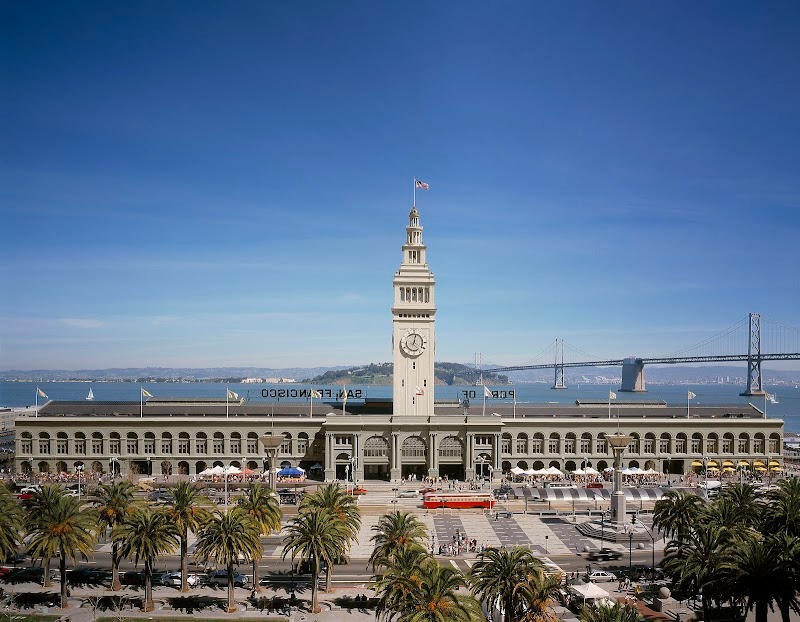
Ferry Building San Francisco, CA is a Bay ferry terminal, food hall, and office building at the foot of Market Street on The Embarcadero. Its 245-foot clock tower is the detail to look for first: the building survived the violent shaking of the 1906 earthquake while nearby structures crumbled, then remained a key crossing point for people moving across San Francisco Bay.
What is the Ferry Building in San Francisco?
The San Francisco Ferry Building is a terminal for ferries crossing San Francisco Bay, as well as a food hall and office building. It stands at the foot of Market Street on The Embarcadero in San Francisco, California, and is served by Golden Gate Ferry and San Francisco Bay Ferry routes.
Its location explains the building's practical importance. The Ferry Building placed Bay crossings directly at the end of Market Street, making it a central arrival and departure point for people travelling between San Francisco and destinations across the water. The San Francisco Pacific Trade Tour includes the building as part of its account of the city's maritime history.
What makes the Ferry Building a San Francisco landmark?
The Ferry Building opened in 1898 and was designed by American architect A. Page Brown in the Beaux-Arts style. Its construction was tied to the rapid growth of ferry traffic during the late 19th and early 20th centuries.
The defining feature is its 245-foot clock tower, inspired by the 12th-century Giralda bell tower in Seville, Spain. The tower became a familiar sight to people arriving by water. When you visit, look closely at the building's stonework and ironwork rather than treating the tower as the whole story: those details are part of what the building's architecture puts in front of you.
What happened at the Ferry Building after the 1906 earthquake?
After the April 18, 1906 earthquake, the Ferry Building's sturdy steel frame and robust construction allowed it to withstand the violent shaking while nearby structures crumbled. The Embarcadero quickly became a place where residents who had lost homes and belongings gathered to seek passage across the bay to Oakland and beyond.
Ferries carried survivors, emergency workers, and supplies between the city and destinations across the bay. Smoke from the burning city drifted over the water, while the clock tower remained visible. The San Francisco 1906 Earthquake and Fire Tour documents the Ferry Building's role in this aftermath.
How important was the Ferry Building as a transit terminal?
During the first half of the 20th century, the Ferry Building was the second-busiest transit terminal in the world, surpassed only by London's Charing Cross. At its peak in the 1930s, more than 50,000 commuters passed through daily.
That scale came from the movement of people travelling across San Francisco Bay. The Ferry Building was a crucial gateway for those crossings before the source's historical account moves on to the later bridge era.
Save this page before your San Francisco visit and send it to the person you are exploring with. When you reach The Embarcadero, start with the clock tower, then compare it with the stonework and ironwork up close; for the building's earthquake history, open the linked Leplace tour.
2 tours visit Ferry Building
Each one is a self-guided route you can start whenever you like.
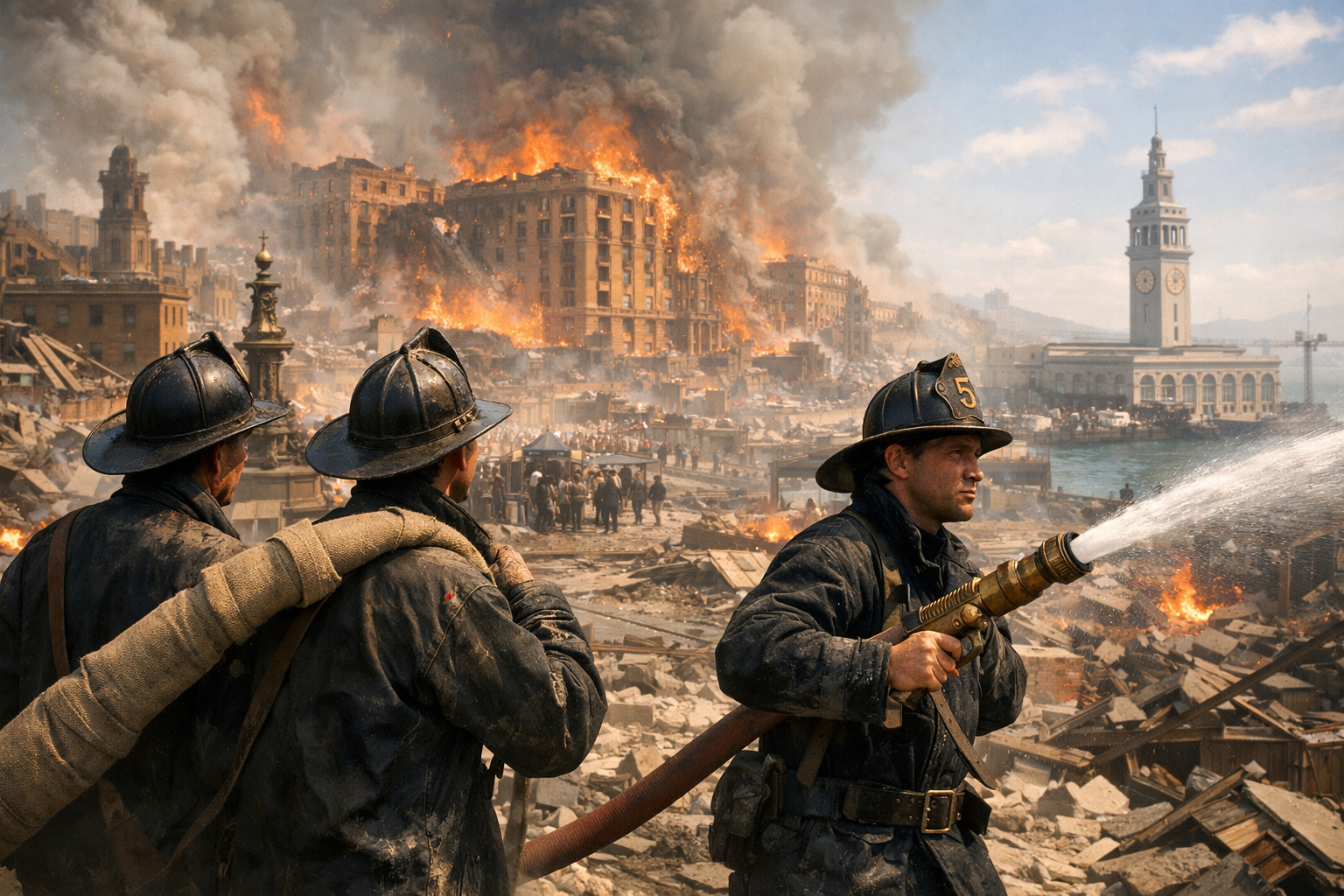
San Francisco, CA · 2h
San Francisco 1906 Earthquake and Fire Tour
Step back in time to the morning of April 18, 1906, and relive San Francisco's most dramatic day. This self-guided walking tour leads you through historic landmarks that survived or were shaped by the earthquake and fire. Explore the Ferry Building, Lotta's Fountain, the Old Mint, Chinatown, and more as you uncover tales of destruction, heroism, and rebirth. Perfect for history buffs and curious explorers alike!
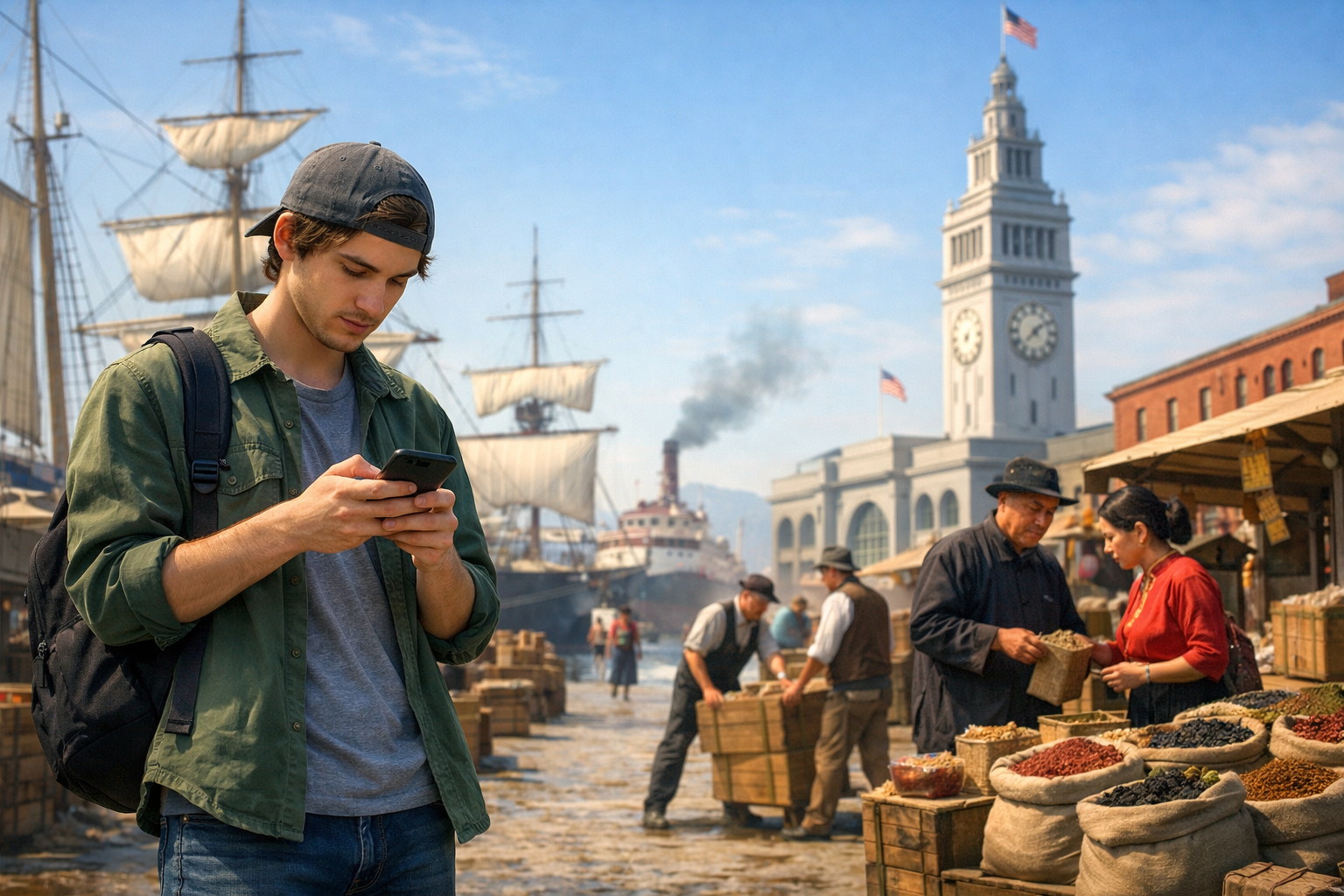
San Francisco, CA · 2h 50m
San Francisco Pacific Trade Tour
Discover San Francisco's rise as a Pacific maritime powerhouse on this self-guided tour. Visit the iconic Ferry Building, historic piers, Chinatown, and preserved ships to learn how trade, immigration, and innovation turned the city into a global port. Uncover stories of the Gold Rush, industrial expansion, and the people who shaped the waterfront.
- places
- San Francisco, CA
- San Francisco
- Ferry Building
- California landmarks
- San Francisco history
- Beaux-Arts architecture