
Amsterdam, Netherlands2 min read
Fo Guang Shan He Hua Temple Amsterdam: Look Up on Zeedijk
Fo Guang Shan He Hua Temple on Google Maps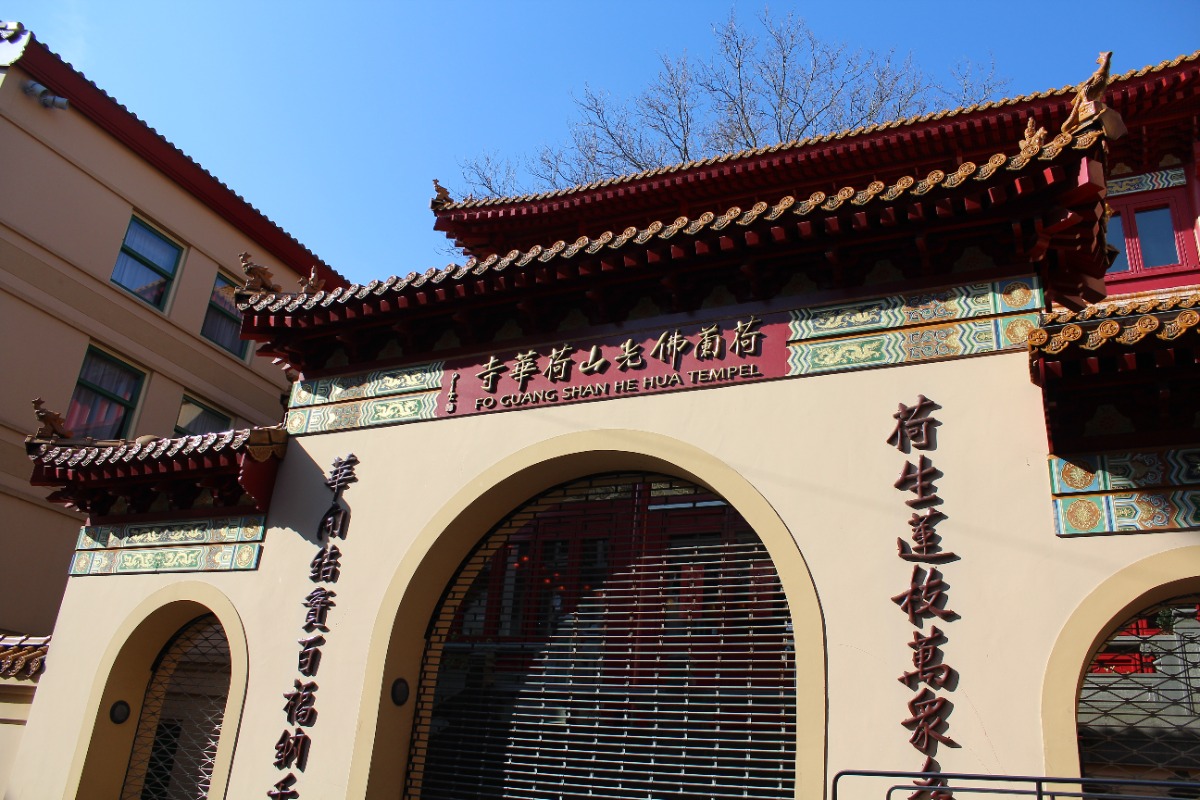
Fo Guang Shan He Hua Temple Amsterdam is a Buddhist temple at Zeedijk 106–118 in Amsterdam's Chinatown. Look up at its traditional Chinese palace-style roof: the animals represent the Chinese Zodiac, while the dragons stand for protection. The building is part of Fo Guang Shan and the BLIA, and is described as the largest Buddhist temple built in this style in Europe.
What is Fo Guang Shan He Hua Temple in Amsterdam?
Fo Guang Shan He Hua Temple, also called He Hua Temple, is the first Chinese Buddhist temple building in Europe. It was opened by Queen Beatrix in 2000 and is open for the public to visit.
The temple's address, Zeedijk 106–118, places it directly in Amsterdam's Chinatown. Its traditional Chinese palace style distinguishes the building from the surrounding street, while its connection to Fo Guang Shan and the BLIA identifies its Buddhist organisation. The Amsterdam Walking Tour passes the temple as stop 8 of 20.
What should you look for on the temple?
Start with the roof details. The animals positioned there represent the Chinese Zodiac, and the dragons stand for protection. These are specific symbols attached to the temple's architecture, so the roof rewards a closer look rather than a quick glance at the entrance.
The traditional Chinese palace style is the building's most visible architectural detail from Zeedijk. The same temple stop appears on the Amsterdam Bicycle Tour, whose route also passes the building. Both tour descriptions point to the roof animals and dragons as details to notice at the temple.
How does He Hua Temple fit into Amsterdam's Chinatown?
He Hua Temple is part of Amsterdam's Chinatown on Zeedijk, and the tour material connects its presence in the Netherlands with freedom of religion. It also places the temple within Amsterdam's wider mix of communities, describing the city as counting 181 different nationalities.
The street names around the temple are in two languages: Dutch and Chinese. Tour material says that when the signs were placed in the nineteen seventies, they were upside down, and that Chinese people laughed at the Dutch in response. Zeedijk itself is not translated; it is described as meaning “Good Hard Street.”
Those details keep the temple tied to its exact setting: a Chinese Buddhist building on Zeedijk, within Amsterdam's Chinatown, with bilingual street names and a roof marked by zodiac animals and protective dragons. Save this page for your Chinatown walk so you can find the temple at Zeedijk 106–118 and know where to look first.
2 tours visit Fo Guang Shan He Hua Temple
Each one is a self-guided route you can start whenever you like.
Amsterdam · 3h 55m
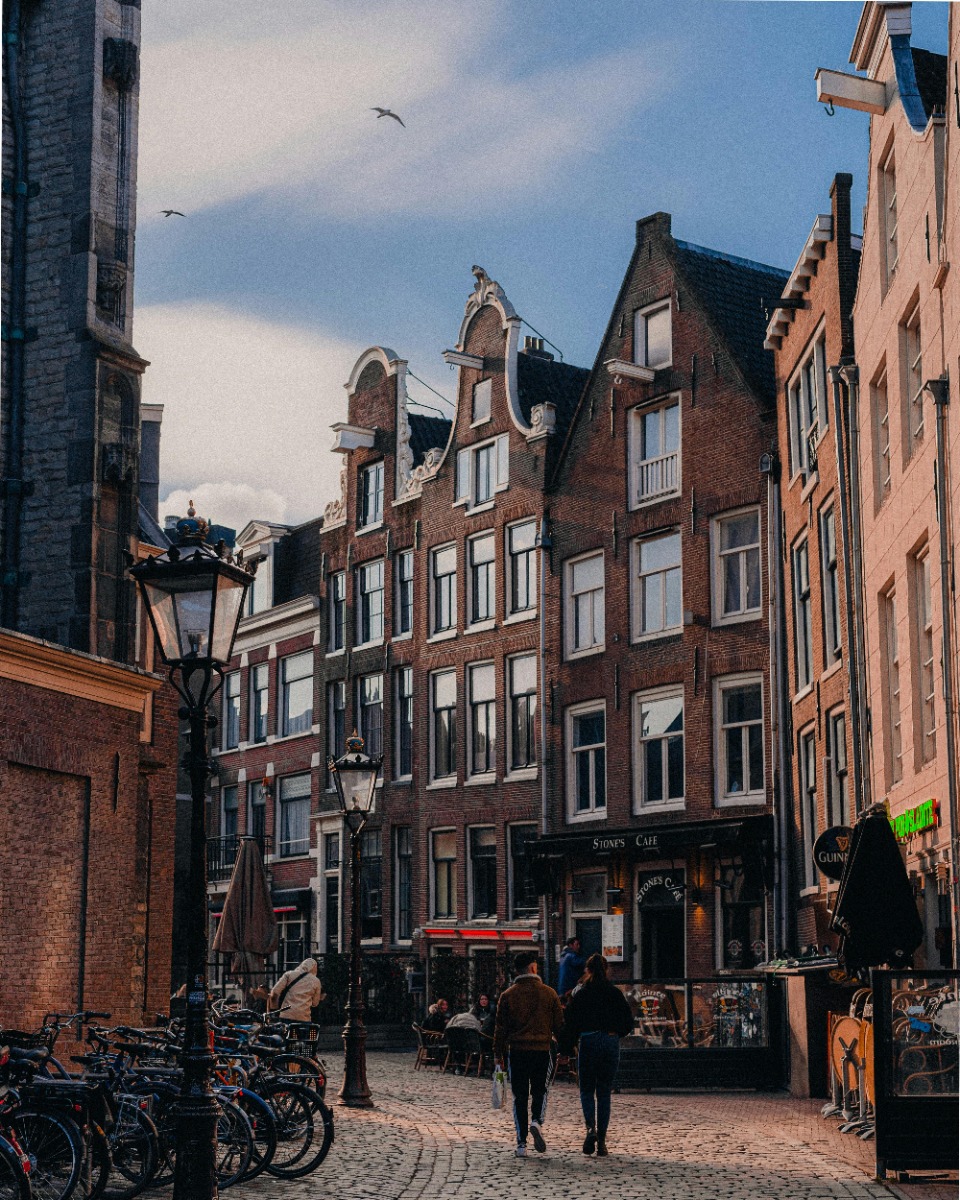
Amsterdam Walking Tour
First of all where are we? This is where the original dam was in the river Amstel back in the year 1200, right there at the tram track. Later they replaced it more back in the direction of the Dam sq…
Amsterdam · 6h 15m
Amsterdam Bicycle Tour
The tour should last about 2.5 hours, maybe something more, depending on how quickly you move, how long you spend on a break, and how much random craziness happens on your tour. Your start is at Damp…
- places
- Amsterdam
- Fo Guang Shan He Hua Temple
- Chinatown
- Buddhist temples
- Zeedijk