
Istanbul, Turkey2 min read
Hagia Sophia Grand Mosque Istanbul: History and Defining Features
Hagia Sophia Grand Mosque on Google Maps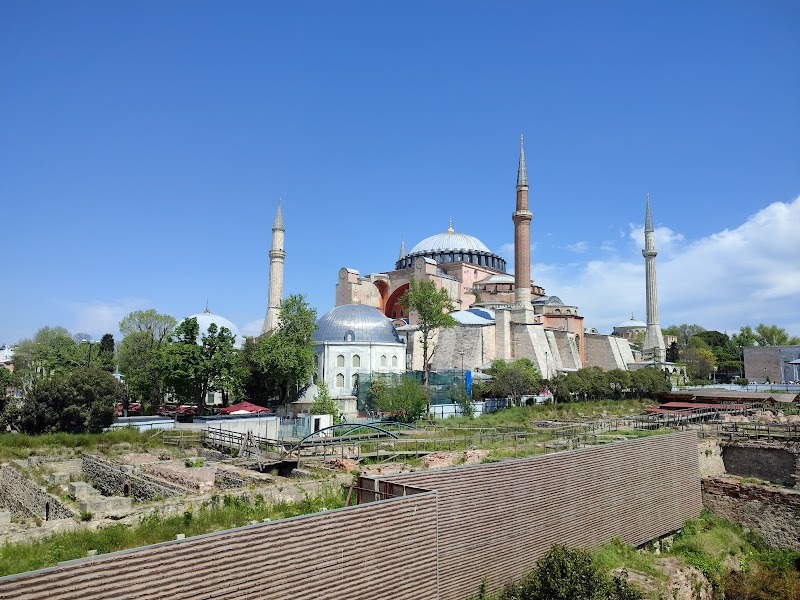
Hagia Sophia, officially the Hagia Sophia Grand Mosque, is a mosque and major cultural and historical site in Istanbul, Turkey. Its vast interior, fully pendentive dome, and visible Christian and Ottoman layers make it one of the defining monuments of Byzantine architecture.
What is Hagia Sophia Grand Mosque?
The present Hagia Sophia is the last of three successive church buildings erected on this site by the Eastern Roman Empire. Completed in AD 537, it became a landmark because of its enormous interior space and its use of a fully pendentive dome, a structural feature that helped establish its importance in architectural history.
The building was formerly a church from 360 to 1453 and a museum from 1935 to 2020. Today, it is officially the Hagia Sophia Grand Mosque, while its earlier roles remain essential to understanding the building itself.
Why is Hagia Sophia important?
Hagia Sophia matters because its religious and civic identity changed repeatedly without erasing the record of those changes. From its dedication in 360 until 1453, it served as the cathedral of Constantinople in the Byzantine liturgical tradition, apart from the period from 1204 to 1261, when Latin Crusaders installed their own hierarchy.
After the fall of Constantinople in 1453, Hagia Sophia served as a mosque, and minarets were added soon after. The site became a museum in 1935 and was redesignated as a mosque in 2020. It is considered the epitome of Byzantine architecture and is said to have changed the history of architecture.
That importance comes from the combination of scale, engineering, and continuity. Hagia Sophia is not simply an example of one architectural tradition: its documented history records the Byzantine cathedral, the Ottoman mosque, the museum period, and its present designation as a mosque.
What can you notice about Hagia Sophia's layered history?
The building's conversion after 1453 included the removal of crosses, the silencing of bells, and the installation of a mihrab. These changes mark the shift from its Christian use to its role as a mosque, but they did not remove every trace of what came before.
Many golden mosaics survived beneath layers of plaster, including the Virgin and Child above the apse. Those mosaics make Hagia Sophia's Christian history physically legible alongside its Ottoman history, presenting the building as a layered record rather than a single uninterrupted identity.
Hagia Sophia also appears as a setting in the Constantinople Siege 1453 route, which describes the building as a place where defenders and citizens sought refuge during the final siege. The route uses that specific historical setting to explore the fall of Constantinople interactively, without reducing Hagia Sophia to only one moment in its long history.
For an independent explorer, the defining feature of Hagia Sophia Grand Mosque is this coexistence: the dome and vast interior express its Byzantine architectural importance, while the mihrab and surviving mosaics make its successive religious histories visible in the same building.
The tour that visits Hagia Sophia Grand Mosque
Each one is a self-guided route you can start whenever you like.
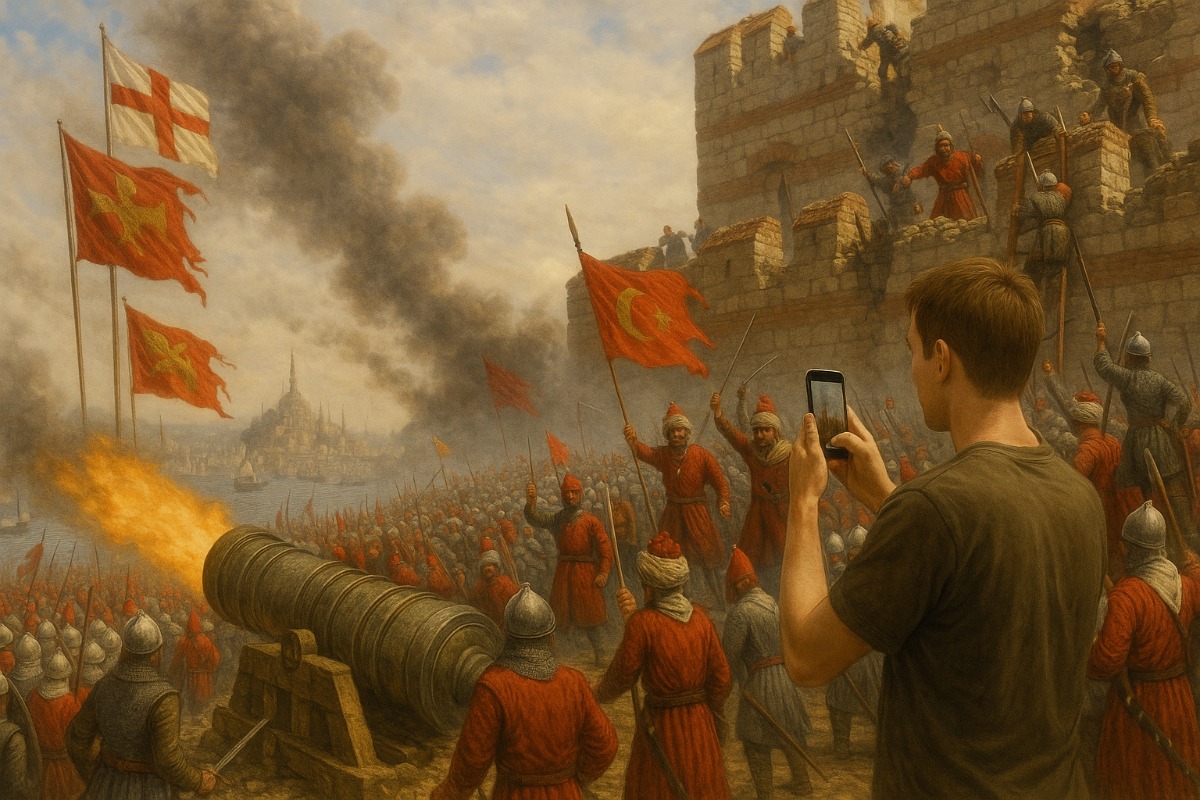
Istanbul · 3h 45m
Constantinople Siege 1453
Step into the shoes of an Ottoman soldier and journey through the dramatic final hours of Constantinople in 1453. Explore legendary sites from the Theodosian Walls to Hagia Sophia, uncovering stories of heroism, intrigue, and transformation that shaped modern Istanbul.
- places
- Istanbul
- Hagia Sophia
- Byzantine architecture
- Ottoman history
- mosques