
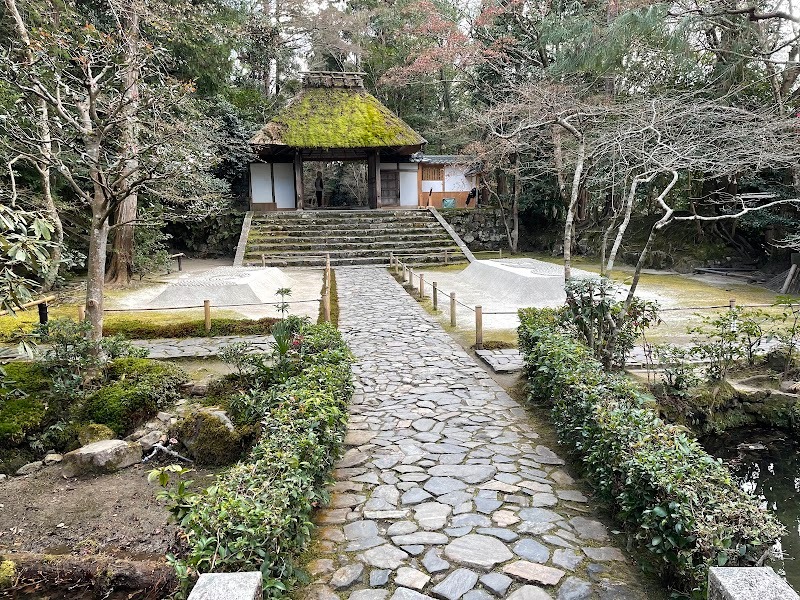
Hōnenin Temple Kyōto, also written Hōnen-in or Hōnenin Temple, is a Buddhist temple located in Sakyō-ku, Kyoto, in western Japan. The supplied temple account places its founding in 1680 and names the monk Nincho as its founder, describing Hōnenin as a sanctuary associated with quiet contemplation.
What is Hōnenin Temple Kyōto?
Hōnenin is a Buddhist temple whose identity is closely tied to its quiet, observation-led setting. Its recorded beginning is placed in 1680, when the monk Nincho founded the temple as a sanctuary for quiet contemplation.
The temple account presents Hōnenin through details that belong to the grounds themselves: a mossy entrance, carefully arranged sand, living greenery, birdsong, sweeping, and the low hum of sutras. Together, these details give the temple a character grounded in stillness rather than spectacle.
What should you notice at Hōnenin Temple?
Start with the mossy gate, described as the entrance into the temple grounds. The moss is not just a colour around the path: it softens the sense of footsteps and contributes to the temple's quiet, natural setting.
Inside, look for the twin sand mounds. They are described as immaculately raked, with patterns that change from week to week, so they are not presented as permanently fixed designs. Their changing forms are one of Hōnenin's most distinctive details.
The surrounding atmosphere is built from small, specific sounds and textures: moss, camellia, pine, sparrows, the sweep of brooms, and the low hum of sutras. These are details recorded in the account of Hōnenin itself, not general descriptions of Kyoto.
The main hall is also associated with a reported hidden painting. The source attributes it to Kano Mitsunobu, while describing it as an uncredited cameo said to appear only to attentive guests. The mystery is part of what makes the detail worth noticing; the account does not resolve what the painting shows or guarantee that it will appear to every visitor.
Why does Hōnenin Temple feel different from a standard sightseeing stop?
Hōnenin feels distinctive because its details change or reveal themselves through close attention. The sand patterns shift each week, while moss-softened footsteps, greenery, sparrows, sweeping, and sutras create a setting where the smallest sounds matter.
That combination keeps the temple from feeling like a fixed display. Its character comes from the relationship between the immaculately raked mounds and the living setting around them: camellia and pine, birds overhead, and the sound of brooms moving through the grounds.
Hōnenin Temple appears as stop 4 of 8 on Kyoto's Kingly Keepsakes, a route that gives the temple a place within a wider set of Kyoto discoveries. When you reach Hōnenin, pay attention to the details that do not stay still—and to the reported painting whose secret the temple leaves open.
The tour that visits Hōnenin Temple
Each one is a self-guided route you can start whenever you like.

Kyōto · 2h 15m
Kyoto's Kingly Keepsakes
Embark on a solo, immersive walking tour through Kyoto's eastern treasures. Begin at the iconic Ginkakuji Temple, sip artisan coffee at local cafés, stroll the cherry-blossom-lined Philosopher's Path, and explore hidden temples and shrines. Conclude with panoramic city views from Shogunzuka Mound. This one-day journey blends centuries of history, culture, and nature—perfect for solo travelers seeking a dramatic, contemplative adventure.
- places
- Kyōto
- Hōnenin Temple
- Kyoto temples
- Sakyō-ku
- Kyoto
- Buddhist temples