
Matsuyama, Japan2 min read
Isaniwa Shrine Matsuyama: Over 130 Steps to a Rare Hachiman-zukuri Shrine
Isaniwa Shrine Haiden on Google Maps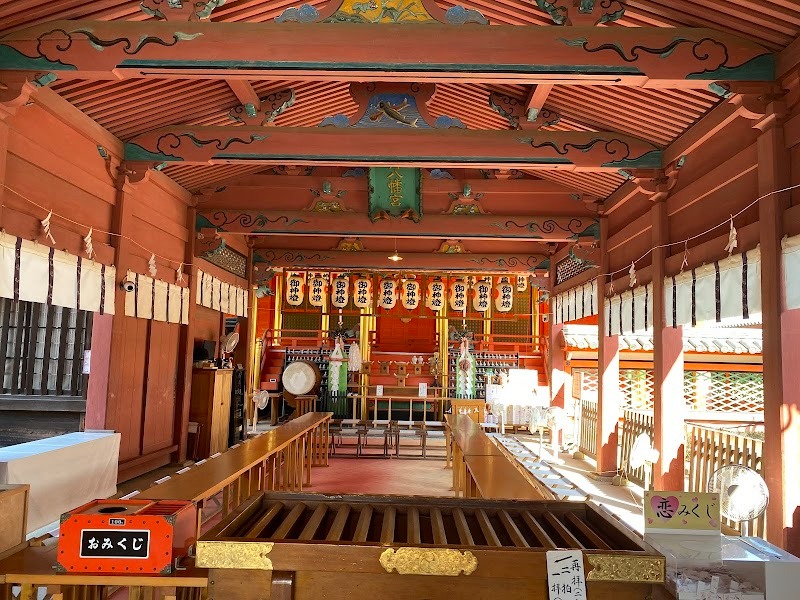
Isaniwa Shrine Matsuyama is a shrine built in 1667 and associated with Hachiman, the god of war and protector of samurai. Its rare Hachiman-zukuri architectural style and approach of over 130 ancient stone steps make it distinctive before you even reach the vermilion pillars, sweeping eaves and intricate dragon carvings at the summit.
What makes Isaniwa Shrine in Matsuyama distinctive?
Isaniwa Shrine is one of only a handful of shrines in Japan described as showcasing the rare Hachiman-zukuri style. The shrine was built in 1667, and its connection with Hachiman gives the site a particular association with warriors: Hachiman was regarded as the god of war and protector of samurai, making Isaniwa Shrine a place where warriors sought favour before battle.
The shrine's distinctive identity is tied to both its structure and its dedication. If you want to encounter Isaniwa Shrine as one specific stop within Matsuyama, the Matsuyama mysteries tour includes it as stop 5 of 10.
What is Hachiman-zukuri at Isaniwa Shrine?
Hachiman-zukuri is a traditional Japanese architectural style used at Hachiman shrines. It joins two parallel structures with gabled roofs on their non-gabled side, forming one building that appears to be two buildings when viewed from the side.
In this terminology, the front structure is the gaiden and the rear structure is the naiden; together, they form the honden. The honden is surrounded by a cloister-like covered corridor called the kairō, while access is made through a gate called the rōmon. These terms explain the architectural form associated with Isaniwa Shrine without reducing it to a conventional single-roof shrine building.
What should you look for on the climb to Isaniwa Shrine?
The approach to Isaniwa Shrine includes a daunting ascent of over 130 ancient stone steps. The staircase is part of the shrine's physical setting, while the 1667 date belongs to the shrine itself, not to a stated construction date for the steps.
At the summit, look for the shrine's vermilion pillars and sweeping eaves. Intricate dragon carvings are described as guardians said to ward off evil and grant courage to those who dare the climb. The hilltop setting also offers panoramic views of Matsuyama.
Send this page to the travel companion deciding whether the climb belongs on your Matsuyama route, then use the Matsuyama mysteries route if you want the shrine's Hachiman connection and physical details presented as an interactive stop.
The tour that visits Isaniwa Shrine Haiden
Each one is a self-guided route you can start whenever you like.
Matsuyama · 2h 45m
Matsuyama mysteries
Unravel the enchanting mysteries of Matsuyama on a one-day walking tour! Explore ancient temples, mystical tunnels, vibrant shrines, and Japan's oldest hot spring. Savor local flavors, marvel at animated clocks, and conquer Matsuyama Castle for stunning city views. Adventure, legends, and laughter await in every step of this immersive solo journey.
- places
- Matsuyama
- Isaniwa Shrine
- Japanese architecture
- Hachiman-zukuri
- samurai history