
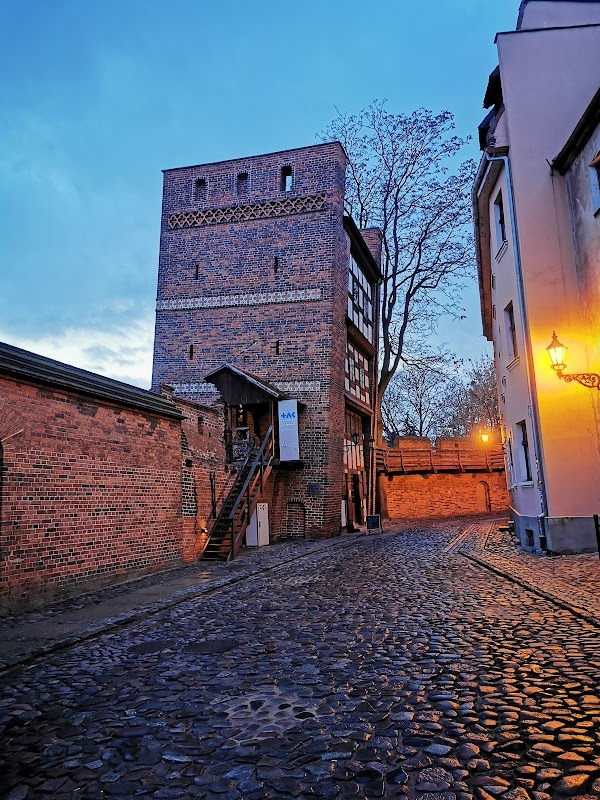
Krzywa Wieża, also known in English as the Leaning Tower of Toruń, is a medieval tower in Toruń, Poland. It stands on Pod Krzywą Wieżą street in the city's Old Town, and its top is displaced 1.5 metres from where it would be if the tower were perfectly vertical. The tower forms part of the Medieval Town of Toruń UNESCO World Heritage Site and is a Historic Monument of Poland.
Its unusual angle is not just a visual curiosity: Krzywa Wieża began as part of Toruń's military infrastructure, and its lean records the unstable ground beneath an early Gothic fortification.
Why is Toruń's tower leaning?
Krzywa Wieża leans because geological instability shifted its foundation, not because medieval builders designed it that way. The heavy brick structure was built on loamy soil that could not support its concentrated weight.
Shortly after the tower was completed, this weak ground caused the foundation to shift toward the Vistula River. The visible result is the 1.5-metre displacement at the top: the tower's present tilt follows the movement of the foundation beneath it. The explanation is therefore physical rather than legendary or tactical.
What was Krzywa Wieża built for?
Krzywa Wieża was constructed in the early 14th century as a functional bastion on Toruń's southern defensive perimeter. Its rectangular plan was characteristic of the city's early Gothic fortifications, giving the tower a military purpose long before it became one of the Old Town's best-known landmarks.
The tower served as a lookout and firing position intended to protect the merchant district from river-based incursions. Its side facing the city was originally open, following a medieval defensive design. If an enemy breached the outer walls, that open arrangement made the tower harder for invaders to turn into a stronghold.
How did the tower fit into medieval Toruń?
Despite its lean, Krzywa Wieża remained part of Toruń's defenses throughout the 15th century. It was integrated into the wall system that secured the Copernicus family's warehouses and the city's stored trade commodities, tying this single tower to the protection of valuable goods.
In the late Middle Ages, maintaining these fortifications was a legal responsibility of the city's trade guilds. Each guild was assigned a section of wall to man and repair. Krzywa Wieża consequently belonged to a wider defensive system maintained alongside Toruń's commercial life, helping the city operate as a secure transshipment point for international trade through the Hanseatic League.
What should you notice when you visit Krzywa Wieża?
Start with the tower's displaced top, then connect the visible lean to the unstable loamy ground beneath its brick structure. The angle is the surviving physical evidence of the foundation movement toward the Vistula River, rather than a feature added for appearance.
Next, notice Krzywa Wieża's rectangular form and its place within Toruń's Old Town fortification landscape. The shape reflects its early Gothic defensive role, while its position recalls the southern perimeter it helped protect. The tower is stop 7 of 7 on Torun of young Copernicus, a 15th-Century Chronicle, for an exploration that places this landmark within the city's historic setting.
The tour that visits Krzywa Wieża
Each one is a self-guided route you can start whenever you like.
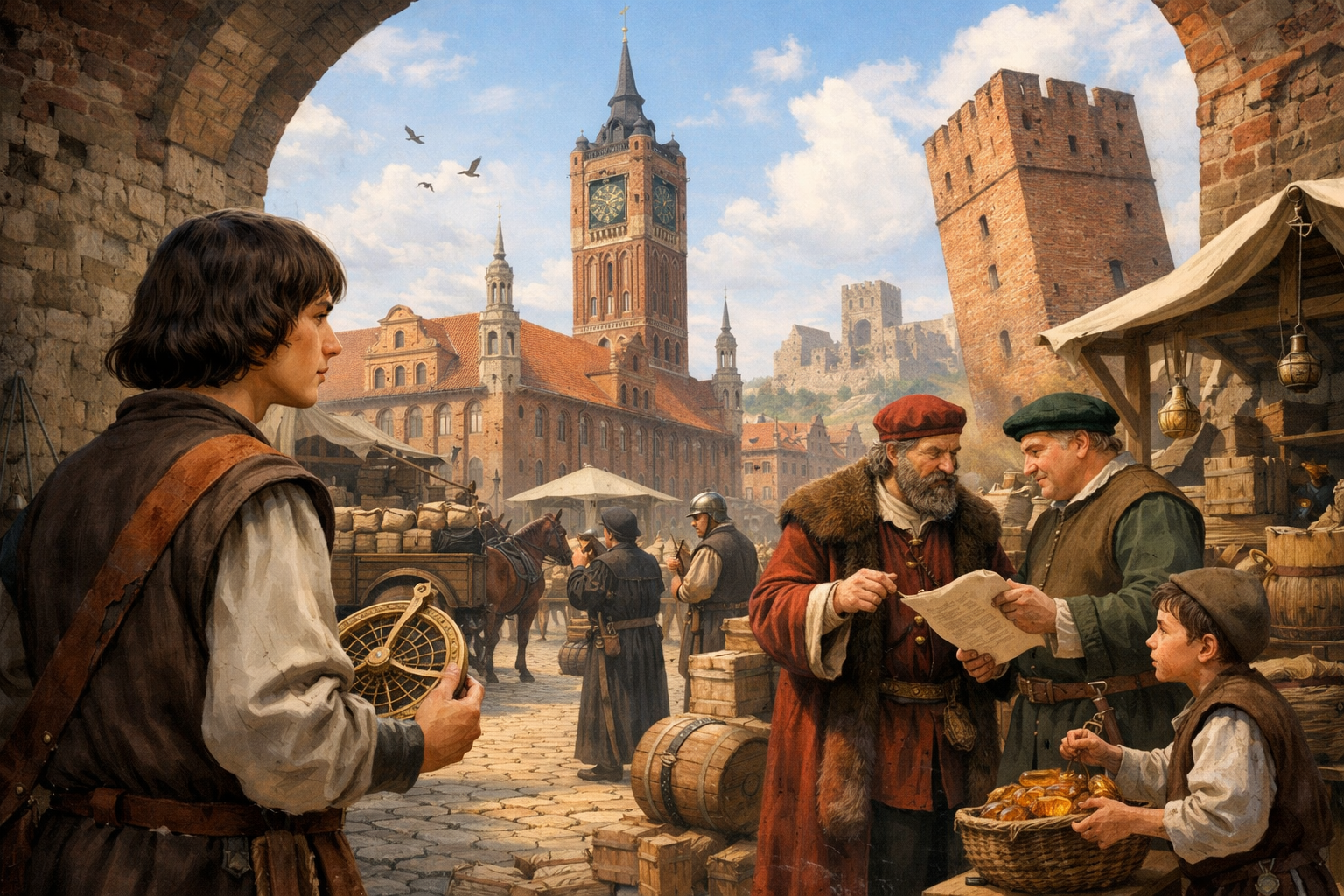
Toruń · 1h 10m
Torun of young Copernicus, a 15th-Century Chronicle
Embark on a self-guided adventure through medieval Toruń as young Nicolaus Copernicus! Discover Gothic granary-houses, bustling market squares, and the secrets of Hanseatic trade. Climb towers, explore ruins, and uncover the city's vertical marvels that shaped a future astronomer.
- places
- Toruń
- Krzywa Wieża
- Toruń Old Town
- medieval fortifications
- Poland landmarks