
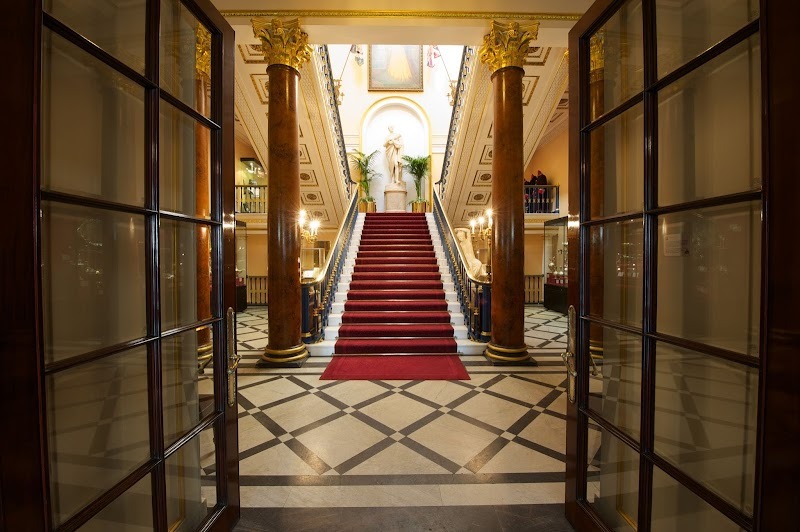
Liverpool Town Hall is a Georgian city hall in High Street, at the junction of Dale Street, Castle Street and Water Street in Liverpool, Merseyside. Completed in 1754, it is recorded as a Grade I listed building on the National Heritage List for England. The listing describes it as one of the finest surviving 18th-century town halls, while the Buildings of England series praises its magnificent scale and considers its civic rooms probably the grandest suite of their kind in the country.
Its identity is visible in the combination of civic rooms, a prominent dome and gilded interiors. Liverpool Town Hall is not simply a surviving historic building in the city centre: its Georgian decoration and ceremonial scale express the authority and wealth that Liverpool concentrated in its civic institutions.
Why is Liverpool Town Hall important to Liverpool's history?
Liverpool Town Hall is important because its civic grandeur is closely connected to the city's mercantile past, including the wealth generated through transatlantic slavery. During the late 18th and early 19th centuries, Liverpool became one of the world's leading slave-trading ports. The historical account attached to the building describes much of Liverpool's wealth and civic grandeur as substantially built on profits from that trade.
The Town Hall was a place where civic decision-making and commercial power met. Within its opulent chambers, aldermen, merchants and financiers gathered around investments, voyages and the city's commercial interests. The building therefore represents more than a general story of urban prosperity: its rooms were connected to the people and decisions involved in Liverpool's mercantile activity.
That history contains a profound tension. The grandeur preserved in Liverpool Town Hall exists alongside the immense human suffering caused by transatlantic slavery. The building's civic importance cannot be separated from the commercial system that helped create the wealth surrounding it. This is the historical context developed in the Liverpool Slave Trade Tour, which treats the Town Hall as a specific place within Liverpool's slave-trading past rather than as a vague symbol of history.
What should you notice about Liverpool Town Hall?
Start with the building's scale and late Georgian decoration. The Buildings of England series calls Liverpool Town Hall magnificent and describes it as probably the grandest suite of civic rooms in the country, as well as an outstanding and complete example of late Georgian decoration. Those descriptions give you a useful way to read the building: its size and finish are not incidental details, but part of how the Town Hall presents civic power.
Notice the dome and the gilded interiors as physical signs of its opulence. These features belong to Liverpool Town Hall itself, and they make the contrast between its ceremonial appearance and the history behind its wealth especially difficult to ignore. The building's splendour is real, but so is the human cost connected to the commercial world it served.
The city's maritime commerce also survives in names associated with ships. Ships that sailed from Liverpool's docks were often named after African kingdoms, African rivers or the captains who commanded them. Those names were preserved in city records and on commemorative plaques, connecting Liverpool Town Hall's civic setting to the wider commercial network represented in the city.
Liverpool Town Hall is consequently a silent witness to a complex and troubling history: a Grade I listed Georgian building, a centre of civic and commercial power, and a place whose opulent interiors stand alongside the suffering produced by the trade that helped fund Liverpool's grandeur. Its position at the meeting of High Street, Dale Street, Castle Street and Water Street makes that history part of the city's physical record.
The tour that visits Liverpool Town Hall
Each one is a self-guided route you can start whenever you like.
Liverpool · 1h 35m
Liverpool Slave Trade Tour
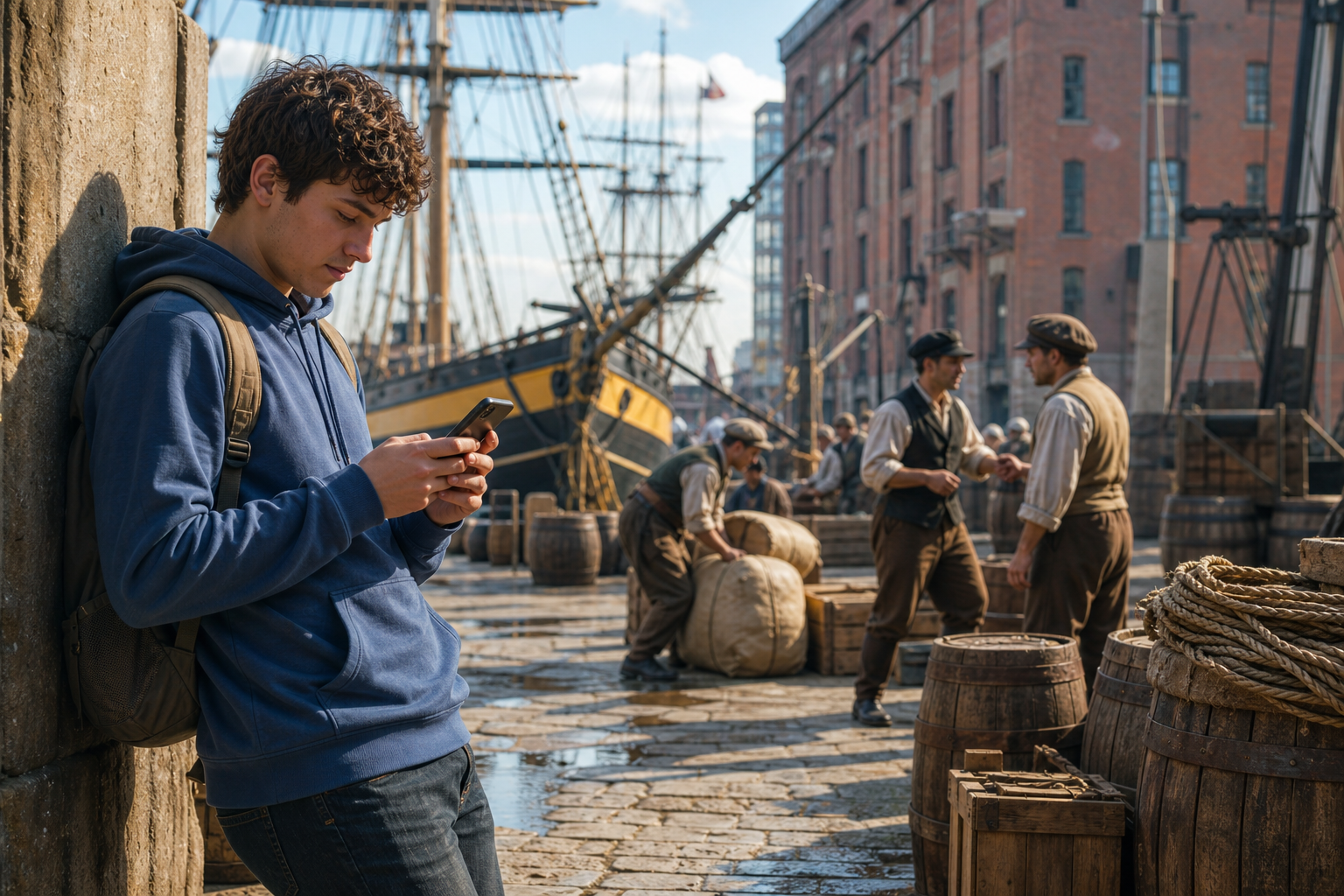
Walk in the footsteps of merchants, sailors, and enslaved Africans on this immersive outdoor tour of Liverpool's slave trade legacy. Explore historic docks, warehouses, and civic halls, uncovering hidden plaques and artefacts. Visit the International Slavery Museum and reflect at the Waterfront Viewpoint. This self-guided journey reveals the city's pivotal role in the transatlantic slave trade and challenges you to reckon with its enduring impact.
- places
- Liverpool
- Liverpool Town Hall
- Georgian architecture
- Liverpool history
- slave trade history