
Nagasaki, Japan2 min read
Megane Bridge Nagasaki: Why It Is Called Spectacles Bridge
Megane Bridge on Google Maps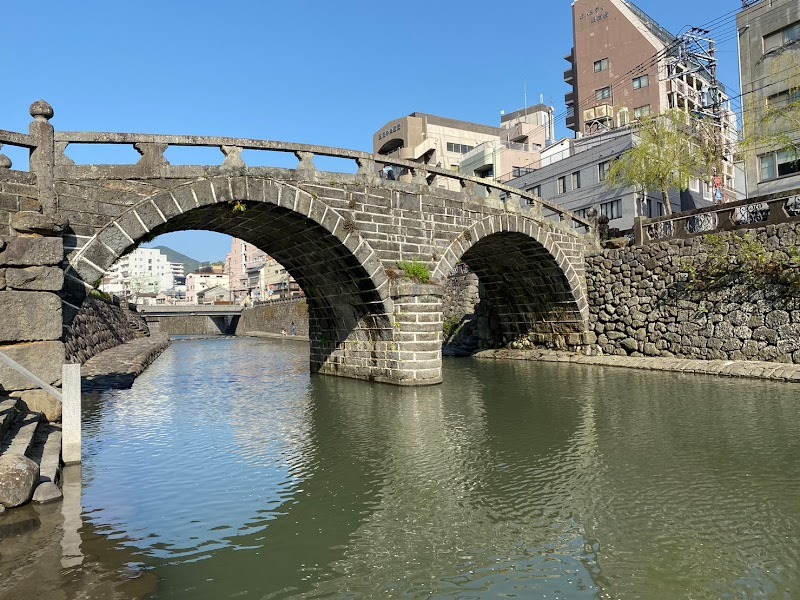
Megane Bridge in Nagasaki is a stone bridge crossing the Nakashima River. It is also known as Meganebashi and Spectacles Bridge, and was built in 1634 by the Chinese monk Mokusunyoujo, who was in the second generation of Chinese monks living at Kofukuji Temple.
That combination of names, setting and construction gives Megane Bridge its distinctive identity: the bridge is not only a crossing over the Nakashima River, but also a carefully placed relationship between stone arches and the water below.
Why is Megane Bridge called Spectacles Bridge?
Megane Bridge is called Spectacles Bridge because its arches and their reflection in still water can create the shape of a perfect circle or a pair of spectacles.
The effect depends on the water below being still. When the surface holds the bridge's reflection, the stone above and the reflected arches appear to join into a single visual form. That is the defining feature to look for at Megane Bridge: not the arches in isolation, but the alignment of stone, arch and reflection across the Nakashima River.
The name Meganebashi refers to the same spectacles-like appearance. Its visual impact comes from the bridge's physical setting, where the river provides the second half of the image.
What should you look for at Megane Bridge?
At low tide, the ancient riverbed can be exposed beneath Megane Bridge. Stones directly in front of the bridge provide a lower perspective when a stable foothold is available.
From that position, you can work on aligning the bridge, its reflection and the exposed riverbed in a photograph. This is the focus of a photo challenge on Nagasaki's Narrative, where Megane Bridge is stop 3 of 6. The challenge depends on the conditions at the river: the reflection is not something to assume will always be visible, and the exposed stones create a different viewpoint when the tide is low.
Look for the changing relationship between the stone arches and the water rather than treating the bridge as a static object. When the river is still, the reflection can transform the shape that gives Megane Bridge its second name. To explore this viewpoint as part of a GPS route, follow Nagasaki's Narrative to the bridge stop.
The tour that visits Megane Bridge
Each one is a self-guided route you can start whenever you like.

Nagasaki · 1h 15m
Nagasaki's Narrative
Step into Nagasaki's living history with this immersive walking tour! Become a Shinobi as you explore six enchanting stops, from bustling Hamamachi Arcade to the legendary Dejima island. Discover quirky shrines, ancient temples, iconic bridges, and panoramic cityscapes. Perfect for history lovers, culture seekers, and curious wanderers, this tour blends centuries-old stories with modern-day marvels. All attractions are open after 11:00 AM—adventure awaits!
- places
- Nagasaki
- Megane Bridge
- Spectacles Bridge
- Japan landmarks