
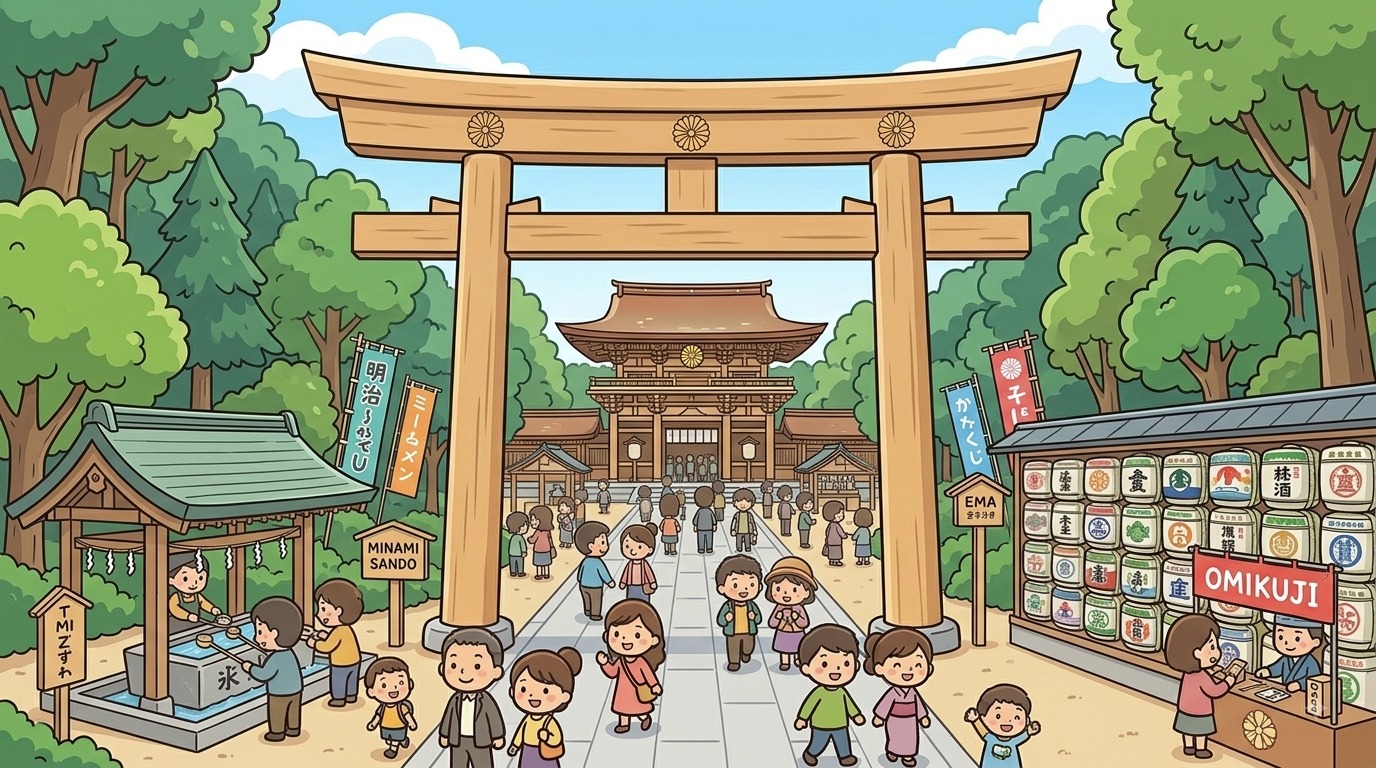
Meiji Jingu, also called Meiji Shrine, is a Shinto shrine in Shibuya, Tokyo. It is dedicated to the deified spirits of Emperor Meiji and Empress Shoken, the imperial couple whose rule is closely associated with Japan's transformation during the Meiji era.
One detail is easy to misunderstand: Meiji Jingu does not contain Emperor Meiji's grave. His grave is at Fushimi-momoyama, south of Kyoto, so the shrine's meaning comes from its dedication to the couple's deified spirits rather than from being their burial place.
Why was Meiji Jingu created?
Meiji Jingu was created in 1920, marking the closing of the Meiji era. The shrine therefore connects a specific place in Shibuya with the period in which Emperor Meiji and Empress Shoken ruled as Japan's first emperor couple after the shogunate, from 1868 onward.
That transition was not peaceful or instantaneous. The shogunate was abolished and traditional imperial rule was reinstalled through war. The Battle of Hakodate in the north in 1869 marked the point at which the battle was completely over. Meiji Jingu's creation placed the memory of that imperial transition within a shrine established at the end of the era.
What did Emperor Meiji and Empress Shoken change?
Emperor Meiji was known for a patriotic outlook and expressed that vision through the slogan “Strong army, strong country.” His importance to Meiji Jingu is tied not only to the restoration of imperial rule, but also to the modernization associated with his reign.
Together, Emperor Meiji and Empress Shoken modernized Japan in several ways. One important part of that work was the blueprint for Japan's infrastructure. The historical meaning of Meiji Jingu is therefore connected to the changes that reshaped the country during the era commemorated by the shrine.
Empress Shoken's legacy also includes philanthropy. She was among the leaders who created the disaster relief fund now known internationally as the Shokan Fund. That fund forms part of the philanthropic example for which she is remembered and adds another dimension to the shrine's dedication.
What should you notice when you visit Meiji Jingu?
Meiji Jingu is defined in the supplied tour material as a place of tranquility, and its shrine and surrounding park provide a setting for reflecting on the deified emperor and empress. The quiet character of the place matters because it holds together two different kinds of memory: the imperial couple themselves and the upheaval and modernization associated with their era.
Rather than treating Meiji Jingu as only a historical marker, consider the shrine as a place where that history is commemorated through devotion. If the site moves you, you can pay your respects at the shrine. For a route that places Meiji Jingu within a wider exploration of Shibuya's culture, history and religion, continue with the Shibuya Scramble Crossing tour.
The tour that visits Meiji Jingu
Each one is a self-guided route you can start whenever you like.
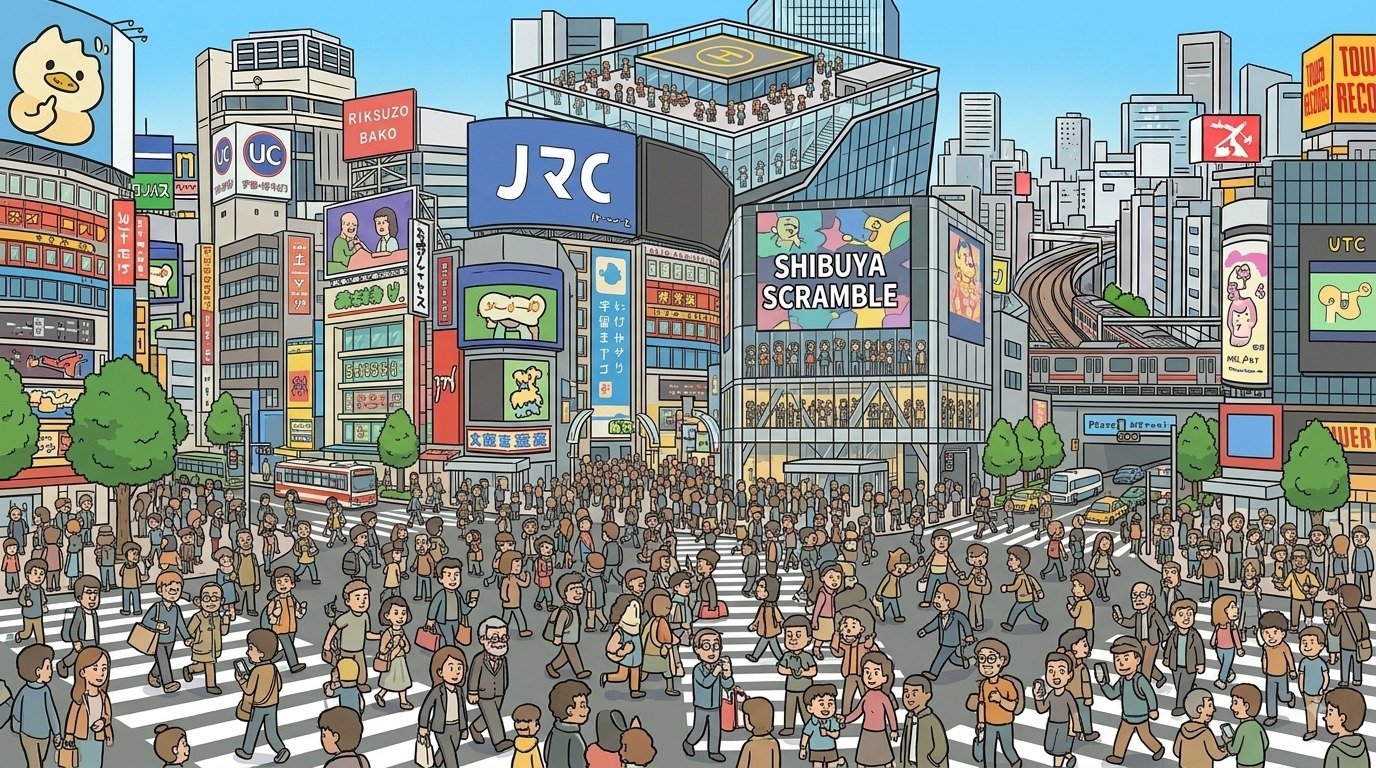
Tokyo · 2h 5m
Shibuya Scramble Crossing - Sub-culture, History, and Religion Tour
Step into the fascinating world of Tokyo's Meiji period on this immersive tour. From the serene Meiji Jingu shrine to the trendy streets of Harajuku and the bustling Shibuya district, experience the rich history and vibrant energy of Japan's bustling capital in just one day. Let us guide you through a time-traveling adventure that will make you feel right at home in the heart of the world's largest city. Join us to uncover the captivating blend of tradition, innovation, and culture that define Tokyo.
- places
- Tokyo
- Meiji Jingu
- Meiji Shrine
- Shibuya
- Shinto