
Metz, France3 min read
Metz Cathedral in Metz: Stone, Stained Glass and History
Metz Cathedral on Google Maps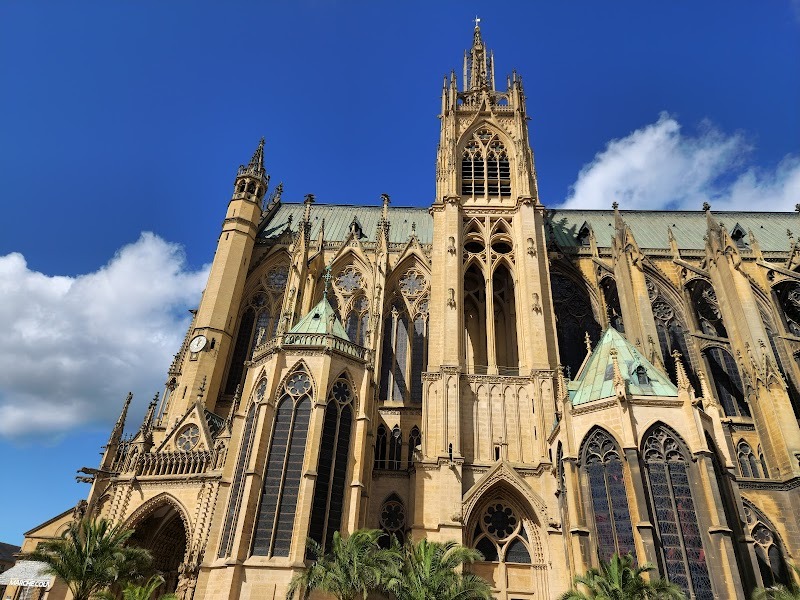
Metz Cathedral is the Cathédrale Saint-Étienne de Metz, a Gothic masterpiece built in golden Jaumont stone. Known as the “Lantern of God,” it stands in Metz, a city in northeast France at the confluence of the Moselle and Seille rivers. Its glowing stone, immense nave, historic stained glass and wartime associations give the cathedral a distinctive presence in the city.
What is Metz Cathedral?
Metz Cathedral is the Cathédrale Saint-Étienne de Metz, built in the Gothic style from golden Jaumont stone. That stone is described as glowing even on cloudy days, giving the cathedral its striking colour and helping explain the name “Lantern of God.” Its setting connects the building directly to Metz’s geography: the city lies where the Moselle and Seille rivers meet in northeast France.
The cathedral’s character comes from the combination of its pale-golden masonry, upward-reaching spires and long architectural history. It is not simply a Gothic building in Metz; it is one of the city’s defining landmarks, with its stone and scale shaping the view around the square and surrounding rooftops.
Why is Metz Cathedral known for its scale and stained glass?
Metz Cathedral is known for having the highest nave in France and for stained glass windows that have witnessed centuries of history. Construction began in 1220 and took over three centuries to complete, making the building itself a record of sustained architectural ambition rather than the product of a single moment.
The windows also connect the cathedral’s long history with more recent art. Among them are designs by Marc Chagall, whose work added a colourful 20th-century layer to the Gothic interior. The contrast is part of what makes the cathedral’s stained glass distinctive: centuries-old windows and Chagall’s modern contribution belong to the same luminous architectural space.
What happened at Metz Cathedral in late 1944?
In late 1944, as Allied forces approached Metz, the cathedral bells rang as a declaration of hope and defiance against the occupiers. The city had been battered by war, and the square before the cathedral filled with anxious but jubilant citizens during the liberation.
The scene associated with Metz Cathedral is defined by sound as much as stone: the bells’ triumphant peals mixed with the distant rumble of tanks and the cheers of liberation. That wartime memory gives the building a specific historical dimension, connecting its familiar spires and square to a moment of fear, relief and resistance.
What should you notice when you stand before Metz Cathedral?
Start with the golden Jaumont stone, then look up at the spires and take in the cathedral’s scale. The height of the nave is central to its character, while the stone’s ability to glow on cloudy days changes how the building occupies the square.
Look closely at the stained glass, including the windows designed by Marc Chagall. Then place the cathedral within its urban setting: the square before it and the surrounding rooftops are part of the scene described by the cathedral’s history. To explore these details alongside other sourced stops in Metz, follow the Metz Through Time self-guided route.
The tour that visits Metz Cathedral
Each one is a self-guided route you can start whenever you like.

Metz · 1h 55m
Metz Through Time: From Dragons to Liberation
Step into Metz's storied past with this immersive self-guided tour—from the imposing Gare de Metz-Ville to the legendary Rue Taison, grand Synagogue, and somber Pont des Morts. Trace the city's journey through WWII: invasion, resistance, and liberation. Experience tales of courage, loss, and hope in every corner of Metz.
- places
- Metz
- Metz Cathedral
- France
- Gothic architecture
- stained glass