
Metz, France2 min read
Metz-Ville Station: A Railway Monument to Changing Borders
Metz-Ville on Google Maps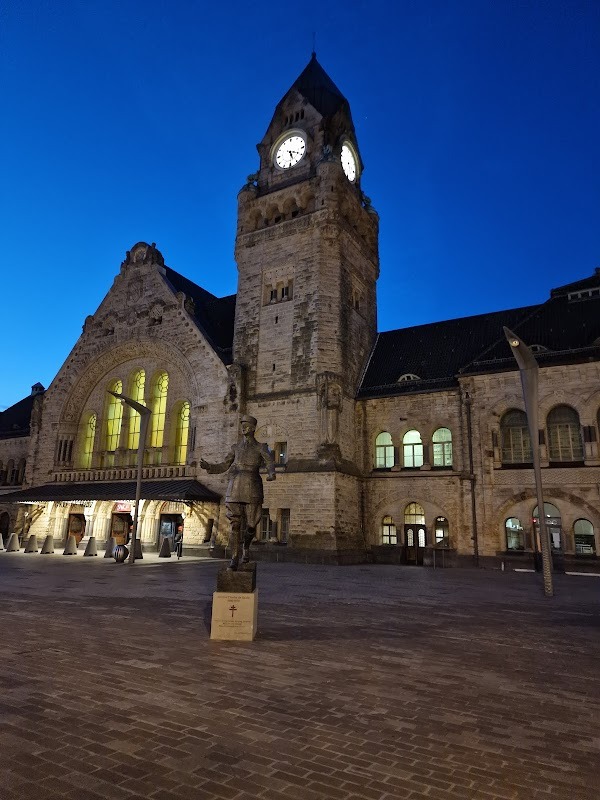
What is Metz-Ville station?
Metz-Ville station, also called Gare de Metz-Ville, is Metz's imposing train station in northeast France. Metz sits at the confluence of the Moselle and Seille rivers, and the station is one of the city's most distinctive landmarks, marked by neo-Romanesque towers, stone arches and a 40-meter clock tower.
Those features make Metz-Ville more than a functional transit point. The building's scale and design reflect the political importance imposed on Metz when its national identity was changing.
Why was Metz-Ville station built?
Metz-Ville was built between 1905 and 1908 by order of Kaiser Wilhelm II, when Metz was under German rule. After France lost the Franco-Prussian War in 1871, Alsace and Lorraine, including Metz, were annexed by the newly unified German Empire. Metz remained a German city for the next 47 years.
The station was designed to showcase German imperial strength and support rapid military mobilization along the French border. Its monumental architecture was therefore a political statement as much as railway infrastructure. Even its size carried a message: it was partly designed so the Kaiser's personal train could pull inside without stopping.
What should you notice at Metz-Ville station?
Start with the neo-Romanesque towers rising over the city, then look at the stone arches and the 40-meter clock tower. These are not isolated decorative details; together, they give the station the imposing scale intended by its original design.
Metz-Ville's physical presence is evidence of the building's political purpose. It was created to make German power visible in Metz and to serve a military role close to the French border. The Metz Through Time: From Dragons to Liberation route examines the station in that wider historical setting through an interactive experience.
How did Metz-Ville station reflect Metz's changing borders?
Metz returned to France in 1918 at the end of World War I, after 47 years as a German city. The station therefore became part of a French city again, but its history as an imperial German project remained built into its towers, arches and clock tower.
That change did not last permanently. When Hitler's army swept into France in June 1940, Metz was re-annexed into the Third Reich without a formal declaration. On June 17, 1940, German troops marched through Metz-Ville station.
The station also stood within the movement of people and power during these changes. Refugees, resistance couriers and German officers passed through its arches. Metz-Ville consequently records shifting borders, loyalties and control not only in its architecture, but in the successive groups who used the building.
For an interactive way to examine Metz-Ville alongside the city's wider history, begin with Metz Through Time: From Dragons to Liberation.
The tour that visits Metz-Ville
Each one is a self-guided route you can start whenever you like.
Metz · 1h 55m
Metz Through Time: From Dragons to Liberation
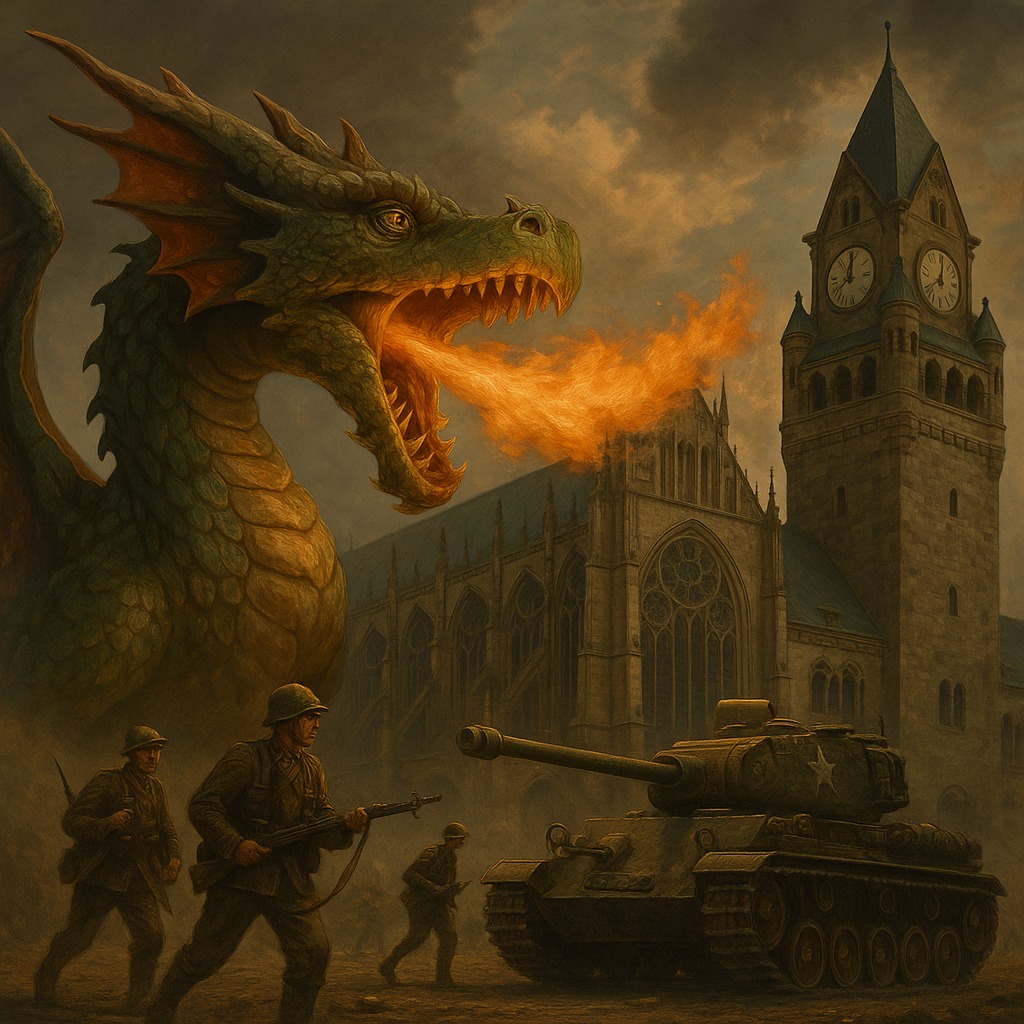
Step into Metz's storied past with this immersive self-guided tour—from the imposing Gare de Metz-Ville to the legendary Rue Taison, grand Synagogue, and somber Pont des Morts. Trace the city's journey through WWII: invasion, resistance, and liberation. Experience tales of courage, loss, and hope in every corner of Metz.
- places
- Metz
- Metz-Ville station
- Gare de Metz-Ville
- French history
- railway architecture