
Jerusalem, Israel3 min read
Mount of Olives Jerusalem: Cemetery Ridge and Titus's Siege Headquarters
Mount of Olives on Google Maps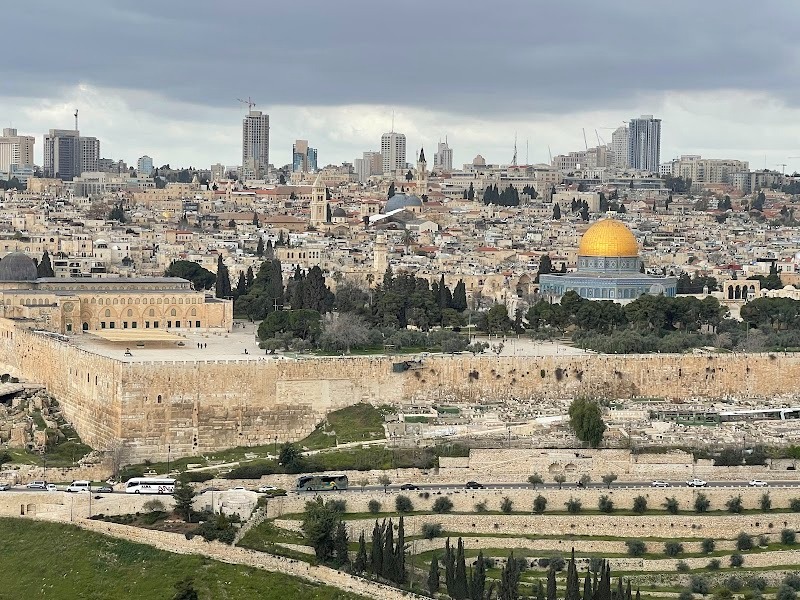
What is the Mount of Olives in Jerusalem?
Mount of Olives Jerusalem is a mountain ridge in East Jerusalem, immediately east of and adjacent to Jerusalem's Old City. Also called Mount Olivet, it is named for the olive groves that once covered its slopes. Atop the hill is At-Tur, a Palestinian neighbourhood and former village that is now part of East Jerusalem.
The ridge is easy to understand spatially: the Old City lies to its west, while the Kidron Valley runs between them. The western slopes facing Jerusalem are covered by a Jewish cemetery with more than 3,000 years of use and approximately 150,000 graves. That combination of elevation, valley and cemetery is the essential physical character of the Mount of Olives.
What can you notice on the Mount of Olives?
Start with the cemetery on the western slopes. Its long use makes the side facing Jerusalem central to the tradition of Jewish cemeteries, while the sheer number of graves gives the ridge a visible historical layer rather than leaving it as a distant outline behind the Old City.
Look south as well. The southern part of the Mount of Olives was the Silwan necropolis, attributed to the elite of the ancient Kingdom of Judah. The cemetery and necropolis are different traces of how the mount's slopes have been used across distinct periods. Between the ridge and the Old City, the Kidron Valley provides the landscape's defining divide.
For a first-time visitor, these are the features worth identifying before trying to place the history: At-Tur on the hilltop, the cemetery-covered western face, the Kidron Valley below, and the Old City beyond it. That simple orientation helps you read the mount as a ridge beside Jerusalem rather than as a viewpoint detached from the city.
Why is the Mount of Olives important in Jerusalem's history?
In 70 CE, Roman General Titus chose the Mount of Olives as his headquarters during the siege of Jerusalem. Its commanding elevation gave him a view over the city's defences, including the Temple and city walls.
From that position, Titus coordinated the encirclement, ordered the construction of siege ramps and directed the assaults that led to the final breach. The ridge therefore mattered not only because it stood beside the city, but because its height made Jerusalem's defensive layout visible to the Roman commander.
The Mount of Olives is also presented as a sacred landscape connected with mourning, prayer and traditions concerning redemption. The adjacent Kidron Valley carries its own religious significance, including traditions that identify it as the setting of final judgment and the ultimate battle between good and evil.
How does the Mount of Olives connect to Jerusalem's Old City?
The connection is visible in one line of landscape: the Mount of Olives stands immediately east of the Old City, and the Kidron Valley runs between them. From the ridge, the cemetery on the western slopes faces the city across that valley, while the mount's elevation explains its strategic importance during Titus's siege.
Reading these features together gives you a useful orientation for Jerusalem. The Old City, the valley and the cemetery are not separate points on a map; they form the specific spatial relationship that made the Mount of Olives both a military headquarters and a sacred landscape.
How can you explore the Mount of Olives through Jerusalem's history?
The Mount of Olives is stop 7 of 7 on the Siege of Jerusalem 70AD tour. Follow the linked tour to place the ridge in the siege sequence and connect its physical position with Titus's operations around Jerusalem.
The tour that visits Mount of Olives
Each one is a self-guided route you can start whenever you like.
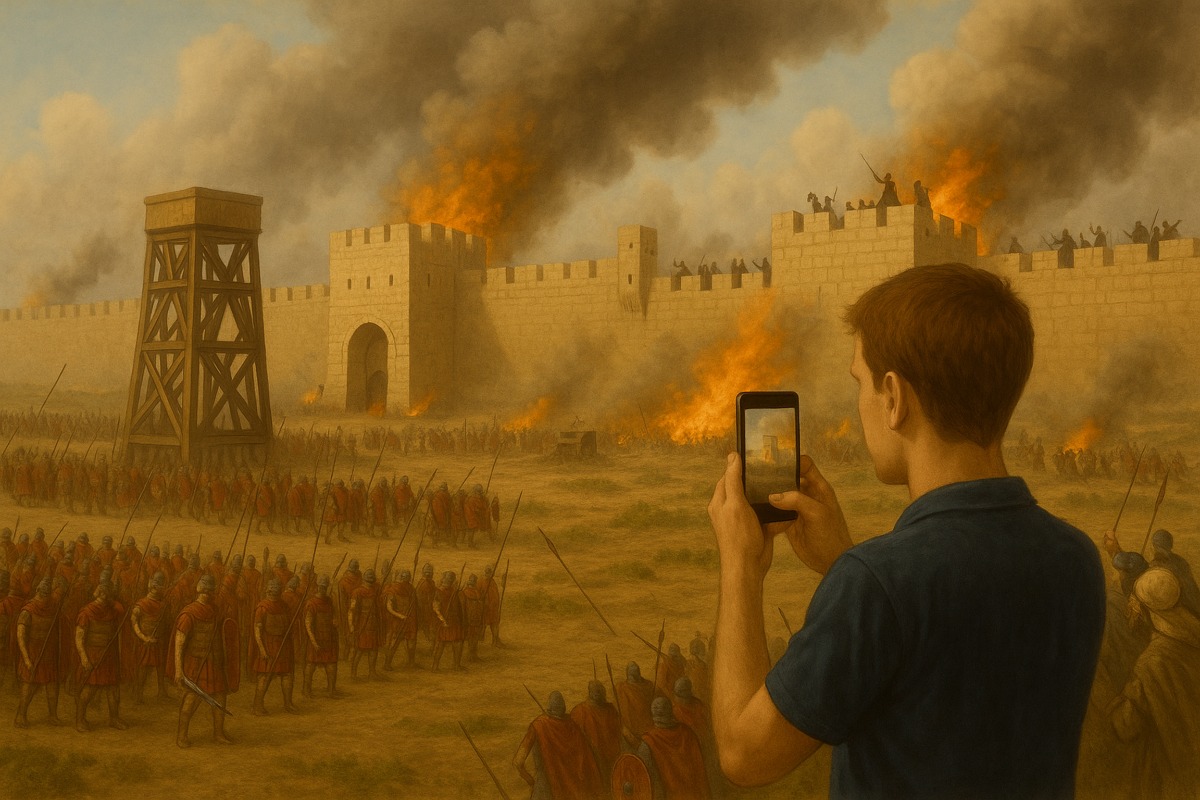
Jerusalem · 1h 30m
Siege of Jerusalem 70AD
Relive the dramatic Siege of Jerusalem in 70 AD through the eyes of a Roman Praetorian. This immersive self-guided tour traces the Roman assault from Jaffa Gate to the Temple Mount's destruction, exploring ramparts, breached walls, and the final aftermath atop the Mount of Olives. Discover pivotal moments, historical sites, and the strategies that shaped one of history's most consequential sieges.
- places
- Jerusalem
- Mount of Olives
- Jerusalem history