
Ise (Ujiyamada), Japan2 min read
Oharaimachi Street in Ise (Ujiyamada): What Makes It Distinctive
Oharaimachi Street on Google Maps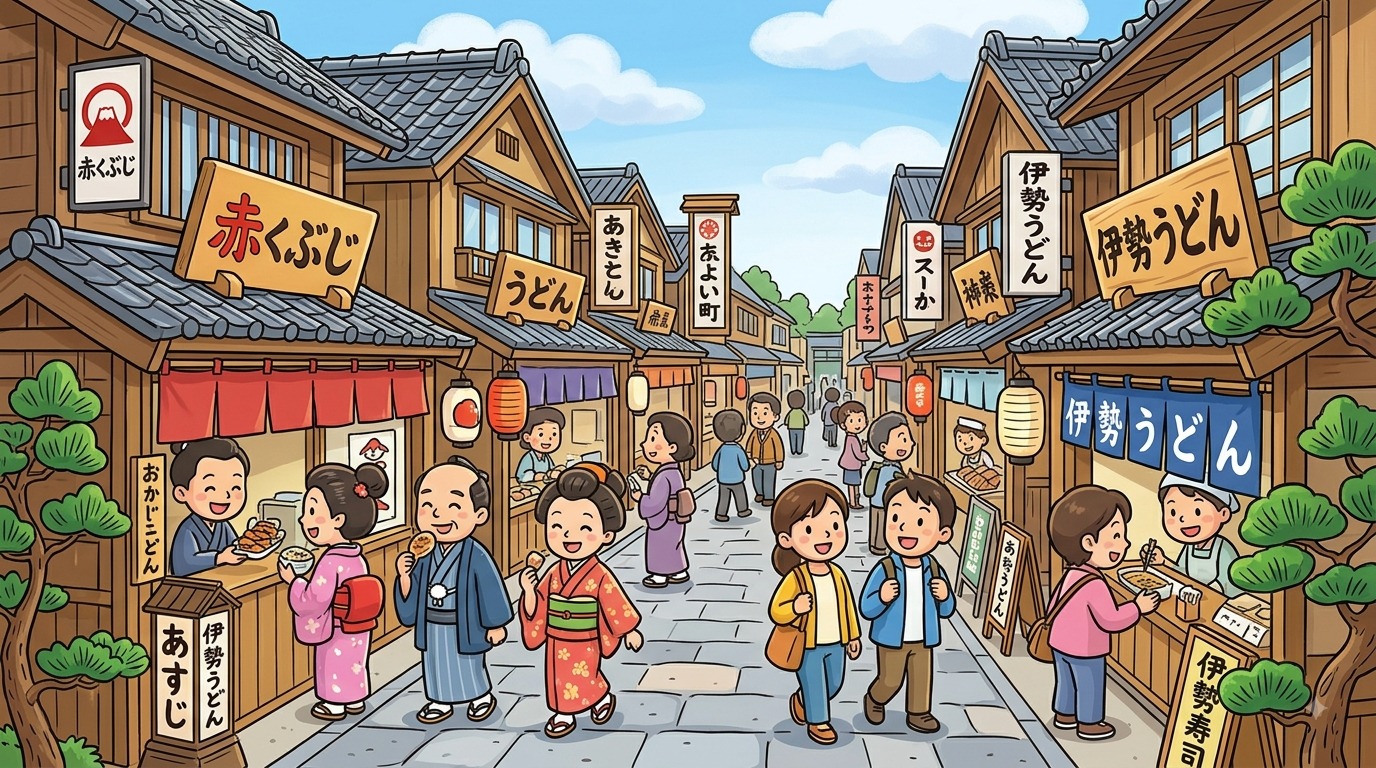
Oharaimachi Street is a historic street in Ise, the city in central Mie Prefecture on Japan's island of Honshū, formerly called Ujiyamada. It is the approach to Ise Grand Shrine—described as Japan's most sacred Shintō shrine—leading toward the sacred Inner Shrine beyond the Uji Bridge. Its traditional architecture, cobblestones, and association with akafuku mochi give the street a distinctive identity.
What is Oharaimachi Street in Ise?
Oharaimachi is the street where Ise's pilgrimage approach meets the threshold of the sacred Inner Shrine. Its character comes from that position: it is not simply a traditional-looking road, but a place connected to the movement of pilgrims toward the shrine and to the rituals that prepared them for the crossing of the Uji Bridge.
The street's traditional architecture and cobblestones remain central to its appearance. Akafuku mochi is another characteristic associated with Oharaimachi, adding a specific food tradition to the street's built and religious setting. The Ise - Amaterasu's Grand Shrine tour includes Oharaimachi as one of its stops.
Why was Oharaimachi important during the Edo Period?
During the Edo Period, Oharaimachi was filled with the grand estates of the Oshi, regional pilgrim guides connected with Ise's visitors. These Oshi performed Oharai, or sacred purification rituals, for arriving commoners before the pilgrims crossed the Uji Bridge into the sacred Inner Shrine.
That ritual role explains the street's name. Oharaimachi is connected to the Oharai purification ceremonies performed there, making the street's historical identity inseparable from the preparation of pilgrims. The setting also included kagura dances, which formed part of the purification rituals for the arriving crowds.
What should you notice on Oharaimachi Street?
Notice the traditional architecture first, then look down at the cobblestones described as polished through years of devotion. These details make the street's physical character specific to its long-standing relationship with pilgrims approaching Ise Grand Shrine.
Kagura is also important to the street's history. The word literally translates to “entertaining the gods,” and kagura is described here as Japan's oldest sacred performing art: Shintō ritual dances accompanied by ancient flutes, drums, and string instruments. On Oharaimachi, those performances belonged to the purification setting before the journey continued toward the Inner Shrine.
How does Oharaimachi Street fit into a visit to Ise?
Approach Oharaimachi as the street where the over-1000-year story of the Ise pilgrimage continues toward the sacred Inner Shrine. As you walk through it, look closely at the traditional architecture, polished cobblestones, akafuku mochi, and the ritual history tied to the Oshi and kagura. The street leads toward the Uji Bridge and Inner Shrine, so its meaning comes from both the road itself and the sacred crossing ahead; the Ise route offers a way to explore that connection through a self-guided stop.
The tour that visits Oharaimachi Street
Each one is a self-guided route you can start whenever you like.
Ise (Ujiyamada) · 2h 55m
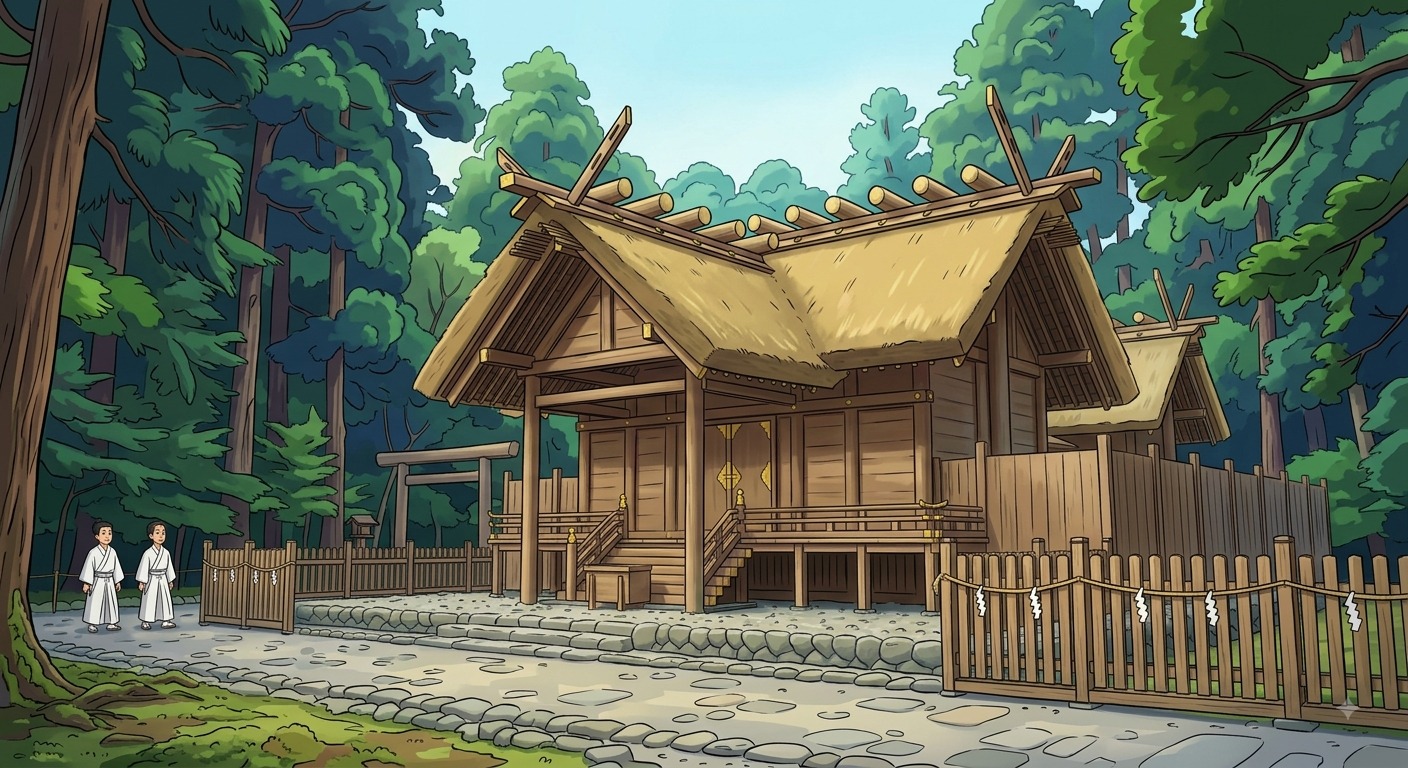
Ise - Amaterasu's Grand Shrine - Culture, Religion, and History
Walk in the footsteps of emperors and pilgrims on this immersive self-guided tour of Ise's most sacred icons. From the welcoming Ise-shi Station to the revered Kotai Jingu, experience ancient shrines, bustling Edo-era streets, and the timeless Uji Bridge. Savor local delicacies, uncover legends, and let the sun goddess Amaterasu illuminate your journey through Japan's spiritual heart.
- places
- Ise (Ujiyamada)
- Oharaimachi Street
- Ise
- Ujiyamada
- Ise Grand Shrine
- Japan travel