
Winchester, United Kingdom2 min read
Old Minster Winchester: History of the Marked Site
Old Minister on Google Maps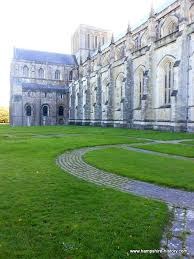
The Old Minster in Winchester was a stone religious building dating back to 648, and its site is marked today by a stone in the grass. According to the account in Journey Through Winchester’s Past, it was the first stone building built in England since the Romans.
What is the Old Minster in Winchester?
The Old Minster was an early centre of religious and royal life in Winchester. Its surviving marker identifies the location of a building that stood here from the Anglo-Saxon period, making the stone in the grass more than a simple historical sign: it marks the footprint of a major early English church.
The site dates to 648. The tour material describes the Old Minster as the first stone building built since the Romans, placing it within a significant change in the history of construction and Christianity in England.
Why was the Old Minster important in Winchester’s history?
The Old Minster mattered because it was connected to both royal ceremony and the religious foundations of Anglo-Saxon Winchester. Edward the Confessor was crowned King of England at the Old Minster in 1042.
The New Minster was built beside it in 903 as a royal mausoleum for Anglo-Saxon kings and queens. At one point, the Old Minster, the New Minster and another religious building stood side by side. That grouping made this site an unusually concentrated centre of religious and royal history.
Who was buried at the Old Minster?
King Alfred the Great was buried at the Old Minster before his remains were moved to the New Minster. In 1110, he was finally buried at Hyde Abbey in Winchester, which was later destroyed in the Reformation.
St Swithun was also buried at the Old Minster. He is the patron saint of Winchester, and the account says he was buried against his wishes in a relic on July 15th.
What is the St Swithun’s Day story?
The story attached to St Swithun’s burial says that it rained for 40 days and 40 nights afterwards. This became the basis of the St Swithun’s Day weather belief.
According to the tradition, if it rains on July 15th, the summer will be wet or poor. The saying gives the Old Minster a memorable connection to a piece of English weather folklore that still centres on St Swithun’s Day.
How can you put the Old Minster into context?
The Old Minster is stop 9 of 18 on Journey Through Winchester’s Past. Following the route places the marked site within a wider account of Winchester’s past, while the stone in the grass keeps the location of the Old Minster visible today.
The tour that visits Old Minister
Each one is a self-guided route you can start whenever you like.

Winchester · 3h 10m
Journey Through Winchester's Past
Journey Through Winchester’s Past! Meet all the Historical Characters of England’s history. And the Literary Characters who left their mark on the world. See the sights of England’s Old Capital. Let …
- places
- Winchester
- Old Minster
- Anglo-Saxon history
- St Swithun