
Gdańsk, Poland3 min read
Old Port Crane Gdańsk: How the Historic Crane Worked
Old Port Crane on Google Maps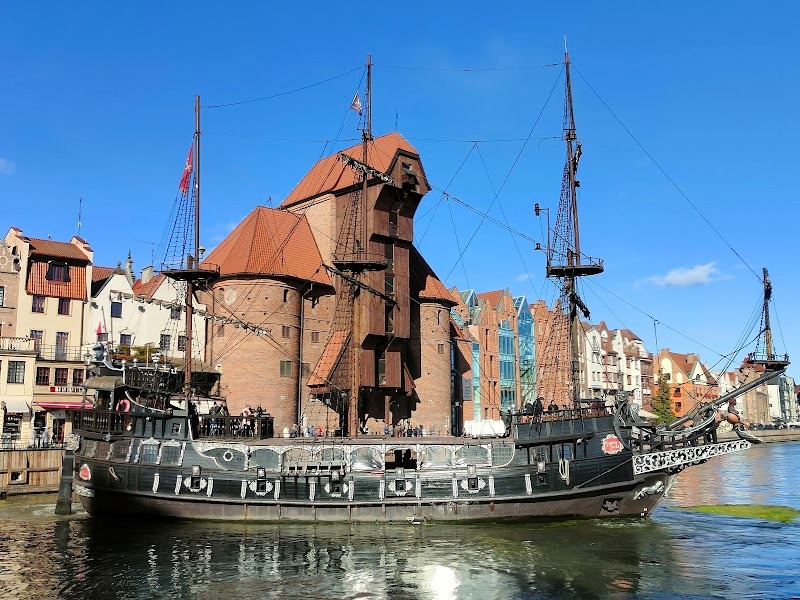
The Old Port Crane in Gdańsk, also called the Crane Gate, is a 15th-century port crane on the Motława river in central Gdańsk, Poland. Its current form dates to 1442–1444, and it served two roles at once: a fortified city gate and a port hoist.
The Crane was the largest port crane in medieval Europe and is now on the regional heritage list. Its importance was not only architectural. It was a working machine built into the city’s waterfront and closely tied to Gdańsk’s maritime trade.
What is the Old Port Crane in Gdańsk?
The Gdańsk Crane is a historic riverfront structure whose gate protected access through the city while its hoisting machinery handled port work. Its position on the Motława placed the Crane directly within the movement of cargo between the river, the port and the ships using Gdańsk.
The structure’s combined identity matters: it was not simply a gate beside the water, nor only a lifting device. The fortified entrance and the industrial hoist formed one landmark, giving the city both a defensive passage and a major piece of port infrastructure.
How did the Gdańsk Crane lift cargo?
The Gdańsk Crane lifted cargo using two sets of human-driven treadwheels. The mechanism could raise cargo weighing up to four tons to a height of 11 meters.
That power came from specialist labour. Known as crane masters, the workers walked inside the treadwheels to generate the torque needed for heavy lifting. Their work was dangerous and required a high level of skill, so the crane masters formed a specialized guild. The machinery therefore depended not only on timber, rope and engineering, but also on trained maritime workers who knew how to operate it.
Why was the Old Port Crane important to Gdańsk’s trade?
The Crane remained the primary industrial engine of the port throughout the 1550–1650 period. In the 17th century, it was essential for “stepping”, or installing, masts on seagoing vessels, as well as for loading bulk goods.
Its most important work connected different kinds of vessels and cargo. Grain and timber arrived on shallow-draft Vistula barges, then moved through the Crane into the deep-hulled ships of the Hanseatic and North Sea fleets. This made the Crane a critical link between the Polish agricultural interior and Western European markets.
The Crane also operated with the surrounding vertical granaries. Together, they helped load ships quickly during the short Baltic shipping season, when efficient movement from storage to vessel was especially important.
What should you notice when you stand by the Crane?
Start with the Crane’s position on the Motława and its two-part identity as a riverfront gate and industrial hoist. The surrounding vertical granaries belonged to the same working port system, so the landmark makes most sense as part of a larger mechanism for storing and moving goods.
Read the structure as a connection between inland barges, seagoing ships, cargo and maritime labour. The treadwheels explain how heavy loads moved; the crane masters explain the specialist skill behind that movement; and the riverfront setting explains why this particular place became central to Gdańsk’s trade.
The Old Port Crane is stop 6 of 8 on The Merchant Republic – Gdańsk’s Golden Age, a route that uses the landmark to explore the city’s maritime and commercial past. To follow the Crane in that wider historical context, continue with the Gdańsk Golden Age route.
The tour that visits Old Port Crane
Each one is a self-guided route you can start whenever you like.

Gdańsk · 1h 20m
The Merchant Republic — Gdańsk’s Golden Age (1550–1650)
Discover Gdańsk's Golden Age on this immersive walking tour through the Main Town. Explore stunning Flemish Mannerist architecture, legendary merchant halls, and iconic landmarks like the Golden Gate, Artus Court, Neptune's Fountain, and the mighty Crane. Step into the world of 16th–17th century trade, culture, and opulence.
- places
- Gdańsk
- Old Port Crane
- Gdańsk Crane
- Crane Gate
- maritime history
- Poland