
New Orleans, LA, United States3 min read
Old Ursuline Convent Museum New Orleans, LA
Old Ursuline Convent Museum on Google Maps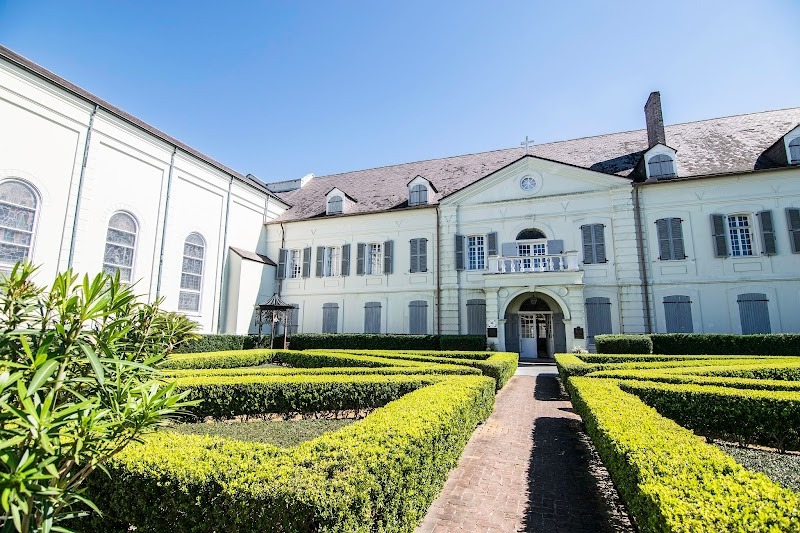
The Old Ursuline Convent Museum is the historic Ursuline convent in New Orleans, Louisiana, United States. French colonial engineers began constructing the surviving building in 1748, and by 1752 it had become the Ursuline nuns’ permanent home. It is described as the oldest surviving example of French colonial architecture in the Mississippi Valley.
What is the Old Ursuline Convent Museum?
The site is the surviving home of the Ursuline nuns, whose presence in New Orleans began before the building was completed. Its architectural importance comes from the French colonial construction that produced the convent that still stands, while its historical importance comes from the institution’s work in education, healthcare, and protection.
The building’s thick stucco walls are an essential detail to notice. They are not simply a visual feature: the walls sheltered vulnerable people during fires, epidemics, and wars, giving the convent a protective role alongside its religious purpose.
Why was the Old Ursuline Convent founded?
The convent was founded to serve New Orleans through religious, medical, and educational work. In 1727, at Governor Étienne Perier’s request, nuns from the Ursuline Convent of Rouen in Normandy came to New Orleans to establish a convent, run a hospital, and educate young girls.
The sisters’ educational work made the site especially significant in Louisiana history. They founded Louisiana’s first school for girls and taught free girls of color. The convent therefore functioned not only as a religious home, but also as a place of instruction and care.
What happened at the Old Ursuline Convent?
The convent’s thick stucco walls helped it shelter vulnerable people during fires, epidemics, and wars. It survived the Great Fire of 1788 as well as hurricanes, adding physical endurance to the institution’s history of care and protection.
The gardens also carry a history that is easy to miss if you look only at the architecture. The gardens visible today were once cultivated by enslaved workers, whose labor sustained this part of the convent and must be acknowledged as part of the site’s history.
The material available about the Old Ursuline Convent does not provide a complete account of every later period in the building’s history. What it does show clearly is an institution shaped by education, charitable care, protection, and the labor that made its grounds possible.
What should you notice at the Old Ursuline Convent Museum?
Start with the surviving French colonial architecture, then look closely at the thick stucco walls and gardens. Together, these details connect the physical site to the convent’s combined history: the walls recall its role as a refuge, the building recalls the nuns’ permanent home and school, and the gardens point to the enslaved workers whose labor sustained them.
The New Orleans French Quarters Tour includes the Old Ursuline Convent as stop 8 of 9, offering a route-based way to place the site within an exploration of the area. Use the convent itself as the focus: its architecture, educational mission, protective walls, gardens, and layered history are the details worth carrying with you.
When you are ready to explore the site as part of a self-guided route, start with the New Orleans French Quarters Tour.
The tour that visits Old Ursuline Convent Museum
Each one is a self-guided route you can start whenever you like.

New Orleans, LA · 1h 45m
New Orleans French Quarters Tour
Experience New Orleans like never before on this immersive walking tour through the French Quarter. Journey from the soulful Congo Square to the historic French Market, uncovering the city's complex history of slavery, Creole culture, and resilience. Explore iconic landmarks, hidden slave quarters, and vibrant marketplaces, all while hearing stories of struggle, survival, and celebration. Perfect for history buffs and curious travelers alike!
- places
- New Orleans, LA
- New Orleans
- French Quarter
- Old Ursuline Convent
- Louisiana history
- French colonial architecture