
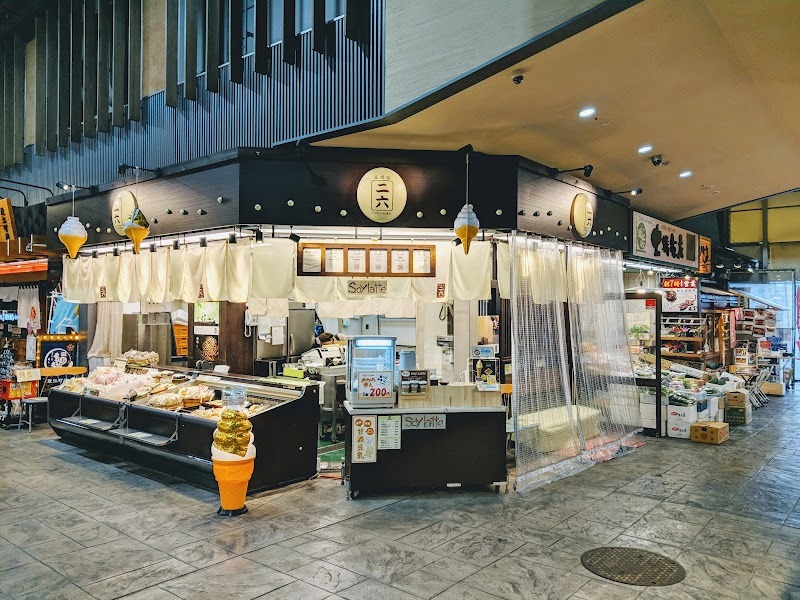
Omicho Market is a historic market in Kanazawa, the capital of Ishikawa Prefecture in central Japan. It has operated since 1721 and is described as having more than 170 stalls, making it a dense, lively place to encounter fresh fish, produce and the everyday activity of Kanazawa. The market's fluttering banners, vendor calls, grilling seafood, yuzu scent and briny ocean air are part of what makes it distinctive. You can explore it as a stop on Kanazawa's Kaleidoscopic Journey.
What is Omicho Market in Kanazawa?
Omicho Market is a long-running market concentrated around stalls selling food and local produce. Its more than 170 stalls create a colourful, noisy environment rather than a single, uniform shopping space. The tour description calls it a kaleidoscope of colour and sound, with hand-painted signs, cheerful vendor shouts and the sizzle of seafood being grilled.
The market's sensory details are unusually specific: yuzu citrus mingles with briny ocean air, while seafood brings the smell and sound of cooking into the aisles. These details connect the market's produce and vendors to Kanazawa's coastal setting without reducing Omicho to a simple food stop.
What is the history of Omicho Market?
Omicho Market dates back to 1721, giving it more than three centuries of activity in Kanazawa. The source describes it as having survived fires and famines, so its history is not just an old date attached to a modern attraction: the market has continued through periods of disruption.
The market's documented historical scene reaches back to the Edo period, when shoppers navigated its aisles in search of the freshest fish to impress their lords. That detail gives the present-day stalls a direct connection to the market activity described in the source, while playful references to samurai disputes and local legends are best treated as stories rather than verified history.
What can you eat at Omicho Market in Kanazawa?
At Omicho Market, you can encounter fresh fish and grilling seafood among the market's food stalls. The tour material names snow crab, seaweed and melon as examples of what appears among the market's offerings, showing the range from seafood to produce.
Yuzu citrus is part of the market's described scentscape, mingling with the briny smell of the ocean and the sizzle of seafood. The source does not prescribe a particular dish, vendor or order; instead, it presents Omicho as a place where food is encountered through its stalls, smells and preparation.
What should you look for inside Omicho Market?
Look for the hand-painted signs, the activity of the vendors and the variety packed into more than 170 stalls. The aisles are described as labyrinthine, so the market's character comes from moving among many small points of attention rather than taking in one central display.
Notice the contrast between the market's everyday movement and its long history. Vendor calls, grilling seafood, fresh fish, seaweed and melons belong to the market's present, while the Edo-period shoppers and the date 1721 connect those details to a much longer record of activity.
Why visit Omicho Market?
Omicho Market brings together a history dating to 1721, more than 170 stalls, seafood, produce and a distinctive mix of banners, vendor calls, grilling sounds, yuzu and ocean air. It is a place where food, local stories and active observation meet in a market environment with a documented continuity stretching across more than three centuries.
To explore those details as part of a self-guided walk, experience Omicho Market on Kanazawa's Kaleidoscopic Journey.
The tour that visits Omicho Market
Each one is a self-guided route you can start whenever you like.

Kanazawa · 2h 10m
Kanazawa's Kaleidoscopic Journey
Embark on a one-day walking tour through Kanazawa's storied heart. Begin at the futuristic Tsuzumi Gate, savor fresh flavors at Omicho Market, marvel at Oyama Shrine's stained-glass gate, and explore the samurai grandeur of Kanazawa Castle Park. Wander Kenrokuen's legendary gardens, dive into contemporary art at the 21st Century Museum, stroll the historic Nagamachi samurai district, and finish in the lantern-lit Higashi Chaya geisha quarter. Discover Kanazawa's living history at every turn.
- places
- Kanazawa
- Omicho Market
- Japan
- Japanese markets
- self-guided walking tours