
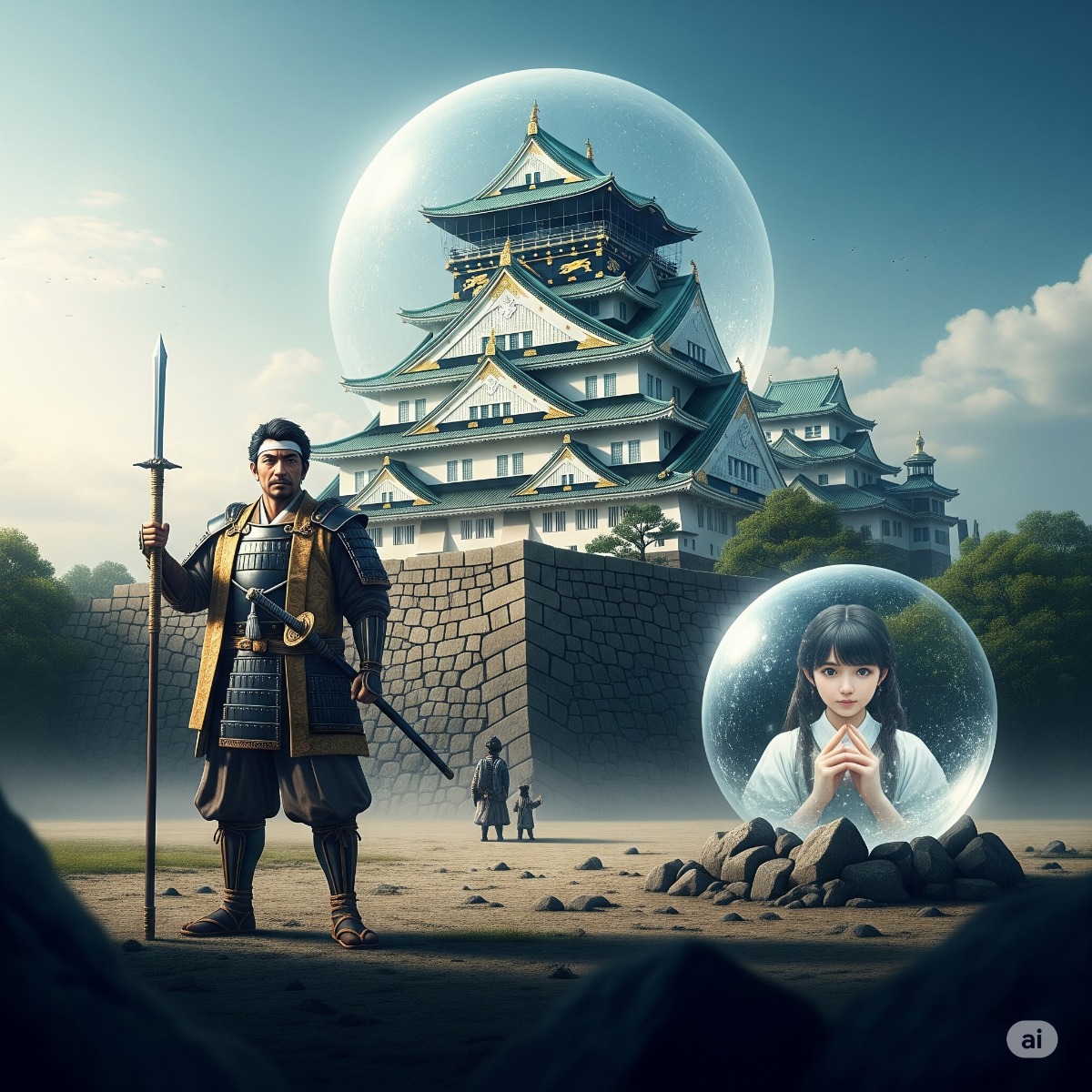
Osaka Castle is a Japanese castle in Chūō-ku, Osaka, Japan, and one of Japan’s most famous landmarks. It played a major role in the unification of Japan during the sixteenth-century Azuchi–Momoyama period, and tour material places its rise above the city in 1583 as part of Toyotomi Hideyoshi’s effort to unite the nation.
What is Osaka Castle?
Osaka Castle is the fortress associated with Toyotomi Hideyoshi’s ambition to bring Japan together. Hideyoshi conceived the castle as part of that effort, making its identity inseparable from the political upheaval of the Azuchi–Momoyama period.
Its importance is not only architectural. Osaka Castle stands as a landmark connected to the process of unification itself, with the fortress described as towering above Osaka since 1583. The scale and symbolism of the castle reflect the power Hideyoshi sought to establish from its ramparts.
What happened at Osaka Castle?
Osaka Castle’s history is marked by conflict, fire and survival rather than an untouched, continuous sixteenth-century story. In 1615, Tokugawa troops laid siege to the castle, adding a decisive military episode to its history.
The main tower was later set ablaze by a bolt of lightning in 1665. The tour material describes it as rising again centuries later, while also noting that the heart of the castle endured World War II bombing. These events give Osaka Castle a historical arc shaped by destruction and survival.
What can you see at Osaka Castle?
Osaka Castle’s most distinctive visual details include its white walls, which the tour material compares to samurai armor. Golden tigers and mythical dolphins, known as shachi, guard the heights of the castle and add bright, symbolic details to the structure.
Look closely at the stones for family crests, or mon. These marks indicate the allegiance of ancient clans, making the castle’s masonry part of its historical record rather than simply a defensive feature.
Inside the castle, the museum contains samurai armor, secret letters and gold leaf screens. These objects connect the building’s political and military history with the people, messages and craftsmanship associated with Japan’s samurai era.
The observatory atop the main keep offers sweeping views of Osaka. From there, skyscrapers stand across the city where samurai once rode, placing the castle’s history directly against Osaka’s modern skyline.
To examine these details through an interactive route, follow Osaka - Hideyoshi's Japan - Culture and History, which visits Osaka Castle as stop 2 of 8.
The tour that visits Osaka Castle
Each one is a self-guided route you can start whenever you like.
Ōsaka · 2h 30m
Osaka - Hideyoshi's Japan - Culture and History tour
Uncover centuries of history and vibrant street life on this immersive self-guided tour of Osaka. Journey from the iconic Osaka Castle through tranquil riverside lawns, sacred shrines, bustling shopping arcades, and neon-lit entertainment districts. Along the way, enjoy curated rest stops at local cafés, experience authentic Osaka flavors, and discover the legends and lore that make this city unforgettable. Perfect for explorers seeking culture, cuisine, and a dash of adventure.
- places
- Ōsaka
- Osaka
- Osaka Castle
- Japanese history
- castles
- Azuchi–Momoyama period