
Oxford, United Kingdom3 min read
Oxford Castle & Prison in Oxford
Oxford Castle & Prison on Google Maps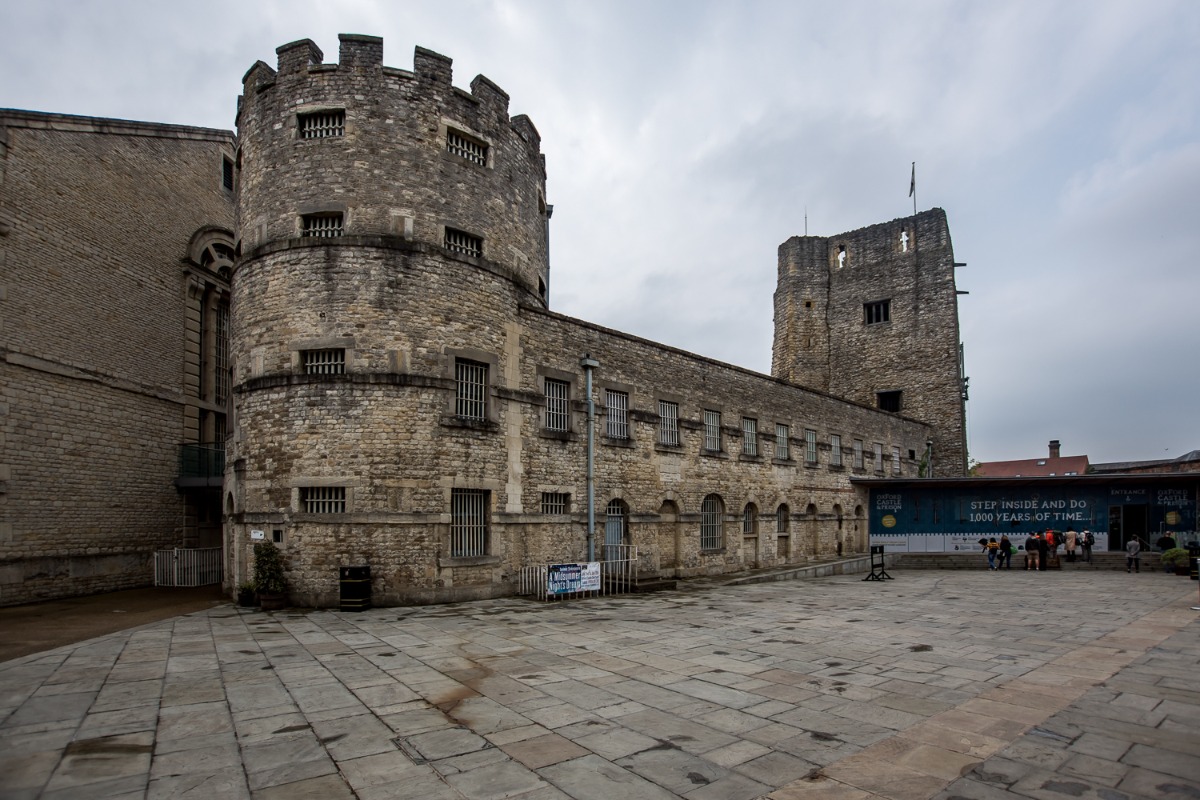
Oxford Castle & Prison is a large, partly ruined medieval castle and former prison on the western side of central Oxford in Oxfordshire, England. Its surviving mound and St George's Tower belong to a site that changed from a Norman stronghold into a centre for county administration and imprisonment.
Most of the original castle was a moated, wooden motte-and-bailey construction. It was later replaced in stone in the late 12th or early 13th century. By the 14th century, its military value had diminished, and Oxford Castle was used primarily for county administration and as a prison.
What is Oxford Castle & Prison?
Oxford Castle & Prison is the surviving castle-and-prison site created after the Norman Conquest, rather than a generic Oxford attraction. The castle began as a strategic fortified site and remained significant even as its military role declined.
Its position on the western side of central Oxford helped connect the castle to the River Thames route leading towards London and the sea. That setting made Oxford Castle strategically important during the conflicts in which control of the city mattered.
What can you recognise at Oxford Castle & Prison?
The most striking surviving feature is the large grassy mound, or motte. It formed the foundations for the keep or tower that has since been destroyed, leaving the raised earthwork as one of the clearest physical signs of the castle's original defensive design.
St George's Tower is the surviving rectangular tower to look for. It is believed to pre-date the remainder of the castle and is now thought to have been a watch tower associated with the original Saxon west gate of the city. The Oxford Exam route uses the site to connect these features with Oxford's earlier settlement and the castle's strategic position, without treating the surviving tower as the whole castle.
What happened at Oxford Castle during the Anarchy?
Oxford Castle played an important role in the Anarchy, the civil war between King Stephen and Empress Matilda after the death of Henry I without a confirmed heir. The conflict lasted from 1135 to 1153, and Oxford Castle was a strategic location during it.
In 1142, Empress Matilda was imprisoned inside St George's Tower. The account associated with the castle describes her escape during a snowstorm, dressed in white, down a frozen River Thames. The episode gives the surviving tower a direct connection to one of the most distinctive events in the castle's history.
Why does Oxford Castle still matter to Oxford?
Oxford Castle matters because the site connects Oxford's Anglo-Saxon beginnings with the city's later medieval power. The tour material describes Oxford's name as deriving from the Old English for a shallow place for oxen to pass, and presents the castle site as preceding the University.
The castle's changing role—from strategic Norman stronghold, to a site involved in the Anarchy, to county administration and prison—explains the significance of the mound and tower that survive. To encounter that specific story as part of a route through Oxford, follow the Oxford Exam.
The tour that visits Oxford Castle & Prison
Each one is a self-guided route you can start whenever you like.

Oxford · 2h
The Oxford Exam
Explore Oxford’s iconic sights, uncover rich history, and embark on the ultimate academic adventure! Perfect for exam takers and curious travelers alike - celebrate your success and start your journey here. The world awaits!
- places
- Oxford
- Oxford Castle
- Oxford Castle & Prison
- medieval history
- Anarchy