
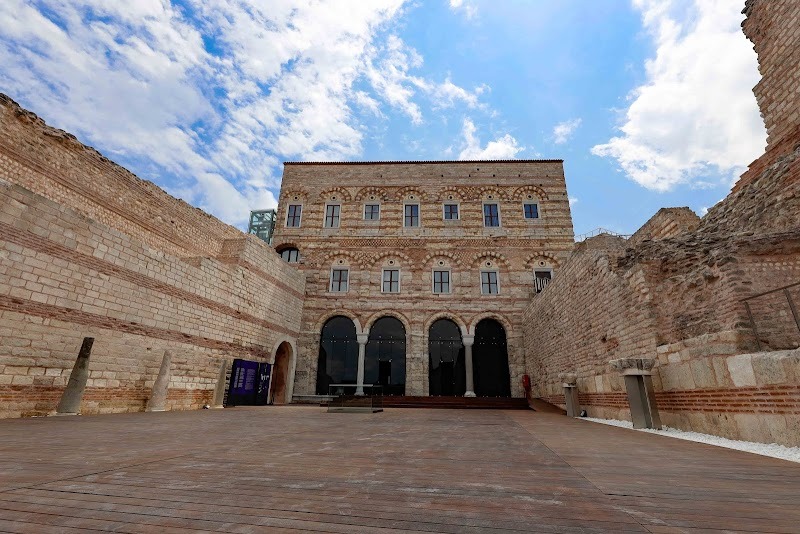
The Palace of Blachernae was an imperial Byzantine residence in the suburb of Blachernae, in the northwestern section of Constantinople. The palace became one of the most important imperial centres of the Byzantine Empire, although its area in present-day Istanbul is now mostly overbuilt.
Much of what is known about the palace's appearance comes from literary sources rather than a preserved architectural complex. That makes Blachernae a place understood through its setting, surviving fragments and role in the final centuries of Byzantium.
What was the Palace of Blachernae?
The Palace of Blachernae was a Byzantine imperial residence that stood apart from the older Great Palace in the northwestern part of Constantinople. The complex originally rose in the 5th century, establishing an imperial presence in a suburb that would later become central to Byzantine political life.
The palace area is not preserved as an intact imperial residence. Later building has covered much of the site, while written accounts provide much of the available description of its former buildings and spaces.
Why did Byzantine emperors prefer Blachernae?
By the 11th century, Byzantine emperors preferred Blachernae to the older Great Palace. Its importance came from two unusually powerful associations: it stood near the Church of St. Mary of Blachernae and close to Constantinople's land walls.
That combination gave the palace both religious significance and a strategic position. Blachernae was more than a residence; the supplied tour material describes it as a setting for intrigue and diplomacy, with imperial decisions connected to the palace's halls and courtyards. Alexios I Komnenos and Constantine XI Palaiologos are both associated with its wider imperial story.
What happened at Blachernae during the siege of 1453?
During the spring of 1453, Ottoman cannons threatened Constantinople, and the palace grounds became a place of anxiety, faith and urgent decision-making. Nobles and clergy debated desperate strategies, while the palace chapel filled with prayers for deliverance.
This setting places Blachernae within the final crisis of the Byzantine Empire: a residence that had once represented imperial authority now stood close to the city's threatened defences during its last stand.
What can you still notice at the Palace of Blachernae?
You cannot experience the Palace of Blachernae today as a complete building or intact imperial complex. The area is mostly overbuilt, but fragments of marble columns and brickwork are identified in the tour material as surviving traces of the palace.
The setting also remains associated with the view towards the Golden Horn, once described as glittering with the sails of Byzantine fleets. The Constantinople Siege 1453 route visits the Palace of Blachernae as stop 5 of 8, connecting the remaining physical traces with the palace's role in the city's final Byzantine crisis.
What remains is not a complete layout to walk through, but a specific location where religious authority, imperial power and the land walls met. That relationship is the key to reading Blachernae in Istanbul today.
The tour that visits Palace of Blachernae
Each one is a self-guided route you can start whenever you like.
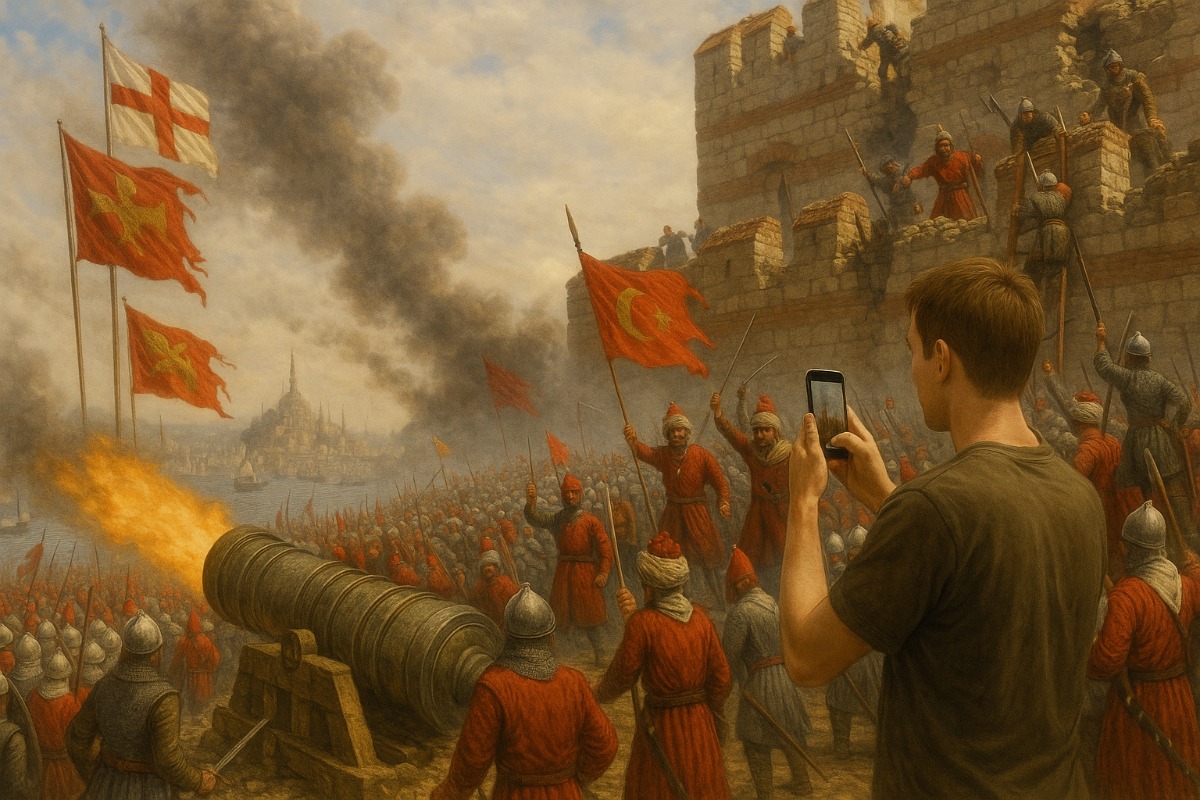
Istanbul · 3h 45m
Constantinople Siege 1453
Step into the shoes of an Ottoman soldier and journey through the dramatic final hours of Constantinople in 1453. Explore legendary sites from the Theodosian Walls to Hagia Sophia, uncovering stories of heroism, intrigue, and transformation that shaped modern Istanbul.
- places
- Istanbul
- Byzantine Empire
- Palace of Blachernae
- Constantinople
- historic places