
Bucharest, Romania2 min read
Palace of Telephones Bucharest: The Art Deco Telephone Palace
Palace of Telephones on Google Maps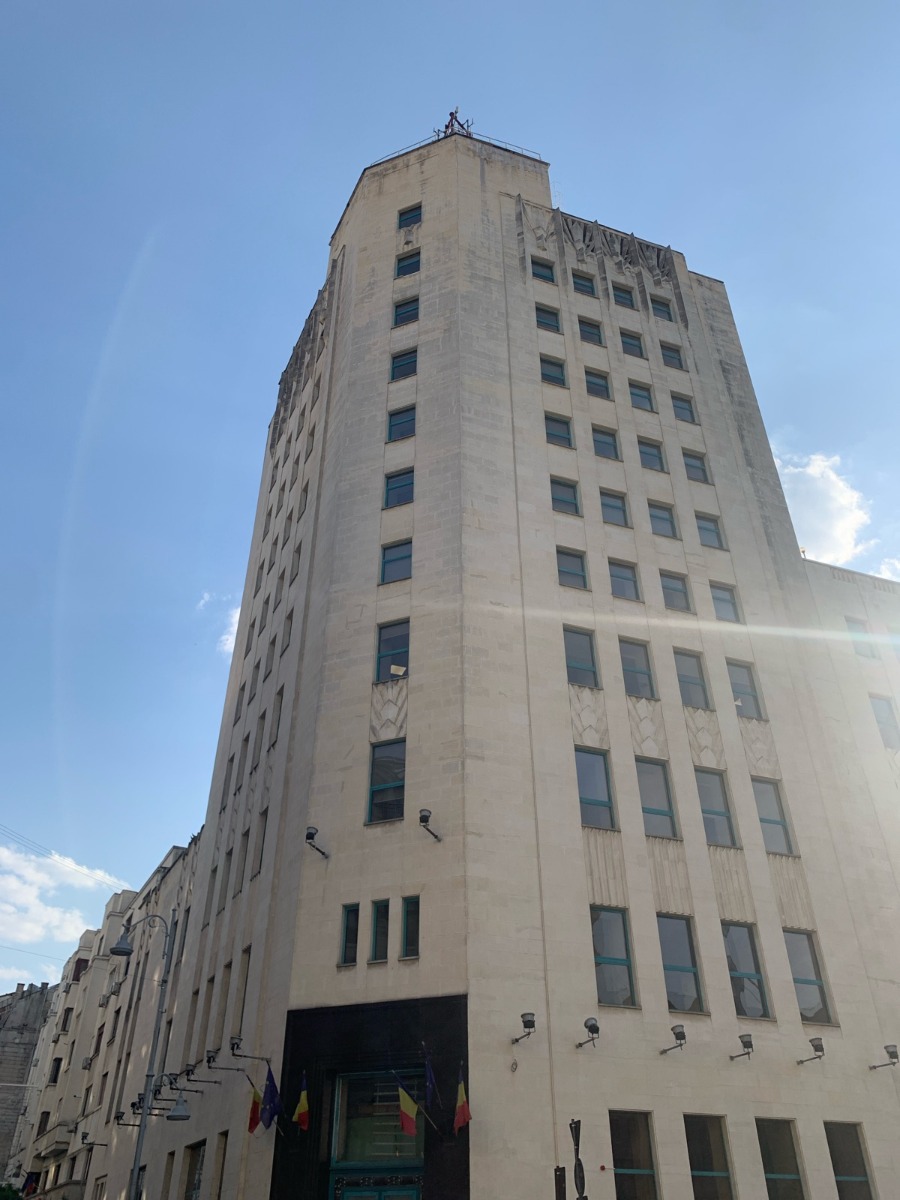
The Palace of Telephones in Bucharest is an Art Deco office building on Calea Victoriei, Romania. Also known as the Telephone Palace, the Telephones Company Building and Palatul Telefoanelor, it is now owned by Telekom România.
Its 1934 design made it one of the clearest physical signs of Bucharest's move into modernity. If you want to place the building within the city's interwar story, the Life in Interbelic Bucharest tour visits it as one of its stops.
What is the Palace of Telephones in Bucharest?
The Palace of Telephones is a 52-metre Art Deco office building on Calea Victoriei that originally served the country's telephone operations. Its other names reflect the same role: Telephone Palace and Telephones Company Building.
The building is now owned by Telekom România. Its geometric form and unusual height make it a distinctive presence on one of Bucharest's central streets, while its original function connects the architecture directly to the communications network it housed.
Why was the Palace of Telephones important to Bucharest?
The building was completed in 1934 and became Romania's first skyscraper, rising 52 metres above Bucharest. That height mattered because the city was still associated with horse-drawn carts when the building's bold silhouette appeared above it.
Its sleek, geometric Art Deco design divided opinion. Some writers criticised the building as cold and impersonal; others saw it as a symbol of progress and Romania's leap into modernity. The American architects used techniques associated with New York skyscrapers, and the building's steel frame was a first for Bucharest.
What happened inside the Palace of Telephones?
The building housed telephone operations through which voices were connected across Romania and internationally. Diplomats, poets and lovers relied on operators inside to carry private and urgent communications, making the building part of the practical infrastructure of everyday life as well as a highly visible landmark.
During World War II, the Palace of Telephones survived bombings and political upheaval while remaining a communications lifeline. Its history is therefore tied both to Bucharest's technological modernisation and to the city's experience of crisis.
What should you notice at the Palace of Telephones?
From Calea Victoriei, look for the building's bold, geometric Art Deco silhouette and its unusual height in the context of 1934 Bucharest. The steel-framed skyscraper form is not separate from the building's purpose: it was created for telephone operations that carried communications through the city and beyond.
The route's stop includes a photo challenge, inviting you to capture the spirit of the building without reducing it to an ordinary office façade. The Palace of Telephones is best understood through that combination of visible ambition and invisible activity: a structure that made Bucharest's connection to the wider world part of the cityscape.
The tour that visits Palace of Telephones
Each one is a self-guided route you can start whenever you like.
Bucharest · 2h 40m
Life in Interbelic Bucharest: From Salons to Streets
Explore the glamour and grit of interwar Bucharest, where poets and politicians clashed in cafés, spies whispered in hotel lobbies, and modernity soared above cobbled streets. This immersive walking tour guides you through iconic salons, literary battlegrounds, and sites of quiet revolution, revealing the city's vibrant culture between the World Wars. Perfect for history buffs, literature lovers, and curious wanderers.
- places
- Bucharest
- Palace of Telephones
- Art Deco
- Calea Victoriei
- Romanian architecture