
Avignon, France3 min read
Palais des Papes Avignon: A Papal Palace Built Like a Fortress
Palais des Papes on Google Maps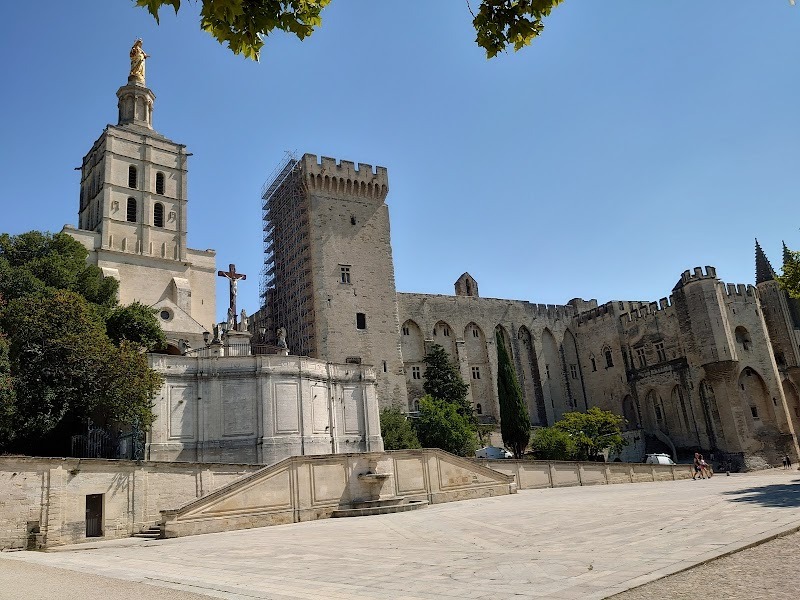
The Palais des Papes Avignon is one of the largest and most important medieval Gothic buildings in Europe. In Avignon, Southern France, it functioned as both a fortress and a palace, serving as the residence and seat of Western Christianity during the 14th century. Construction took place between 1335 and 1364, during the Avignon Papacy.
That combination is the key to reading the building: this was not simply a ceremonial residence. Its rooms, chapels, administrative spaces and defensive towers expressed the authority of the papacy at a time when religious leadership also required political protection.
What is the Palais des Papes in Avignon?
The Palais des Papes is a monumental Gothic complex built to house the popes and the papal administration during the 14th-century Avignon Papacy. It became a spiritual and political centre in a period when Avignon was regarded as the spiritual capital of the Western world.
You can read the building as two things at once. The palace provided spaces for private life, worship, audiences and administration; the fortress protected the papal residence and made its authority visible in stone. The scale of the complex reflects the importance of the institution it housed.
Why was the Palais des Papes built as both a palace and a fortress?
Pope Benedict XII began the construction of a fortified palace that combined piety and power. His successor, Pope Clement VI, expanded it into a larger administrative and diplomatic centre, turning the original project into a vast complex.
The building's defensive character reflected the pressures surrounding the Avignon Papacy: tensions with European monarchs, divisions within the Church and calls for reform. Its military architecture was therefore not separate from its religious purpose. The thick defensive presence helped assert papal authority while the ceremonial and sacred spaces gave that authority an institutional setting.
What are the main architectural features of the Palais des Papes?
The complex has two main wings, and their contrast gives you one of the clearest ways to understand its development. The austere Old Palace was built by Benedict XII, while the more elaborate New Palace was constructed under Clement VI.
Together, the two wings contain more than 25 rooms. The named spaces include private papal apartments, audience halls, chapels and a library, while defensive towers remain part of the complex. The result is a building in which intimate papal rooms, formal spaces for public authority and military structures occupy the same architectural system.
Look inside for surviving fragments of 14th-century frescoes. Some are associated with the artist Matteo Giovanetti, and they preserve evidence of the colour and ritual character that shaped the palace's interiors. The Avignon route that visits the Palais des Papes gives these architectural details a place within a wider interactive exploration of the city.
Why is the Palais des Papes historically important?
The Palais was a seat of the papacy during the 14th century, and six papal conclaves were held there. Those conclaves led to the elections of Benedict XII in 1334, Clement VI in 1342, Innocent VI in 1352, Urban V in 1362, Gregory XI in 1370 and Benedict XIII in 1394.
Its importance is also recognised beyond the history of Avignon. In 1995, the Palais des Papes was classified as a UNESCO World Heritage Site for its outstanding architecture and historical importance for the papacy.
What should you notice when you reach the Palais des Papes?
Start with the contrast between the severe Old Palace and the more elaborate New Palace. Then look for the way ceremonial rooms, chapels, private apartments, library spaces and defensive towers are gathered into one complex rather than separated into unrelated buildings.
Finally, pay attention to the surviving fresco fragments. They connect the imposing stone structure with the palace's original colour and ritual setting. This compact orientation is worth sharing with a companion before arrival: compare the two wings, spot the towers and look for the traces of Giovanetti's decoration.
Once you have those details in mind, encounter the Palais des Papes as one stop in Leplace's interactive Avignon tour, without losing sight of the building's own history.
The tour that visits Palais des Papes
Each one is a self-guided route you can start whenever you like.
Avignon · 1h 55m
Avignon: Where the Templars Fell
Step into Avignon's shadowy past on a self-guided walking tour tracing the dramatic downfall of the Knights Templar. Explore iconic sites like the Tour Philippe-le-Bel, Pont Saint-Bénézet, and Palais des Papes. Uncover secrets of faith, betrayal, and hidden relics as you walk in the footsteps of exiled knights and powerful popes. Each stop offers immersive stories, historic intrigue, and a touch of medieval mystery—perfect for history lovers and fans of the Cursed Kings saga.
- places
- Avignon
- Palais des Papes
- medieval architecture
- French history
- UNESCO