
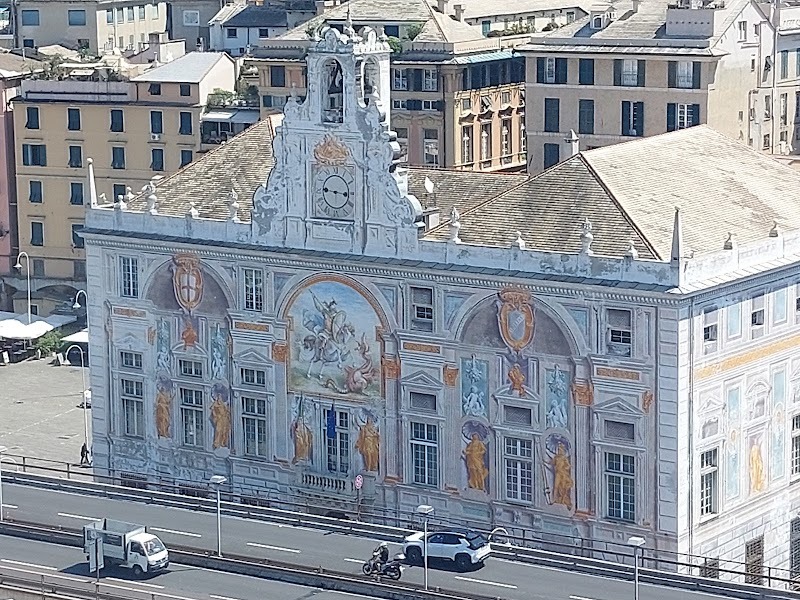
What is Palazzo San Giorgio in Genoa?
Palazzo San Giorgio, also called the Palace of St. George, is one of Genoa's important and well-known historic buildings. Its ornate façade looks out over Genoa's busy port, while the building currently houses the headquarters of the Port System Authority of the Western Ligurian Sea.
That combination of historic architecture and present-day port administration makes Palazzo San Giorgio closely connected to Genoa's identity as a maritime city. It is not simply a surviving façade beside the harbour: it remains linked to the organisation of the port itself.
Why is Palazzo San Giorgio important?
Palazzo San Giorgio is important because its history shows how Genoa's military, financial and maritime power became connected. Guglielmo Boccanegra built the palace in 1260, originally designing it as a fortress.
Its most significant change came in the 15th century, when Palazzo San Giorgio became the headquarters of the Banco di San Giorgio. The bank's ledgers tracked fortunes connected to voyages and wars, as well as the governance of territories including Corsica and Crimea.
The bank's role extended beyond recording money. It managed entire territories, showing how closely Genoa's financial power was tied to political power. At Palazzo San Giorgio, banking was part of the machinery through which Genoa governed and supported its wider maritime world.
What happened at Palazzo San Giorgio?
Marco Polo was imprisoned at Palazzo San Giorgio in 1298. According to the account preserved in the Genoa maritime tour material, he told his cellmate stories about the Silk Road while imprisoned there.
Those stories would later become the famous Travels of Marco Polo. The detail gives the palace another layer of significance: alongside its roles as a fortress and banking headquarters, it is associated with one of the best-known accounts of travel and exploration.
What should you look for on Palazzo San Giorgio?
Look up at Palazzo San Giorgio's frescoes and look specifically for the dragon. The dragon is presented as a symbol of Genoa, connecting the building's decorated façade with the city's indomitable spirit.
That single detail helps bring together the palace's documented layers of history: it began as a fortress, became the headquarters of a powerful bank, and is connected with Genoa's maritime territories and Marco Polo's Silk Road stories. The façade's dragon makes those layers something to look for rather than a list of dates.
To see Palazzo San Giorgio as one stop in Genoa's story of shipbuilding and maritime power, follow the Genoa maritime history route.
The tour that visits Palazzo San Giorgio
Each one is a self-guided route you can start whenever you like.

Genoa · 1h 45m
Genoa: Cradle of Shipbuilders and Maritime Power
Embark on a self-guided adventure through Genoa's maritime heart! Discover medieval piazzas, legendary docks, grand palaces, and the secrets of Genoese bankers and sailors. Explore historic sites, panoramic views, and the iconic Lanterna lighthouse while tracing the city's rise and transformation from medieval powerhouse to modern maritime hub.
- places
- Genoa
- Palazzo San Giorgio
- Italian history
- maritime history
- landmarks