
Paris, France3 min read
Paroisse Saint-Paul-Saint-Louis Paris
Paroisse Saint-Paul Saint-Louis on Google Maps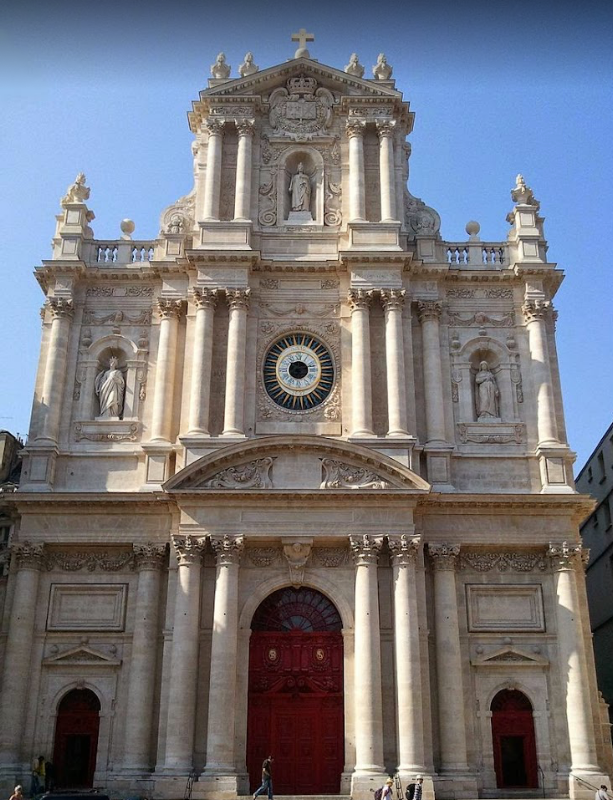
Paroisse Saint-Paul-Saint-Louis is the Église Saint-Paul-Saint-Louis, a church on rue Saint-Antoine in Paris's Marais quarter. Its present building was constructed between 1627 and 1641 by the Jesuit architects Étienne and François Derand, on the orders of Louis XIII.
The church is also the landmark behind the names Place Saint-Paul and the nearby Saint-Paul Metro station. The Lycée Charlemagne, another institution founded by the Jesuits, stands next door.
What is Paroisse Saint-Paul-Saint-Louis in Paris?
Paroisse Saint-Paul-Saint-Louis is a Jesuit church whose construction belongs to the reign of Louis XIII. Étienne and François Derand designed the present building between 1627 and 1641, giving the Marais a church closely connected to both the Jesuit order and the Bourbon monarchy.
Its location remains embedded in the surrounding street plan: Place Saint-Paul and the Saint-Paul Metro station take their names from the church, while the Jesuit-founded Lycée Charlemagne occupies the adjoining site. These names and the neighboring school make Saint-Paul-Saint-Louis unusually easy to locate in the Marais.
Why is Saint-Paul-Saint-Louis different from older Paris churches?
Saint-Paul-Saint-Louis was the first church in Paris to break away entirely from the Gothic style. Its design introduced the new Baroque style of the Jesuits rather than continuing the Gothic architectural tradition.
That stylistic change is what makes the church important beyond its local history. Saint-Paul-Saint-Louis had an important influence on Parisian religious architecture, so its identity is tied to a specific architectural shift: the arrival of a fully Jesuit Baroque church in Paris.
What happened to Saint-Paul-Saint-Louis during the French Revolution?
During the Dechristianization campaign of 1793, the revolutionary government targeted Saint-Paul-Saint-Louis because of its close ties to the Bourbon monarchy. The church traditionally housed the reliquary hearts of Louis XIII and Louis XIV, which represented the divine right the Republic sought to erase.
Revolutionary agents seized the reliquaries, removed the hearts, and sent their gold and silver casings to the national mint to be melted down and used to fund the Revolutionary Wars. The action connected the church's royal associations to the material demands of the Revolution.
Saint-Paul-Saint-Louis was also closed for worship and converted into a warehouse for confiscated books and artwork from the libraries of executed aristocrats. This depot formed part of an administrative effort to centralize and inventory national property, known as biens nationaux.
The church's revolutionary history continued in 1797, when the neighboring medieval church of Saint-Paul-des-Champs was demolished for its stone and lead. Its surviving sixteenth-century clock was forcibly moved to the facade of Saint-Paul-Saint-Louis. The relocated clock is a physical remnant of the revolutionary consolidation of the parishes.
What should you notice around the church?
Look for Saint-Paul-Saint-Louis on rue Saint-Antoine in the Marais, using Place Saint-Paul and the Saint-Paul Metro station as location markers named for the church. The adjacent Lycée Charlemagne adds another visible connection to the site's Jesuit foundation.
Saint-Paul-Saint-Louis is stop 4 of 10 on the 1789 French Revolution Grand Tour, whose account preserves the church's Bourbon and revolutionary history. Walk to the church and examine the place where its Baroque identity and revolutionary past meet.
The tour that visits Paroisse Saint-Paul Saint-Louis
Each one is a self-guided route you can start whenever you like.
Paris · 2h 55m
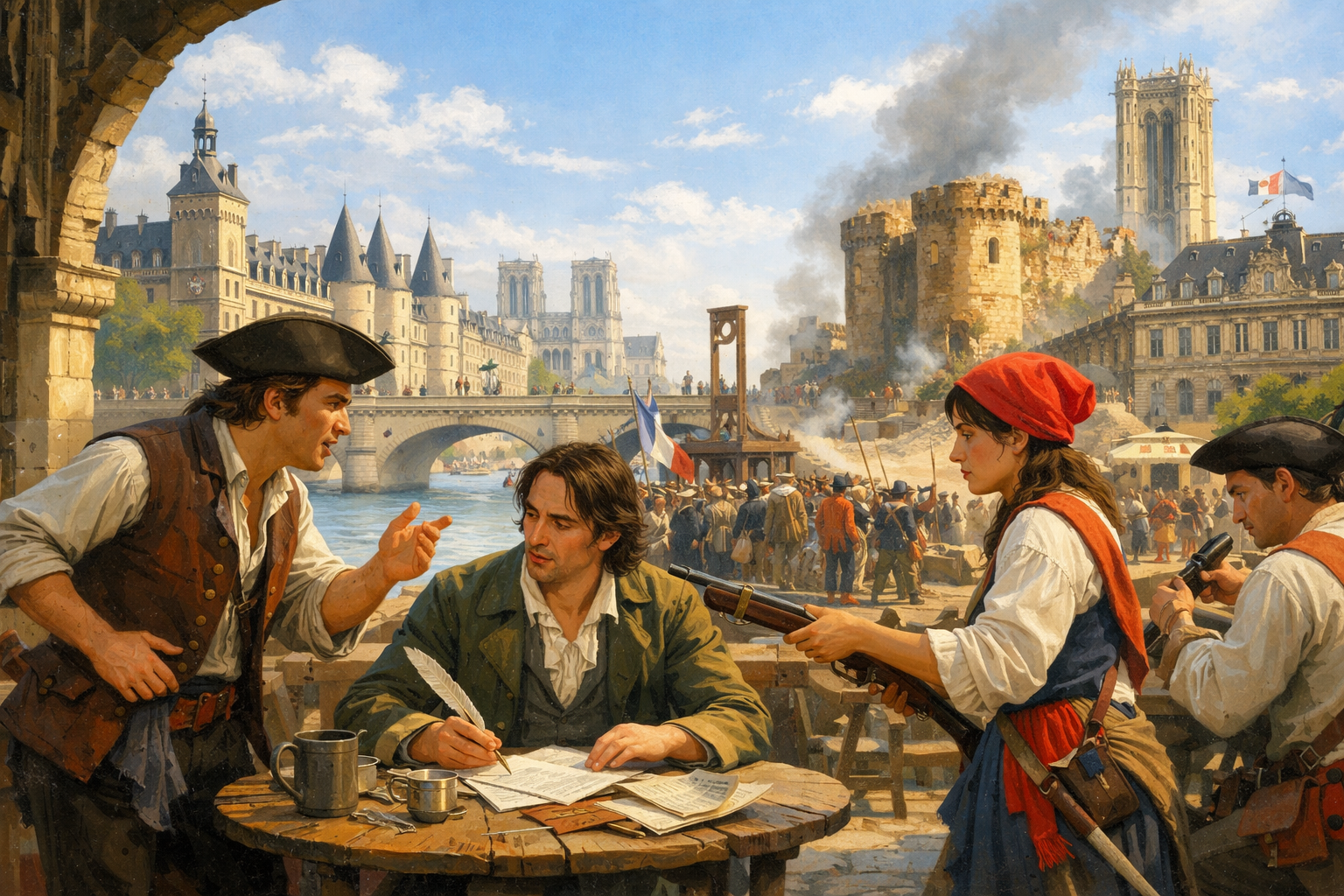
1789 French Revolution Grand Tour
Trace the radical pulse of Paris from the first sparks of 1789's revolution. Hunt ground markings and relics of revolution as you cross bridges, palaces, and prisons. Discover how Paris's architecture became both witness and weapon in the making of modern liberty.
- places
- Paris
- Marais
- Saint-Paul-Saint-Louis
- French Revolution
- Baroque architecture