
Genoa, Italy3 min read
Piazza Banchi Genoa: Where Public Banking Took Shape
Piazza Banchi on Google Maps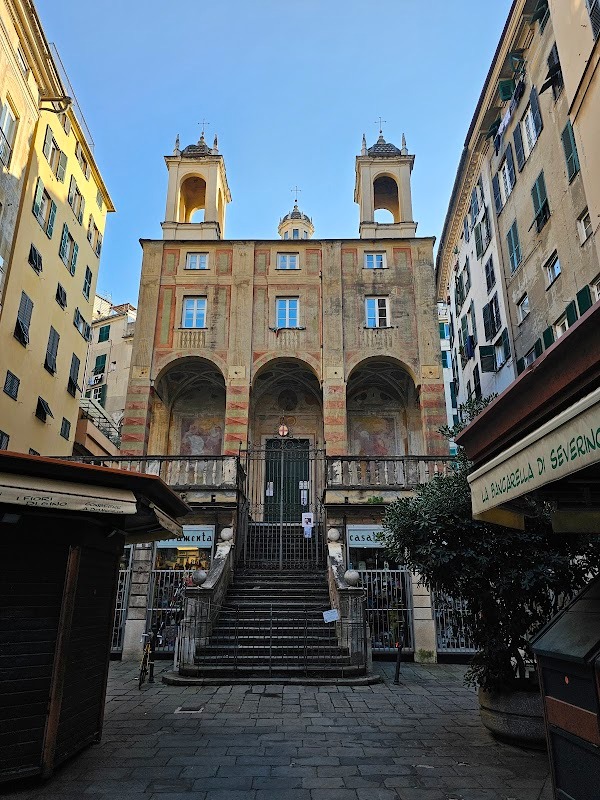
Piazza Banchi in Genoa is the former economic heart of medieval Genoa and the place associated with the founding of the Banco di San Giorgio in 1407. Its name, architecture and history connect one square with maritime trade, money changing and the development of public banking.
Genoa's ships crossed the Mediterranean while traders dealt in spices, silks and gold. Piazza Banchi was a focal point for that commercial activity, and the Genoa maritime power tour visits it as stop 2 of 8. The square's importance comes from the financial infrastructure that supported the city's trading power, not simply from its position in the historic centre.
What is Piazza Banchi in Genoa known for?
Piazza Banchi is known for the Banco di San Giorgio, founded there in 1407. The institution became the financial engine of Genoa's empire: it funded naval expeditions, managed state debts and governed overseas territories.
That makes the square a precise meeting point between Genoa's maritime ambitions and its financial systems. The bank was more than a place for deposits. It was associated with state-backed loans and deposit accounts, practices that helped turn commercial wealth into organised public finance.
How did Piazza Banchi influence modern banking?
Piazza Banchi's connection to banking began before the Banco di San Giorgio. Money changers were already active in Genoa during the 12th and 13th centuries, using benches in the piazza. The Italian word banchi refers to those benches, giving the square its distinctive name and linking an everyday object to the language of banking.
The imposing loggia provided shelter for merchants as they negotiated and kept ledgers. In that setting, financial exchange was a visible part of the square's activity. The Banco di San Giorgio continued operating until Napoleon dissolved it in 1805, but its influence travelled further: the banking models associated with Genoa helped shape later financial centres including Amsterdam and London.
What should you look for at Piazza Banchi?
Start with the imposing loggia, then look for the carved symbols and worn benches that remain as architectural hints of Piazza Banchi's financial past. The source material does not assign a particular meaning to each carving or bench, but together they point towards the merchants, money changers and ledgers that defined the square.
Nearby, the Church of San Pietro adds another specific layer to the place. Its presence is described in connection with the relationship between faith and fiscal responsibility, placing religious life alongside the commercial and financial work associated with Piazza Banchi. The present-day square therefore carries a visible contrast: its built details remain, while the negotiations and record-keeping that once filled the space are part of its history.
Why is Piazza Banchi different from an ordinary historic square?
Piazza Banchi is distinctive because its physical space is directly connected to the development of public banking. The loggia and benches are not just historic decoration; they prompt you to connect the square with money changers, merchant negotiations and the institution that funded Genoa's naval power and managed its debts.
To encounter that connection in context, visit Piazza Banchi as one stop on the Genoa: Cradle of Shipbuilders and Maritime Power route.
The tour that visits Piazza Banchi
Each one is a self-guided route you can start whenever you like.

Genoa · 1h 45m
Genoa: Cradle of Shipbuilders and Maritime Power
Embark on a self-guided adventure through Genoa's maritime heart! Discover medieval piazzas, legendary docks, grand palaces, and the secrets of Genoese bankers and sailors. Explore historic sites, panoramic views, and the iconic Lanterna lighthouse while tracing the city's rise and transformation from medieval powerhouse to modern maritime hub.
- places
- Genoa
- Piazza Banchi
- Italian history
- Banco di San Giorgio
- public banking