
Verona, Italy3 min read
Piazza dei Signori Verona: Dante, Power and Romeo and Juliet
Piazza dei Signori on Google Maps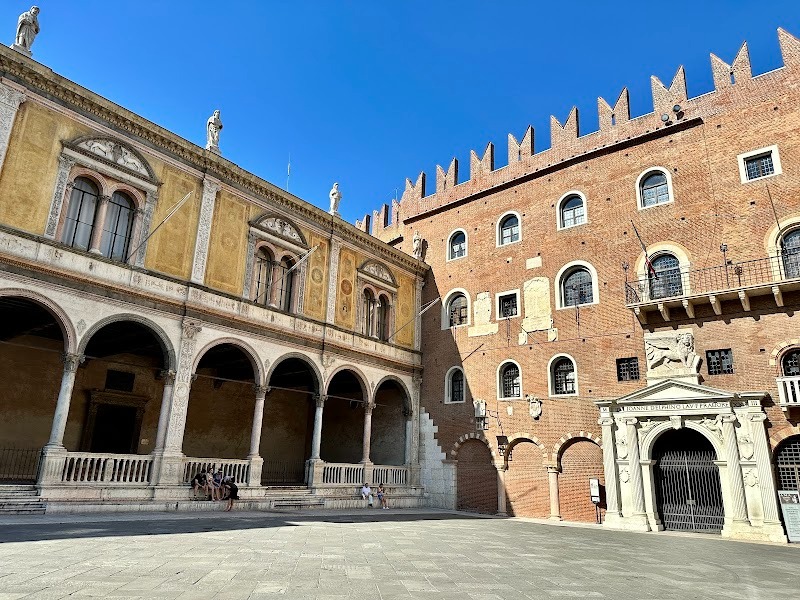
Piazza dei Signori Verona is a city square in Verona, Italy, and it was the political center of medieval Verona. The square was the seat of power for the Scaliger dynasty, the ruling family that governed the city during the 13th and 14th centuries. Its surrounding palaces, administrative buildings, and noble residences preserve the setting in which Verona’s political and literary history became connected to Romeo and Juliet.
What is Piazza dei Signori in Verona?
Piazza dei Signori was the political center of medieval Verona and the seat of Scaliger power. The square’s buildings belonged to the world of government and aristocratic life: palaces, administrative buildings, and noble residences surrounded the piazza and reflected the factions and hierarchy of the city.
That built setting matters because Piazza dei Signori is not simply a historic open space. Its architecture represents the political world of Verona under the Scaliger dynasty, whose rule shaped the city during the 13th and 14th centuries. The square therefore gives a specific context for understanding the rivalries that later became part of Verona’s Romeo and Juliet tradition.
What can you see in Piazza dei Signori?
The defining feature of Piazza dei Signori is the statue of Dante Alighieri at the center of the piazza. Around it, the palaces, administrative buildings, and noble residences create an unmistakably aristocratic and factional character.
The square’s surrounding buildings are important because they show how closely political authority and noble life were concentrated in this part of medieval Verona. Rather than functioning as a generic Verona attraction, Piazza dei Signori is a place where the city’s governing structures and aristocratic world remain central to its identity.
Why is there a Dante statue in Piazza dei Signori Verona?
The statue of Dante Alighieri stands at the center of the piazza and reinforces Piazza dei Signori’s connection to the literary traditions behind Romeo and Juliet. In the Divine Comedy, Dante mentioned the Montecchi and Cappelletti as rival factions involved in violent political conflicts in northern Italy.
Those references connect Dante’s literary work with the factional political world represented by Piazza dei Signori. The square’s central statue makes that connection part of the place’s meaning without turning the piazza itself into a scene from Shakespeare’s play.
How does Piazza dei Signori connect to Romeo and Juliet?
Piazza dei Signori connects to Romeo and Juliet through the political and literary origins of the legend, not because it is a setting from Shakespeare’s play. Dante’s references to the Montecchi and Cappelletti came more than two centuries before Shakespeare’s play and concerned rival factions in northern Italy.
Renaissance authors Luigi da Porto and Matteo Bandello later transformed those names into the feuding families of Romeo and Juliet. Piazza dei Signori’s aristocratic and factional world is therefore part of the history behind the legend, long before Shakespeare adapted it for the English stage. The Romeo and Juliet Verona Tour visits the piazza as part of its route.
Save this page for your Verona plans, or send it to the companion who wants the historical context before you explore the square together. When you are ready to connect the place with the wider story, follow the Verona Romeo and Juliet route.
The tour that visits Piazza dei Signori
Each one is a self-guided route you can start whenever you like.
Verona · 1h 15m
Romeo and Juliet Verona Tour
Walk in the footsteps of Romeo and Juliet on this immersive self-guided tour of Verona. Discover medieval houses, legendary balconies, and ancient tombs as you unravel the real history and enduring myths behind the world's most famous love story. Perfect for romantics, literature lovers, and curious explorers alike!
- places
- Verona
- Piazza dei Signori
- Dante
- Romeo and Juliet
- Italian history