
Paris, France3 min read
Place des Vosges Paris: What Makes This Marais Square Distinctive?
Place des Vosges on Google Maps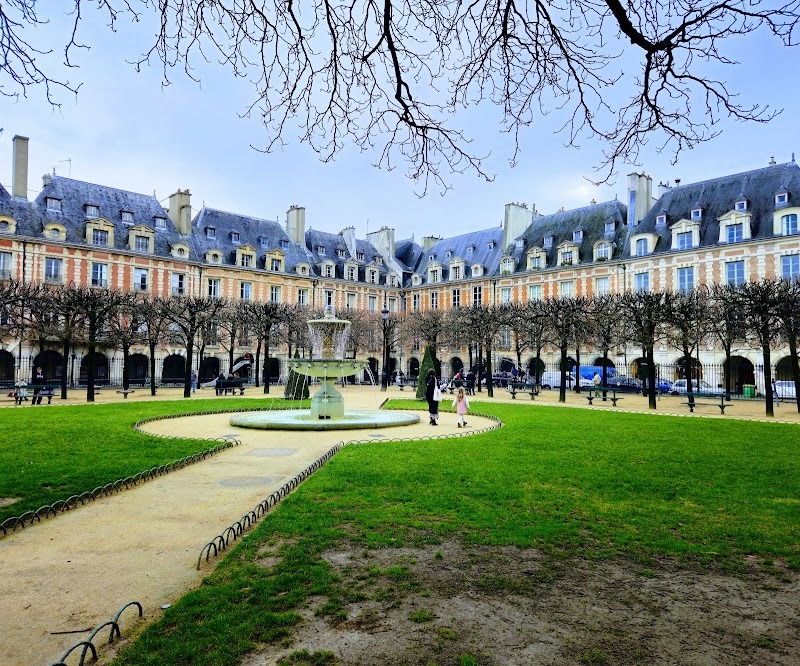
Place des Vosges is Paris's oldest planned square, originally called Place Royale, and sits in the Marais on the dividing line between the 3rd and 4th arrondissements. Its enclosed layout, pavilion entrances and royal history make it distinctive among Parisian squares, while the destruction of its central statue during the French Revolution changed what the square represented.
What is Place des Vosges in Paris?
Place des Vosges is an enclosed royal-planned square in the Marais, just before Place Dauphine in the chronology of Paris's planned squares. It was originally known as Place Royale, and its formal design still gives the place a clear identity: the central space is contained by the buildings around it rather than opening broadly into the surrounding streets.
Access is part of that design. The square is reached through a main street on one of its four sides, as well as through two streets running beneath pavilions. These controlled approaches connect the surrounding Marais streets to a central space shaped by the buildings that enclose it.
Place des Vosges is one of Paris's five royal squares, alongside Place des Victoires, Place Dauphine, Place Vendôme and Place de la Concorde. Its combination of royal association, planned geometry and enclosed access distinguishes it from a more open Parisian plaza.
Why was Place des Vosges important to the Marais?
Place des Vosges was a fashionable and expensive place to live during the 17th and 18th centuries. Its status as an elite address helped make the Marais chic among the Parisian nobility.
That social role was tied to the square's physical and political design. Place Royale was not simply an empty urban space: it was a planned royal square whose surrounding buildings and limited entrances created a unified setting. The square's reputation as an expensive address made that royal-planned environment an important part of the Marais's identity among the nobility.
What happened to Place des Vosges during the French Revolution?
During the French Revolutionary Wars from 1792 to 1802, the Republic faced the First Coalition, a military alliance that included Austria, Prussia, Great Britain and Spain. In 1793, the revolutionary government renamed Place Royale Place de l'Indivisibilité as the square became a centre for military mobilisation.
The square's central bronze equestrian statue of Louis XIII was dismantled and melted down to provide raw material for cannons. That destruction changed Place des Vosges from a royalist park into a strategic asset for national defence. The former royal name and the missing statue therefore remain essential to understanding the place-specific effect of the Revolution here.
The 1789 French Revolution Grand Tour treats Place des Vosges as stop 2 of 10, focusing on this transformation without separating the square from the wider revolutionary pressure facing the Republic.
What should you notice when you visit Place des Vosges?
Start by treating Place des Vosges as an enclosed space, not as an open Parisian plaza. Notice how the surrounding buildings define the central area, then look at the access points beneath the pavilions and the way those passages connect the square to the Marais.
Keep three details in mind: this was originally Place Royale; it belongs to the group of five royal squares in Paris; and the bronze equestrian statue of Louis XIII that once stood at its centre was dismantled and melted down during the Revolution. Together, those details connect the square's layout, elite identity and revolutionary transformation without turning it into a generic landmark.
The tour that visits Place des Vosges
Each one is a self-guided route you can start whenever you like.
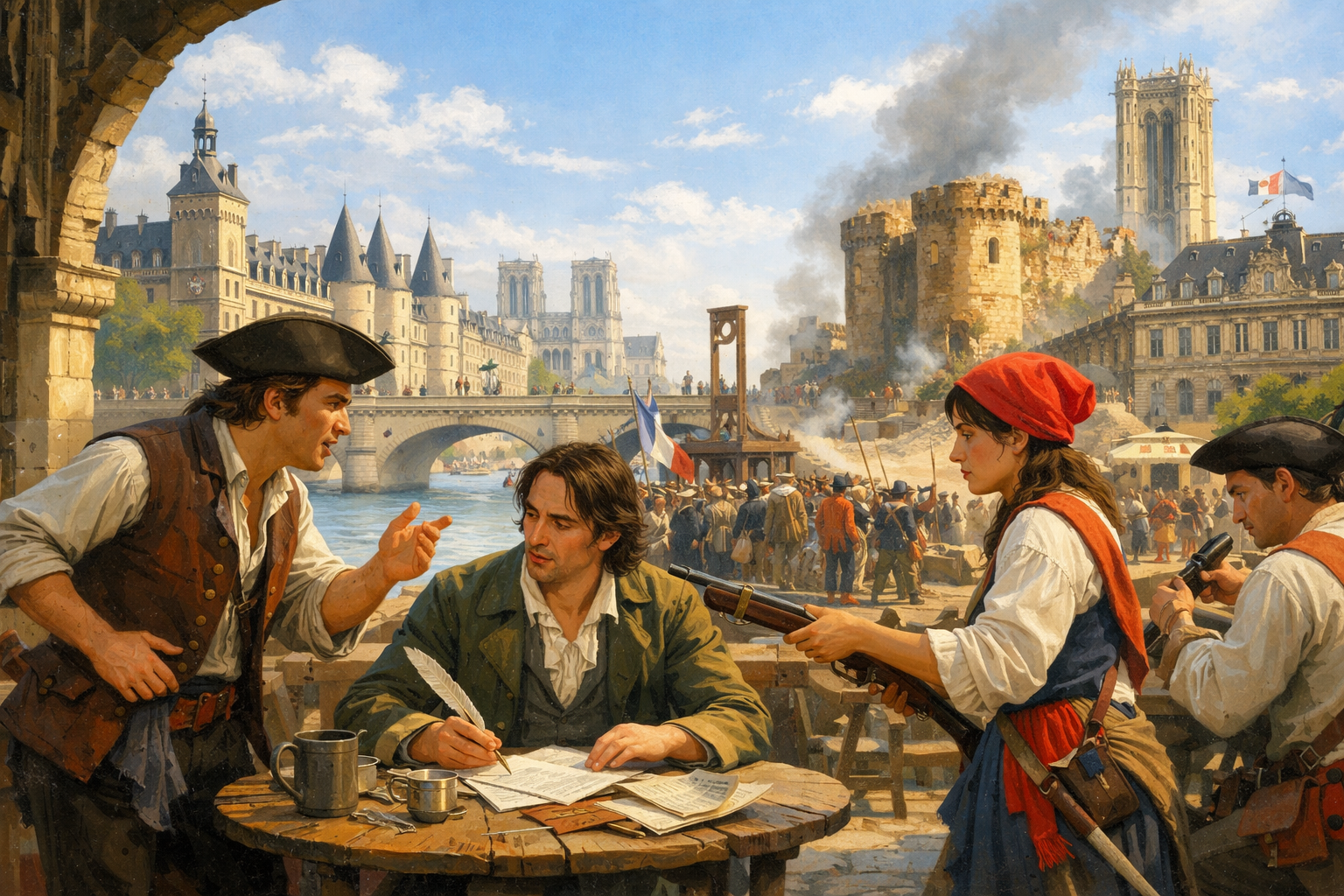
Paris · 2h 55m
1789 French Revolution Grand Tour
Trace the radical pulse of Paris from the first sparks of 1789's revolution. Hunt ground markings and relics of revolution as you cross bridges, palaces, and prisons. Discover how Paris's architecture became both witness and weapon in the making of modern liberty.
- places
- Paris
- Place des Vosges
- Marais
- French Revolution
- Paris history