
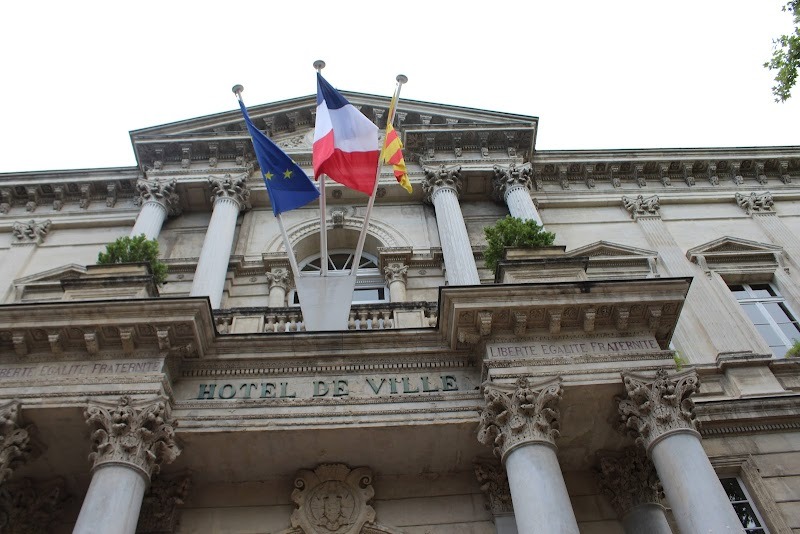
Place de l'Horloge is Avignon's civic heart: a central gathering place in the historic city, associated with the Hôtel de Ville and its long role as a setting for public life. The square is now known for its cafés, terraces and street performers, but its significance reaches back to Avignon's Roman past and its medieval role as a centre of urban authority.
What is Place de l'Horloge in Avignon?
Place de l'Horloge is Avignon's central civic square, standing in front of the Hôtel de Ville, a historic building that occupies an important position on the square. The Hôtel de Ville was designated a monument historique by the French government in 1862.
The present-day square brings together cafés, terraces and street performers. Those uses make it a gathering place in contemporary Avignon, while the Hôtel de Ville provides a physical connection to the square's older civic role. The space is not simply an open area beside a historic building: it is where Avignon's public life has repeatedly been organised and displayed.
What was Place de l'Horloge before it became today's square?
Place de l'Horloge occupies the site of Avignon's Roman forum, described as the nucleus of public life during antiquity. Its role continued through the centuries, when the area became a medieval market square and remained a central gathering place.
The medieval town hall stood on the site of today's Hôtel de Ville. That continuity matters: although the uses of the square changed, the location retained its connection with civic authority. By the 13th century, Avignon was a wealthy and strategically important city along the Rhône River, positioned at a crossroads between French, Holy Roman and Papal interests.
Reading the square through these successive roles is more reliable than treating it as a single, fully documented architectural story. The sourced history identifies a Roman forum, a medieval market square and a civic setting; together, those details show a long continuity of public importance.
Why was Place de l'Horloge important during the Avignon Papacy?
Place de l'Horloge was important during the Avignon Papacy because it was the hub of civic announcements and public events, in front of the medieval town hall. In 1305, Bertrand de Got was elected Pope Clement V, and in 1309 he relocated the Papal Curia to Avignon. This began the Avignon Papacy, during which seven successive popes ruled from Avignon under close French oversight.
The source records no direct Templar trials at Place de l'Horloge. It is instead described as likely that royal edicts, papal bulls and civic mandates were proclaimed in this public space. That possibility reflects the square's political setting without turning an inference into a confirmed event.
What should you notice when you stand in Place de l'Horloge?
Read Place de l'Horloge as a civic space layered over its earlier role as the Roman forum. The current cafés, terraces and street performers occupy the same broadly significant setting that once served as a medieval market and a venue for public announcements.
Use the Hôtel de Ville as your physical reference point: it connects the present square with the medieval town hall site and helps make the changing civic role of the place legible. For a sourced walking interpretation of the square's connection to Avignon's political and religious history, see Avignon: Where the Templars Fell, which includes Place de l'Horloge as one of its stops.
The tour that visits Place de l'Horloge
Each one is a self-guided route you can start whenever you like.
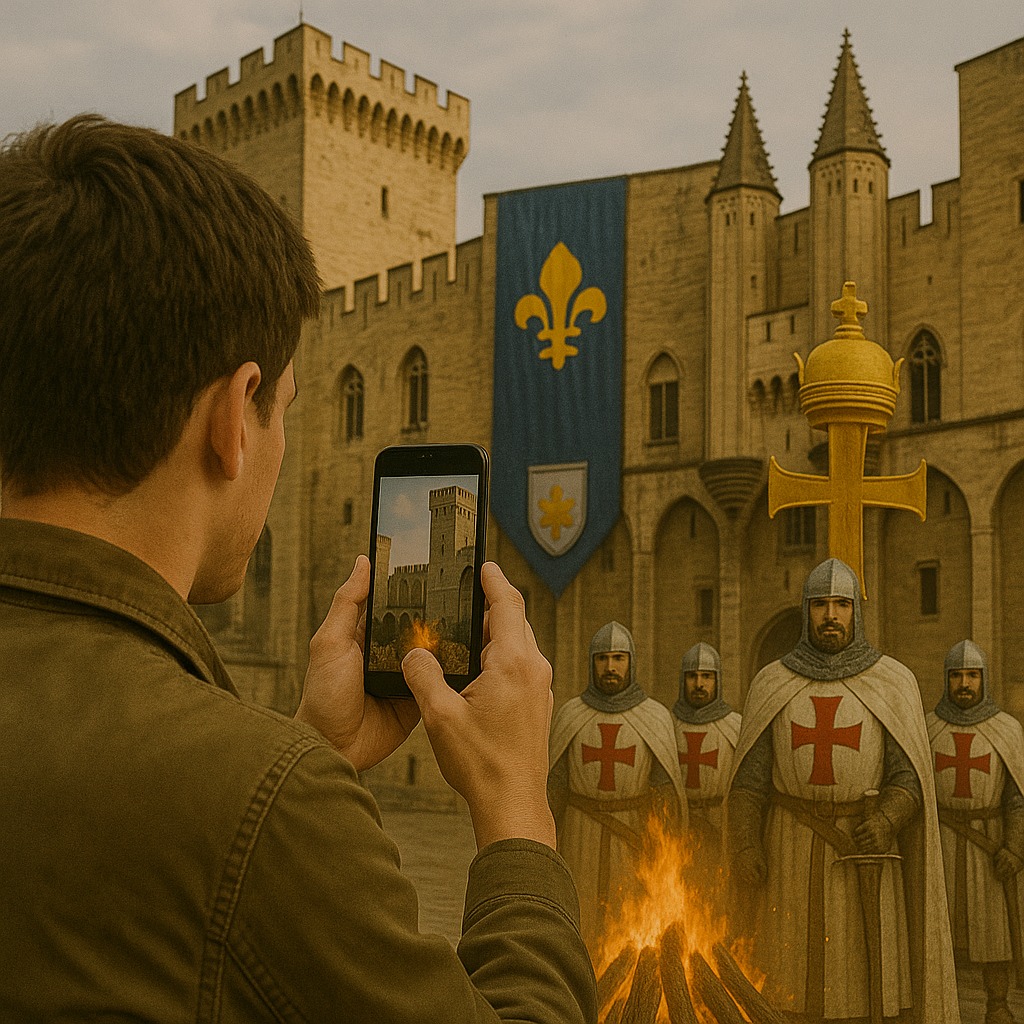
Avignon · 1h 55m
Avignon: Where the Templars Fell
Step into Avignon's shadowy past on a self-guided walking tour tracing the dramatic downfall of the Knights Templar. Explore iconic sites like the Tour Philippe-le-Bel, Pont Saint-Bénézet, and Palais des Papes. Uncover secrets of faith, betrayal, and hidden relics as you walk in the footsteps of exiled knights and powerful popes. Each stop offers immersive stories, historic intrigue, and a touch of medieval mystery—perfect for history lovers and fans of the Cursed Kings saga.
- places
- Avignon
- Place de l'Horloge
- Avignon history
- French history