
Paris, France4 min read
Place de l'Hôtel de Ville Paris: From Place de Grève to Robespierre's Arrest
Place de l'Hôtel de Ville on Google Maps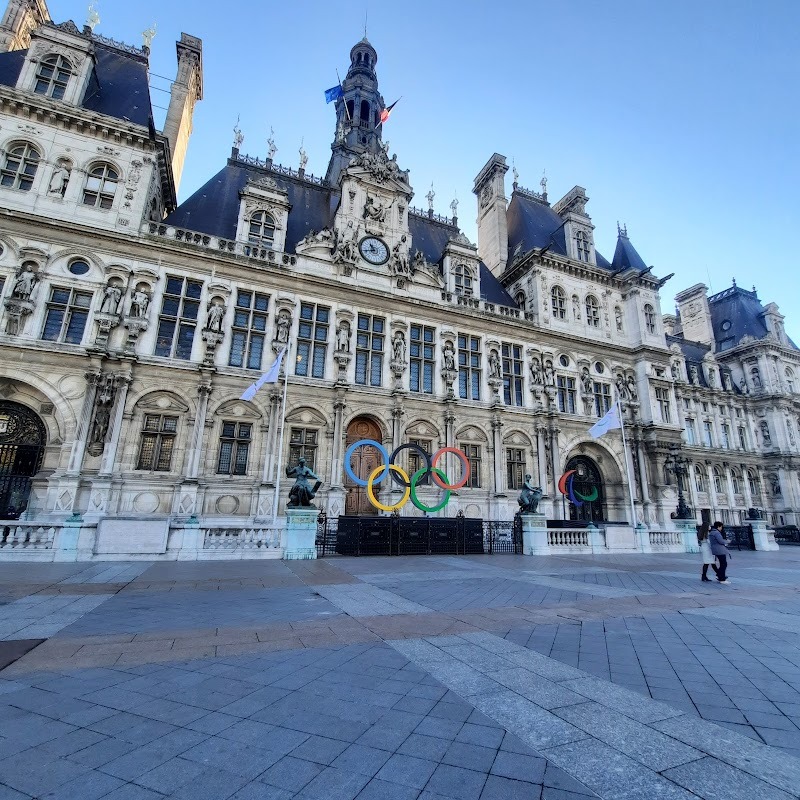
Place de l'Hôtel de Ville Paris is the public square in Paris's 4th arrondissement directly in front of the Hôtel de Ville. Its earlier name, Place de Grève, and the events connected to the building's steps make it a useful place to understand how Paris's revolutionary power gathered, acted and finally turned against Robespierre's group.
What is Place de l'Hôtel de Ville in Paris?
Place de l'Hôtel de Ville – Esplanade de la Libération is the square located in front of the Hôtel de Ville. Before 1802, it was called Place de Grève. The French word grève refers to a flat area covered with gravel or sand on the shore or bank of a body of water.
That older name is the first detail to keep in mind when you identify the square. The place name changed from Place de Grève to Place de l'Hôtel de Ville before the modern name was established, while the Hôtel de Ville remained the building that gives the square its present identity.
Why is Place de l'Hôtel de Ville historically important?
Place de l'Hôtel de Ville matters because the Hôtel de Ville became a centre of Parisian revolutionary authority, with major decisions and confrontations attached to the building and its steps.
On July 14, 1789, after the storming of the Bastille, the Hôtel de Ville became the seat of the newly formed Paris Commune. That day, Jacques de Flesselles, the Provost of Merchants, was killed on the building's steps after being accused of withholding arms from the people. Three days later, on July 17, Louis XVI came to the building to meet Paris's first mayor, Jean-Sylvain Bailly, and formally accepted the tricolor cockade.
The square also served as a gathering point for revolutionary action. On October 5, 1789, the Place de Grève was the primary assembly point for the Women's March on Versailles. On August 10, 1792, the Insurrectionary Commune established its headquarters at the Hôtel de Ville and directed the attack on the Tuileries Palace.
During the Republic, the building was the administrative centre for the Committee of General Security and a primary site for organising the levée en masse, or mass conscription. The Hôtel de Ville was therefore tied not only to public gatherings but also to the organisation of revolutionary government and military mobilisation.
The most concentrated episode came on the night of July 27, 1794, known as 9 Thermidor. After being outlawed by the National Convention, Maximilien Robespierre, Louis Antoine de Saint-Just and Georges Couthon sought refuge in the building. At approximately 2:00 AM on July 28, Convention troops led by Paul Barras entered to arrest them. During the seizure, Robespierre sustained a shattered jaw from a gunshot, and those arrested were taken from the Hôtel de Ville to the guillotine later that day.
What changed after the French Revolution?
The building connected to these revolutionary events is not the original medieval and Renaissance structure. That structure was destroyed by fire in May 1871, and the Hôtel de Ville was reconstructed between 1873 and 1892.
This gives the square a precise historical tension: the reconstructed Hôtel de Ville stands over a setting associated with the Paris Commune, revolutionary assemblies, the organisation of the Republic and the collapse of Robespierre's group. The present name points to the building, but the older name and the recorded events keep the square's revolutionary history attached to it.
How can you place the square in Paris's revolutionary history?
Use the Hôtel de Ville and its steps as fixed reference points for a sequence of political turning points: the Paris Commune's formation on July 14, Louis XVI's meeting with Bailly on July 17, the Women's March assembly on October 5, the Insurrectionary Commune's headquarters in 1792 and the arrest of Robespierre's group in 1794.
If you are exploring with a Paris companion, send them this page as a shared key to the square: its location before the Hôtel de Ville helps connect the building and its steps to the specific events rather than treating the space as an anonymous open area.
Your next step: follow Leplace's 1789 French Revolution Grand Tour, where Place de l'Hôtel de Ville appears as stop 5 of 10. Use the stop to place the square within the wider revolutionary sequence without giving away its in-app quest.
The tour that visits Place de l'Hôtel de Ville
Each one is a self-guided route you can start whenever you like.
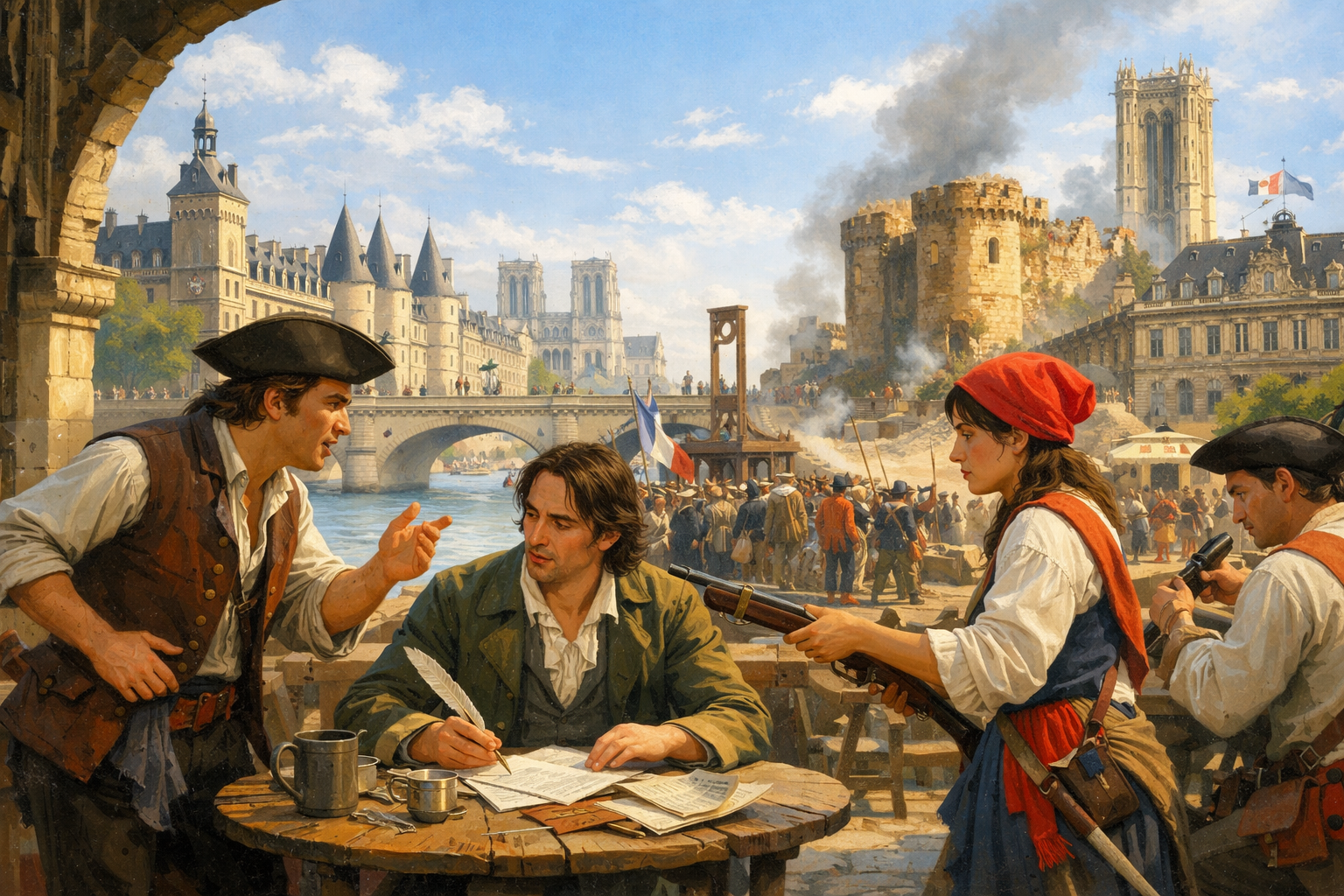
Paris · 2h 55m
1789 French Revolution Grand Tour
Trace the radical pulse of Paris from the first sparks of 1789's revolution. Hunt ground markings and relics of revolution as you cross bridges, palaces, and prisons. Discover how Paris's architecture became both witness and weapon in the making of modern liberty.
- places
- Paris
- French Revolution
- Place de l'Hôtel de Ville
- Paris history