
Avignon, France3 min read
Porte Limbert Avignon: History of the Medieval Gateway
Porte Limbert on Google Maps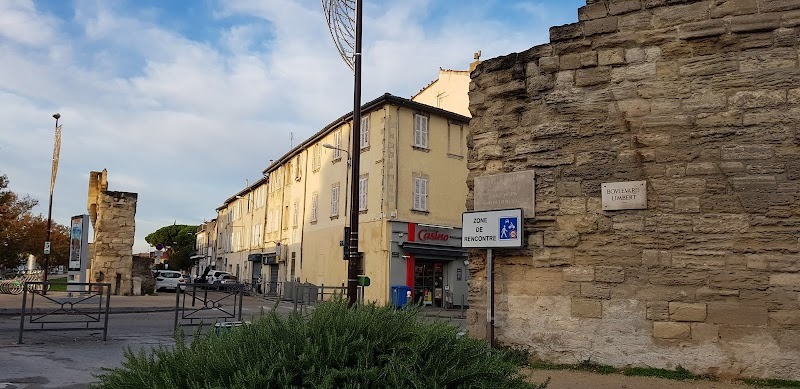
Porte Limbert is one of the remaining gateways of Avignon's medieval fortifications. Built in the late 14th century as part of the city's second ring of defensive walls, it was one of seven main gates regulating access to the growing papal capital. To encounter the gateway in its historical setting, follow the Avignon: Where the Templars Fell tour, which visits Porte Limbert as one of its stops.
What is Porte Limbert in Avignon?
Porte Limbert was a controlled entrance in Avignon's expanded medieval defensive system. Its role was practical as well as political: it helped manage movement into the city while forming part of the walls that expressed Avignon's importance as a papal capital.
The gate belonged to the second ring of walls constructed in the late 14th century. This larger defensive circuit included seven main gates, built as Avignon grew and needed to regulate access more carefully. Porte Limbert is therefore not an isolated monument; it is a surviving part of the system that enclosed and protected the city.
Why was Porte Limbert built?
Porte Limbert was built to help protect Avignon from bandits, roaming mercenaries, and potential military threats during the Hundred Years' War. Its gate controlled a vulnerable point of entry at a time when security was an immediate concern for the city.
Avignon's walls were commissioned and expanded under Pope Innocent VI and later Pope Urban V. The fortifications also projected the strength of the Avignon Papacy during its conflict with Rome and with broader Christendom. A defensive wall could keep danger out, but it could also make papal authority visible in stone.
The fortifications, including Porte Limbert, were completed after the Knights Templar were suppressed in 1307 and formally dissolved in 1312. The chronology matters: the Templar trials had ended by the time these defences were in use, and power had been consolidated under papal administration and royal courts. Porte Limbert was part of that later political and defensive order, not a structure built or controlled by the Templars.
What passed through Porte Limbert?
Porte Limbert channelled merchants, pilgrims, and diplomats into Avignon. The gateway also provided access to the Carreterie district, described in the source material as a bustling neighbourhood just outside the walls.
That position made Porte Limbert a point where everyday movement met civic control. Its historical significance includes centuries of comings and goings shaped by plague, exile, and reform. Later, the gate became a point of control during unrest in Avignon, including the Wars of Religion.
What should you notice at Porte Limbert?
Focus on Porte Limbert as a surviving section of Avignon's medieval defensive system. Its position between the walled city and the Carreterie district identifies it as a controlled threshold: a place where people and goods entered, and where the city's authorities could regulate access.
The gateway's weathered stones speak to the movement and upheaval that passed through this threshold over the centuries. Merchants, pilgrims, and diplomats used the entrance, while plague, exile, reform, and later religious unrest shaped the history around it. That combination of physical survival and strategic position is what makes Porte Limbert more than a generic historic gateway.
When you visit Porte Limbert, read it as evidence of how medieval Avignon defended its growing papal capital and managed the boundary between the city and Carreterie.
The tour that visits Porte Limbert
Each one is a self-guided route you can start whenever you like.

Avignon · 1h 55m
Avignon: Where the Templars Fell
Step into Avignon's shadowy past on a self-guided walking tour tracing the dramatic downfall of the Knights Templar. Explore iconic sites like the Tour Philippe-le-Bel, Pont Saint-Bénézet, and Palais des Papes. Uncover secrets of faith, betrayal, and hidden relics as you walk in the footsteps of exiled knights and powerful popes. Each stop offers immersive stories, historic intrigue, and a touch of medieval mystery—perfect for history lovers and fans of the Cursed Kings saga.
- places
- Avignon
- Porte Limbert
- medieval history
- Avignon Papacy
- city walls